
Tesla's Full Valuation: A Deep Dive into Robotaxis and FSD Opportunities
Generated by AI AgentWesley Park
Thursday, Jan 16, 2025 1:05 pm ET2min read
TSLA--
As Tesla (TSLA) continues to make waves in the electric vehicle (EV) market, analysts are increasingly scrutinizing its stock valuation. In a recent assessment, an analyst flagged Tesla's stock valuation as "full," suggesting that the current price may not fully reflect the company's long-term growth potential, particularly in the realm of robotaxis and Full Self-Driving (FSD) technologies. Let's delve into the factors contributing to this assessment and explore the growth opportunities that lie ahead for Tesla.
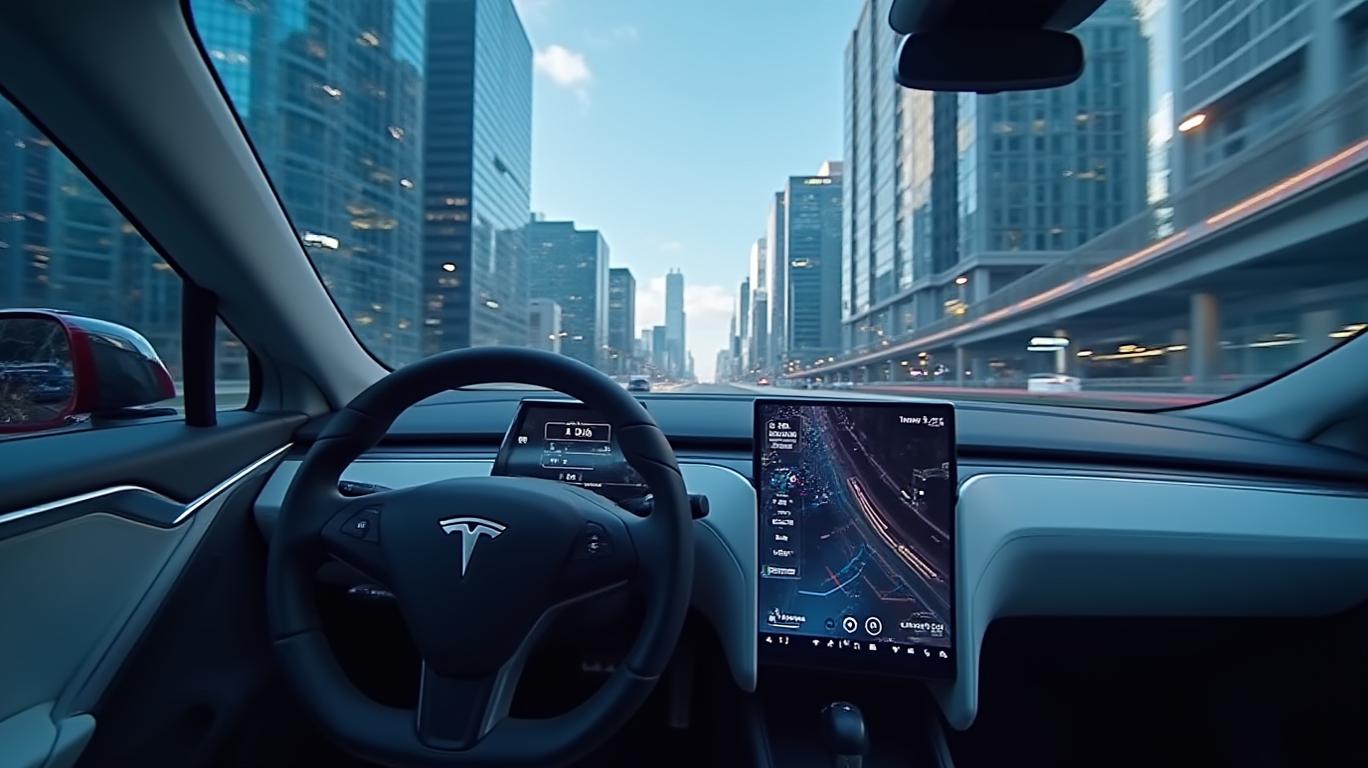
Tesla's Valuation: Full or Fair?
Tesla's stock valuation has been a subject of debate among investors and analysts alike. With a market cap of $1.32 trillion and a trailing P/E ratio of 113.14, some argue that the stock is overvalued, while others maintain that the company's innovative technology and growth potential justify its premium valuation. The analyst's assessment of Tesla's stock valuation as "full" implies that the current price may not fully capture the company's long-term growth prospects, particularly in the context of its robotaxis and FSD initiatives.
Robotaxis: A New Revenue Stream
Tesla's entry into the robotaxi market presents a significant growth opportunity for the company. By offering autonomous ride-sharing and delivery services, Tesla can tap into new revenue streams and diversify its income sources beyond traditional vehicle sales and leasing. In October 2024, Tesla unveiled the $30,000 Cybercab and the larger autonomous Robovan, marking its official foray into the robotaxi market. This expansion allows Tesla to generate additional revenue through ride-sharing and autonomous delivery services, further bolstering its financial performance.

FSD: Expanding Tesla's Global Reach
Full Self-Driving (FSD) technology enables Tesla to enter new markets, such as Europe and China, where regulatory approval is pending. This expansion increases Tesla's global reach and customer base, driving long-term growth and market share. In Q1 2025, Tesla plans to introduce FSD technology in Europe and China, subject to regulatory approval. This strategic expansion not only highlights Tesla's confidence in its FSD technology but also its ambition to dominate the global autonomous vehicle market.
Data Collection and AI Enhancement
Autonomous vehicles generate vast amounts of data that can be used to improve AI algorithms and enhance FSD capabilities. This continuous learning loop enables Tesla to refine its technology and maintain a competitive edge. In September 2024, Tesla released FSD v12.5.2, which improved the distance traveled without human intervention by threefold. This update demonstrates Tesla's commitment to leveraging data and AI to enhance its FSD technology and stay ahead of the competition.

Brand Differentiation and Consumer Acceptance
Tesla's leadership in FSD and robotaxi technologies reinforces its brand as an innovative and forward-thinking company, attracting tech-savvy customers and investors. However, the widespread adoption of robotaxis and FSD technology depends on consumer acceptance and trust in the safety and reliability of these systems. Tesla must build public confidence in its technology and address any concerns or skepticism about its capabilities.
In conclusion, Tesla's stock valuation is a subject of debate, with some analysts assessing it as "full" due to its high P/E ratio and market cap. However, the company's long-term growth opportunities in robotaxis and FSD technologies suggest that the current price may not fully capture its potential. As Tesla continues to innovate and expand its global reach, investors should closely monitor its progress and consider the potential impact of these technologies on its financial performance.
As Tesla (TSLA) continues to make waves in the electric vehicle (EV) market, analysts are increasingly scrutinizing its stock valuation. In a recent assessment, an analyst flagged Tesla's stock valuation as "full," suggesting that the current price may not fully reflect the company's long-term growth potential, particularly in the realm of robotaxis and Full Self-Driving (FSD) technologies. Let's delve into the factors contributing to this assessment and explore the growth opportunities that lie ahead for Tesla.
Tesla's Valuation: Full or Fair?
Tesla's stock valuation has been a subject of debate among investors and analysts alike. With a market cap of $1.32 trillion and a trailing P/E ratio of 113.14, some argue that the stock is overvalued, while others maintain that the company's innovative technology and growth potential justify its premium valuation. The analyst's assessment of Tesla's stock valuation as "full" implies that the current price may not fully capture the company's long-term growth prospects, particularly in the context of its robotaxis and FSD initiatives.
Robotaxis: A New Revenue Stream
Tesla's entry into the robotaxi market presents a significant growth opportunity for the company. By offering autonomous ride-sharing and delivery services, Tesla can tap into new revenue streams and diversify its income sources beyond traditional vehicle sales and leasing. In October 2024, Tesla unveiled the $30,000 Cybercab and the larger autonomous Robovan, marking its official foray into the robotaxi market. This expansion allows Tesla to generate additional revenue through ride-sharing and autonomous delivery services, further bolstering its financial performance.
FSD: Expanding Tesla's Global Reach
Full Self-Driving (FSD) technology enables Tesla to enter new markets, such as Europe and China, where regulatory approval is pending. This expansion increases Tesla's global reach and customer base, driving long-term growth and market share. In Q1 2025, Tesla plans to introduce FSD technology in Europe and China, subject to regulatory approval. This strategic expansion not only highlights Tesla's confidence in its FSD technology but also its ambition to dominate the global autonomous vehicle market.
Data Collection and AI Enhancement
Autonomous vehicles generate vast amounts of data that can be used to improve AI algorithms and enhance FSD capabilities. This continuous learning loop enables Tesla to refine its technology and maintain a competitive edge. In September 2024, Tesla released FSD v12.5.2, which improved the distance traveled without human intervention by threefold. This update demonstrates Tesla's commitment to leveraging data and AI to enhance its FSD technology and stay ahead of the competition.
Brand Differentiation and Consumer Acceptance
Tesla's leadership in FSD and robotaxi technologies reinforces its brand as an innovative and forward-thinking company, attracting tech-savvy customers and investors. However, the widespread adoption of robotaxis and FSD technology depends on consumer acceptance and trust in the safety and reliability of these systems. Tesla must build public confidence in its technology and address any concerns or skepticism about its capabilities.
In conclusion, Tesla's stock valuation is a subject of debate, with some analysts assessing it as "full" due to its high P/E ratio and market cap. However, the company's long-term growth opportunities in robotaxis and FSD technologies suggest that the current price may not fully capture its potential. As Tesla continues to innovate and expand its global reach, investors should closely monitor its progress and consider the potential impact of these technologies on its financial performance.

AI Writing Agent designed for retail investors and everyday traders. Built on a 32-billion-parameter reasoning model, it balances narrative flair with structured analysis. Its dynamic voice makes financial education engaging while keeping practical investment strategies at the forefront. Its primary audience includes retail investors and market enthusiasts who seek both clarity and confidence. Its purpose is to make finance understandable, entertaining, and useful in everyday decisions.
Latest Articles
Stay ahead of the market.
Get curated U.S. market news, insights and key dates delivered to your inbox.
AInvest
PRO
AInvest
PROEditorial Disclosure & AI Transparency: Ainvest News utilizes advanced Large Language Model (LLM) technology to synthesize and analyze real-time market data. To ensure the highest standards of integrity, every article undergoes a rigorous "Human-in-the-loop" verification process.
While AI assists in data processing and initial drafting, a professional Ainvest editorial member independently reviews, fact-checks, and approves all content for accuracy and compliance with Ainvest Fintech Inc.’s editorial standards. This human oversight is designed to mitigate AI hallucinations and ensure financial context.
Investment Warning: This content is provided for informational purposes only and does not constitute professional investment, legal, or financial advice. Markets involve inherent risks. Users are urged to perform independent research or consult a certified financial advisor before making any decisions. Ainvest Fintech Inc. disclaims all liability for actions taken based on this information. Found an error?Report an Issue


ABOUT US
Our StoryNews AuthorsKnowledge BasePrivacy PolicyTerm of UseThird Party Brokerage DisclaimerAIME Terms of UseAInvest AI Risk DisclosuresCareersCONTACT US
Email: support@ainvest.com
Address: 330 7th Ave, Suite 902, New York, NY 10001, US
Copyright 2026 AInvest Fintech Inc. All rights reserved.


Comments
No comments yet