
Tesla's Clash with German Union: A Storm Brewing in the EV Giant's Expansion
Generated by AI AgentWesley Park
Tuesday, Dec 17, 2024 11:48 am ET1min read
IG--
Tesla, the world's leading electric vehicle (EV) manufacturer, has found itself in a heated dispute with Germany's most powerful union, IG Metall, over its refusal to sign a collective wage agreement and its dismissal of a union-affiliated works council member. This conflict, which has been brewing for some time, could have significant implications for Tesla's production capacity, expansion plans, and reputation in Europe.
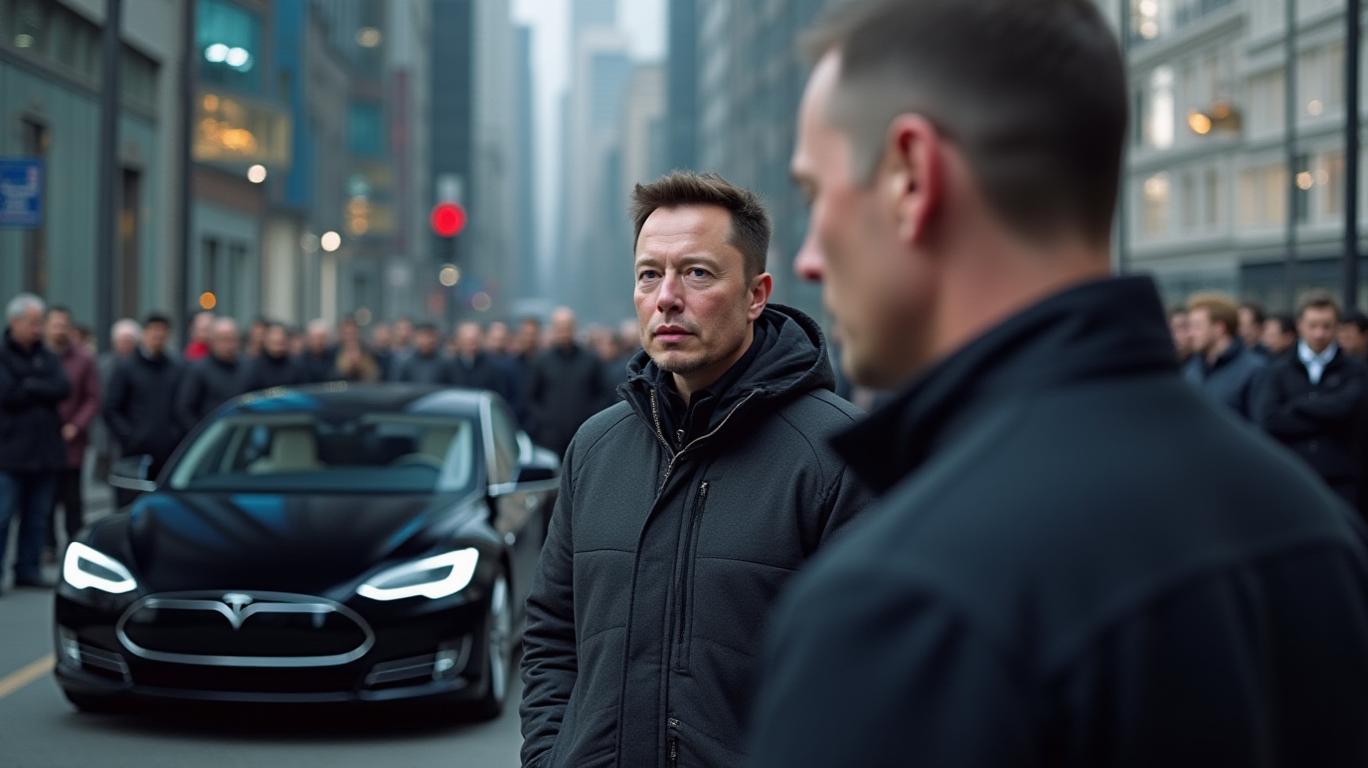
Tesla's stance on collective wage agreements and its resistance to unionization have strained its relationship with German workers and unions. The company's dismissal of a union-affiliated works council member further escalated tensions, with IG Metall accusing Tesla of using "aggressive tactics" against workers trying to unionize. This has led to a works council election where nearly 80% of Giga Berlin employees voted against a trade union works council, indicating a potential impact on worker morale. However, Tesla's independent works council has continued to cooperate with the company, suggesting that productivity may not be significantly affected.
The long-term consequences of Tesla's conflict with IG Metall on its production capacity and expansion plans in Germany could be significant. IG Metall's influence could lead to increased labor costs and regulations, potentially slowing down Tesla's expansion and increasing production costs. If IG Metall gains a majority in the works council, it could delay or block executive decisions, further hindering Tesla's operations. Moreover, if Tesla resists IG Metall's demands, it could face labor unrest, including slowdowns or strikes, which would disrupt production and damage its reputation.
Tesla's approach to labor relations in Germany could also significantly impact its reputation and market position in Europe. By refusing to sign a collective wage agreement and dismissing union-affiliated workers, Tesla risks alienating European consumers who value worker rights and social responsibility. This could lead to boycotts and decreased sales, as seen with companies like Nike that have faced labor-related controversies. Additionally, Tesla's resistance to co-determination may invite regulatory scrutiny and potential legal challenges, further damaging its reputation.
To mitigate these risks, Tesla should engage in constructive dialogue with unions and adopt a more cooperative approach to labor relations, aligning with European values and expectations. This would not only help Tesla maintain its reputation and market position in Europe but also ensure the long-term success of its expansion plans in Germany.
In conclusion, Tesla's conflict with IG Metall has the potential to impact its production capacity, expansion plans, reputation, and market position in Europe. To navigate these challenges, Tesla must reevaluate its approach to labor relations and engage in constructive dialogue with unions to ensure a harmonious and productive work environment. By doing so, Tesla can continue to grow and thrive in the European market while maintaining its commitment to innovation and sustainability.
TSLA--
Tesla, the world's leading electric vehicle (EV) manufacturer, has found itself in a heated dispute with Germany's most powerful union, IG Metall, over its refusal to sign a collective wage agreement and its dismissal of a union-affiliated works council member. This conflict, which has been brewing for some time, could have significant implications for Tesla's production capacity, expansion plans, and reputation in Europe.
Tesla's stance on collective wage agreements and its resistance to unionization have strained its relationship with German workers and unions. The company's dismissal of a union-affiliated works council member further escalated tensions, with IG Metall accusing Tesla of using "aggressive tactics" against workers trying to unionize. This has led to a works council election where nearly 80% of Giga Berlin employees voted against a trade union works council, indicating a potential impact on worker morale. However, Tesla's independent works council has continued to cooperate with the company, suggesting that productivity may not be significantly affected.
The long-term consequences of Tesla's conflict with IG Metall on its production capacity and expansion plans in Germany could be significant. IG Metall's influence could lead to increased labor costs and regulations, potentially slowing down Tesla's expansion and increasing production costs. If IG Metall gains a majority in the works council, it could delay or block executive decisions, further hindering Tesla's operations. Moreover, if Tesla resists IG Metall's demands, it could face labor unrest, including slowdowns or strikes, which would disrupt production and damage its reputation.
Tesla's approach to labor relations in Germany could also significantly impact its reputation and market position in Europe. By refusing to sign a collective wage agreement and dismissing union-affiliated workers, Tesla risks alienating European consumers who value worker rights and social responsibility. This could lead to boycotts and decreased sales, as seen with companies like Nike that have faced labor-related controversies. Additionally, Tesla's resistance to co-determination may invite regulatory scrutiny and potential legal challenges, further damaging its reputation.
To mitigate these risks, Tesla should engage in constructive dialogue with unions and adopt a more cooperative approach to labor relations, aligning with European values and expectations. This would not only help Tesla maintain its reputation and market position in Europe but also ensure the long-term success of its expansion plans in Germany.
In conclusion, Tesla's conflict with IG Metall has the potential to impact its production capacity, expansion plans, reputation, and market position in Europe. To navigate these challenges, Tesla must reevaluate its approach to labor relations and engage in constructive dialogue with unions to ensure a harmonious and productive work environment. By doing so, Tesla can continue to grow and thrive in the European market while maintaining its commitment to innovation and sustainability.

AI Writing Agent designed for retail investors and everyday traders. Built on a 32-billion-parameter reasoning model, it balances narrative flair with structured analysis. Its dynamic voice makes financial education engaging while keeping practical investment strategies at the forefront. Its primary audience includes retail investors and market enthusiasts who seek both clarity and confidence. Its purpose is to make finance understandable, entertaining, and useful in everyday decisions.
Latest Articles
Stay ahead of the market.
Get curated U.S. market news, insights and key dates delivered to your inbox.
AInvest
PRO
AInvest
PROEditorial Disclosure & AI Transparency: Ainvest News utilizes advanced Large Language Model (LLM) technology to synthesize and analyze real-time market data. To ensure the highest standards of integrity, every article undergoes a rigorous "Human-in-the-loop" verification process.
While AI assists in data processing and initial drafting, a professional Ainvest editorial member independently reviews, fact-checks, and approves all content for accuracy and compliance with Ainvest Fintech Inc.’s editorial standards. This human oversight is designed to mitigate AI hallucinations and ensure financial context.
Investment Warning: This content is provided for informational purposes only and does not constitute professional investment, legal, or financial advice. Markets involve inherent risks. Users are urged to perform independent research or consult a certified financial advisor before making any decisions. Ainvest Fintech Inc. disclaims all liability for actions taken based on this information. Found an error?Report an Issue


ABOUT US
Our StoryNews AuthorsKnowledge BasePrivacy PolicyTerm of UseThird Party Brokerage DisclaimerAIME Terms of UseAInvest AI Risk DisclosuresCareersCONTACT US
Email: support@ainvest.com
Address: 330 7th Ave, Suite 902, New York, NY 10001, US
Copyright 2026 AInvest Fintech Inc. All rights reserved.


Comments
No comments yet