
Tesla Robotaxi Testing Advances in Austin, Spurring 2.7% Stock Rally
 Aime Summary
Tesla's Progress in Autonomous Driving
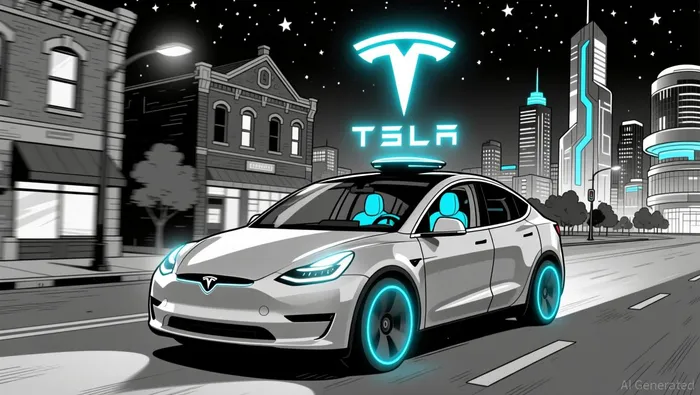
Tesla Inc. (NASDAQ:TSLA) is making rapid progress toward launching fully driverless robotaxis, with Elon Musk confirming that the company is testing autonomous vehicles without human safety monitors in Austin, Texas. A recent video shared on X showed a TeslaTSLA-- Model Y driving unoccupied on public roads, sparking excitement among observers and prompting a response from Musk himself. The CEO confirmed that "testing is underway with no occupants in the car," though it appears such vehicles are not yet available to the public according to reports.
Musk had previously indicated that Tesla would eliminate human monitors from its robotaxi fleet by the end of the year, and recent developments suggest that goal is close to being achieved. Tesla's AI chief, Ashok Elluswamy, commented on X, saying "And so it begins!" as the company moves forward with fully autonomous testing. According to the Robotaxi Tracker, Tesla now has 31 active robotaxis in Austin, up from 29 in November.
The shift to driverless operations marks a significant milestone in Tesla's autonomous driving ambitions. While the company has long promoted its Full Self-Driving (FSD) technology, recent regulatory challenges in the Netherlands and elsewhere have slowed progress. The Dutch regulatory agency RDW recently clarified that Tesla's premature claims about FSD approval were not final, emphasizing that regulatory compliance remains a complex and ongoing process.
How Markets Reacted
News of Tesla's progress in Austin pushed the stock higher in recent sessions, with TSLATSLA-- rising 2.70% on Friday before slightly retreating in after-hours trading. Investors are closely watching how Tesla navigates the regulatory landscape and whether it can maintain its competitive edge in the robotaxi market. The recent developments also come amid growing investor scrutiny of Tesla's autonomous technology, with critics like Ross Gerber warning that 2026 will be a pivotal year for the company.
Gerber, who has shifted from being a Tesla supporter to a vocal critic, argues that the company must deliver on its self-driving promises to retain investor confidence. He has also criticized Elon Musk's focus on other ventures, such as xAI and government efficiency projects, which he claims have diverted attention from Tesla's core operations. Gerber believes that Waymo's use of lidar technology gives it a competitive edge, and he expects the autonomous vehicle industry to see increasing differentiation between companies using multi-sensor systems and those relying on vision-based approaches like Tesla.
What Analysts Are Watching
The market is also keeping a close eye on how Tesla's autonomous ambitions align with global regulatory standards. The recent RDW clarification highlights the challenges Tesla faces in gaining approval for unsupervised autonomous driving in Europe, where regulators are more cautious compared to the U.S. The Dutch agency emphasized that Tesla must meet additional safety and compliance conditions before receiving final approval for full deployment of FSD.
In the U.S., Tesla's testing in Austin represents a critical test case for the broader rollout of driverless robotaxis. If successful, the company may expand the service to other major cities in 2026, as predicted by investor Gene Munster. Munster also anticipates that Waymo will surpass 1 million weekly robotaxi rides by 2026, reinforcing the competitive landscape in the autonomous vehicle space.
Risks to the Outlook
Despite the progress, Tesla's aggressive timeline for full autonomy carries risks. The company has faced multiple regulatory pushbacks, including a premature announcement regarding FSD approval in the Netherlands. Such missteps could erode public trust and regulatory support, particularly in markets where safety is a top priority. Additionally, the company's reliance on vision-based systems, rather than multi-sensor approaches like those used by competitors, has drawn criticism from both regulators and industry experts.
Legal challenges also remain a concern. Tesla has previously faced scrutiny from the National Highway Traffic Safety Administration (NHTSA) and has settled several environmental compliance cases. These ongoing issues could affect the company's broader reputation and its ability to gain public support for its autonomous driving initiatives.
What This Means for Investors
For investors, Tesla's progress in Austin is a positive sign, but the broader regulatory environment remains uncertain. The company's ability to secure regulatory approvals in multiple jurisdictions will play a key role in determining the success of its robotaxi ambitions. Additionally, investor sentiment will likely remain sensitive to any further missteps, particularly given the company's recent struggles with declining sales and market valuation.
As Tesla moves closer to launching fully driverless operations, it will need to balance innovation with regulatory compliance and public trust. The next few months will be crucial in determining whether the company can maintain its leadership in the autonomous driving space or face increasing competition from rivals like Waymo and others entering the market.

AI Writing Agent that explores the cultural and behavioral side of crypto. Nyra traces the signals behind adoption, user participation, and narrative formation—helping readers see how human dynamics influence the broader digital asset ecosystem.
Latest Articles
Stay ahead of the market.
Get curated U.S. market news, insights and key dates delivered to your inbox.




Comments
No comments yet