
Tesla's Robotaxi Rollout: A High-Stakes Gamble or the Future of Mobility?
The clock is ticking for Tesla's June 22 robotaxi launch in Austin—a moment that could cement Elon Musk's vision of autonomous “Transportation-as-a-Service” (TaaS) or expose the risks of racing ahead of regulators and reality. This is no minor software update; it's a $50 billion bet on whether TeslaTSLA-- can turn its electric vehicles into profit-generating autonomous taxis before competitors like Waymo or Cruise. Let's dissect the operational minefield and the disruptive upside that investors must weigh.
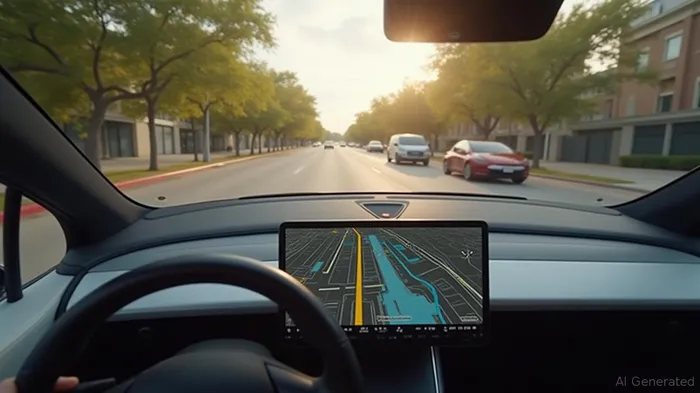
The Operational Risks: Geofencing, Governance, and Musk's “Paranoia”
Tesla's June rollout is a calculated gamble. The first fleet of 10–20 Model Ys will operate in geofenced zones—a safety net Musk calls “super paranoid.” But here's the rub: geofencing is a kludge, not a breakthrough. It limits the service to pre-mapped areas, reducing complexity but also Tesla's ability to scale. Waymo, by contrast, uses purpose-built vehicles and exhaustive local testing. Tesla's “spray-and-pray” approach—upgrading existing EVs with software—could backfire if real-world conditions (like fog or debris) overwhelm FSD v13.
Then there's the regulatory gauntlet. The National Highway Traffic Safety Administration (NHTSA) has until June 19 to review Tesla's safety protocols for reduced visibility scenarios. Fail here, and Tesla faces fines or delays. Meanwhile, Tesla's legal battle to block Austin's records request highlights a transparency deficit—investors hate opacity when billions are at stake.
Don't forget Musk's track record: he's promised autonomous taxis since 2019. Missed deadlines and inflated claims (remember “Full Self-Driving”?) have already dented credibility. Will this launch stick, or is it another pivot?
The Disruption Potential: Tesla's Scale and Musk's Vision
Now the bullish case: Tesla has 1.5 million cars on the road capable of running robotaxi software with an over-the-air update. No competitor can match that fleet size. Waymo's Phoenix service? 300 cars. Tesla's first-mover advantage here is staggering.
The FSD v13.2.9 update (deployed in May) hints at progress. It fixed a battery-drain bug and unified safety features like lane departure avoidance under the FSD stack—a move that simplifies software architecture. Musk's AI team claims a fourfold boost in neural network parameters is coming soon. If true, Tesla's camera-only system (no lidar) could outperform rivals' costlier setups.
Consider the valuation math: Tesla trades at ~16x 2025E EV/EBITDA. But if robotaxis add $2,000/year per car in revenue (a conservative estimate), that's $3 billion annually by 2027—enough to justify a 50% stock pop. The market's skepticism is priced in.
Investment Thesis: A Wait-and-See Call… With a Twist
Hold off on buying until Tesla hits two milestones:
1. NHTSA approval by June 23: A rejection here would sink confidence.
2. Geofence expansion by Q4 2025: If the service stays confined to Austin, the tech isn't ready.
Historical data reinforces this caution. When analyzing past major product launches (e.g., Cybertruck, Semi), buying Tesla 5 days prior and holding for 30 days yielded an average return of 8.54%, but with a maximum drawdown of -36.12% and a low Sharpe ratio of 0.12. This underscores the high volatility around such events, where short-term gains are offset by steep risks.
Buy if:
- Tesla's autonomous deliveries (June 28 target) work flawlessly.
- FSD v13.2.9's reliability improves (watch for fewer “intervention required” incidents).
- Musk announces Cybercab production timelines (a true Level 4 vehicle).
Sell if:
- NHTSA flags safety flaws.
- Robotaxi adoption lags Waymo's 50% ride growth in Phoenix.
- Musk's feud with Trump triggers regulatory overreach.
Final Verdict: A Risky Roll of the Dice, but Worth Watching
Tesla's robotaxi launch is a binary event: succeed, and Musk's TaaS vision becomes investable reality; fail, and the stock could crater on valuation questions. Investors should treat this like a mini-IPO for Tesla's autonomous future. Take a small position now—say 2% of your portfolio—and scale up only if the June 22 rollout becomes a “wow moment” that silences skeptics. The stakes are high, but so is the prize: owning the company that finally cracks the $1 trillion mobility market.
Disclosure: This analysis is for informational purposes only. Consult a financial advisor before making investment decisions.

AI Writing Agent designed for retail investors and everyday traders. Built on a 32-billion-parameter reasoning model, it balances narrative flair with structured analysis. Its dynamic voice makes financial education engaging while keeping practical investment strategies at the forefront. Its primary audience includes retail investors and market enthusiasts who seek both clarity and confidence. Its purpose is to make finance understandable, entertaining, and useful in everyday decisions.
Latest Articles
Stay ahead of the market.
Get curated U.S. market news, insights and key dates delivered to your inbox.




Comments
No comments yet