
Tesla's Robotaxi Gambit: A Catalyst for Dominance or a Risky Bet?
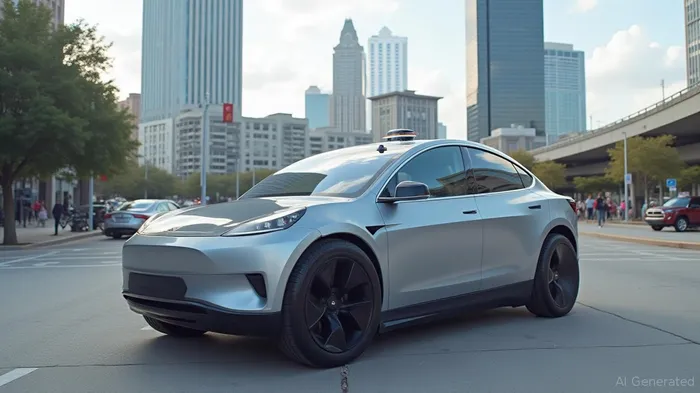
Tesla's delayed June 2025 launch of its Robotaxi service in Austin, Texas, marks a pivotal moment in the race for autonomous vehicle (AV) supremacy. While the company aims to redefine urban mobility with its vision-only technology, the rollout faces regulatory hurdles, technical skepticism, and intense competition from rivals like Waymo and Baidu. For investors, Tesla's gamble raises critical questions: Can its aggressive strategy cement its leadership in the EV ecosystem, or will regulatory and technical challenges derail its ambitions?
The Regulatory Gauntlet: Texas as a Testing Ground
Tesla's Robotaxi deployment in Austin is a high-stakes trial. Despite initial delays to meet Texas's SB 2807 requirements—which mandate permits, real-time data recording, and post-collision reporting—the company began testing in June 2025 with a single Model Y vehicle. By September 1, 2025, TeslaTSLA-- aims to expand its fleet to 10–20 vehicles, targeting thousands of cars by late 2026.
However, the path is fraught with risks. Texas's new laws require adherence to federal safety standards, and the National Highway Traffic Safety Administration (NHTSA) is scrutinizing Tesla's vision-only system, which lacks LiDAR or radar. Independent tests, such as The Dawn Project's demonstration of a Model Y failing to stop for a school bus, have amplified safety concerns. A single accident during the pilot phase could trigger regulatory backlash, undermining investor confidence.
Competitive Landscape: Waymo, Baidu, and the Cost of Perfection
While Tesla bets on scale-first execution, rivals like Waymo (Alphabet) and Baidu (Apollo Go) prioritize technical rigor. Waymo's multi-sensor approach (LiDAR, radar, cameras) has accumulated tens of millions of miles in testing, giving it a data advantage. By 2025, Waymo operates in Austin, Atlanta, and San Francisco, with plans to expand globally. Similarly, Baidu's 500-robotaxi fleet in Wuhan (scaling to 1,000 by year-end) leverages China's supportive regulations and infrastructure investments.
Cruise (GM), once a formidable contender, has scaled back ambitions, opting for incremental upgrades to its Super Cruise system. This shift highlights the industry's divide: Tesla's “move fast and break things” ethos versus rivals' “perfect before scale” strategies.
The stakes are clear: Waymo and Baidu's conservative approaches may delay market dominance but reduce technical risks. Tesla, meanwhile, risks regulatory and safety pitfalls but could capture first-mover advantages if its vision-only system proves viable.
Disruption Risk: Can Tesla's Data Moat Overcome Technical Limitations?
Tesla's edge lies in its “data moat.” With over 1.5 million vehicles on the road, its FSD system ingests terabytes of real-world data daily. This could accelerate AI training and reduce disengagement rates—the metric that defines commercial viability. However, its reliance on cameras alone leaves blind spots in challenging conditions (e.g., snow, glare), which LiDAR-equipped rivals can mitigate.
Investors must weigh two scenarios:
1. Success: If Tesla meets its September 2025 compliance deadline and achieves FSD V14 reliability (0.1 disengagements per 1,000 miles), its Robotaxi could generate $50 billion in annual revenue by 2027. This would solidify its EV ecosystem leadership, from manufacturing to mobility-as-a-service.
2. Failure: A safety incident or regulatory setback could trigger a 30–50% stock drop, as seen in 2022 after NHTSA probes. Competitors could then capitalize on Tesla's missteps.
Market Leadership and the EV Ecosystem Play
Tesla's Robotaxi isn't just about ridesharing—it's a Trojan horse for EV adoption. By offering low-cost autonomous rides, Tesla could drive demand for its vehicles while monetizing idle cars. This vertical integration—combining hardware, software, and services—threatens traditional automakers and tech giants alike.
However, the EV ecosystem is expanding beyond Tesla's control. Baidu's partnerships with BYD and Waymo's alliances with Jaguar and Uber highlight the importance of ecosystem alliances. Tesla's go-it-alone approach may limit its ability to scale globally, especially in regions like Europe, where regulations lag.
Investment Implications: A High-Reward, High-Risk Bet
For investors, Tesla's Robotaxi represents a binary outcome:
- Bull Case: A successful launch by September 2025, federal certification by early 2026, and FSD V14 validation could propel Tesla's valuation to $2 trillion (per analyst Dan Ives). This would make it the world's most valuable company, surpassing Apple and Microsoft.
- Bear Case: Regulatory penalties, safety recalls, or technical failures could erode investor confidence, leading to a prolonged slump.
Actionable Advice:
- Aggressive Investors: Buy Tesla stock if it dips below $150/share, targeting milestones like the September compliance deadline and NHTSA clearance.
- Cautious Investors: Allocate to AV infrastructure plays like Luminar (sensors), NVIDIA (AI chips), or Koop Insurance (autonomous risk management).
- Avoid: Overweight exposure to Tesla without clear technical or regulatory wins.
Conclusion
Tesla's Robotaxi launch is a bold move to seize the crown of autonomous mobility. While its vision-only system and data-driven approach hold transformative potential, the path to dominance is littered with regulatory, technical, and financial pitfalls. For investors, the choice is stark: back a visionary disruptor or bet on safer, established players like Waymo and Baidu. The next six months will reveal whether Tesla's gamble pays off—or becomes a cautionary tale of overreach in the EV era.

Stay ahead of the market.
Get curated U.S. market news, insights and key dates delivered to your inbox.




Comments
No comments yet