
Tesla's Robotaxi Ambitions Clash with Shrinking Margins and AI Costs


 Aime Summary
Tesla (TSLA) shares fell 2.6% to $398.38 on November 19, 2025, despite securing a critical transportation network company permit in Arizona to operate its robotaxi service. The stock's decline followed a third-quarter earnings report, marked by compressed margins and strategic shifts, raising questions about whether the drop presents a "buy-the-dip" opportunity for investors.
Tesla reported record third-quarter revenue of $28.1 billion and 497,000 vehicle deliveries, driven by pent-up demand for the $7,500 federal EV tax credit before its expiration. However, net income tumbled 37% to $1.4 billion, with operating margins shrinking from 11% to 6% year-over-year. Analysts attributed the margin pressure to aggressive AI investments, lower vehicle pricing, and increased incentives to maintain market share. The company's profitability challenges were exacerbated by its focus on developing Full Self-Driving software and robotics, which require significant capital expenditures.
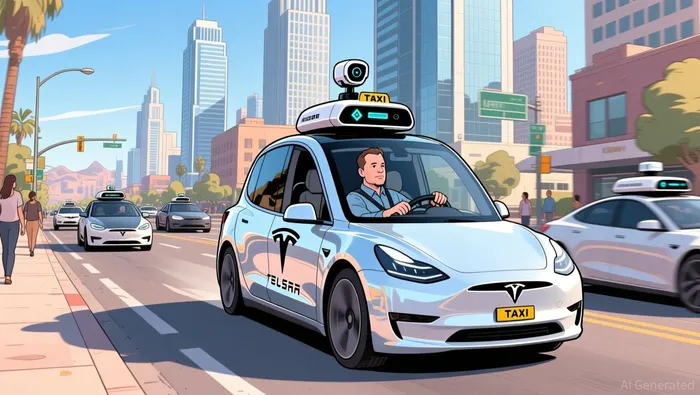
Tesla's Arizona permit allows it to operate ride-hailing services, though safety drivers must remain in vehicles for now. The move positions TeslaTSLA-- to compete directly with Alphabet's Waymo, which has already expanded its autonomous fleet to Phoenix, Miami, Dallas, and other U.S. cities. Waymo reported 10 million driverless trips served in 2025 and 400 autonomous vehicles in Phoenix, while Tesla aims to launch robotaxis in eight to ten metro areas by year-end. Elon Musk, however, dismissed Waymo's fleet size as "rookie numbers", though Tesla's robotaxi service remains unproven at scale compared to rivals.
Tesla is accelerating its shift away from Chinese components for U.S.-produced vehicles, a move expected to benefit Korean suppliers and reduce reliance on China. The company has already replaced Chinese-made lithium iron phosphate (LFP) batteries in U.S. models and plans to fully transition within one to two years. This aligns with broader industry trends, as automakers like GM also seek to localize supply chains amid U.S.-China tensions. Meanwhile, Tesla's partnership with Australian miner Syrah Resources faces delays, with deadlines extended to January 2026 for resolving an alleged default on graphite supply agreements.
Elon Musk's AI venture, xAIXAI--, is in advanced talks to raise $15 billion at a $230 billion valuation, nearly doubling its March 2025 valuation. While Tesla shareholders remain divided on whether the company should invest in xAI, analysts highlight potential synergies in AI infrastructure and compute resources. xAI's Colossus data center in Memphis, funded in part by SpaceX, underscores Musk's push to vertically integrate AI capabilities across Tesla, SpaceX, and other ventures. However, Tesla's board has yet to approve the investment, with Chair Robyn Denholm cautioning against overextending the company's balance sheet.
Despite the recent pullback, Tesla trades at a forward P/E of 179, with Stifel analysts upgrading their price target to $508 from $483. The firm cited progress in Full Self-Driving and robotaxi momentum as key value drivers. Technical indicators suggest support near $380-390, though the stock remains 12% above its 50-day moving average according to market analysis. Meanwhile, competitors like XPeng are gaining traction, with Daiwa Securities upgrading its rating to Buy on improved margins and robotaxi ambitions according to market reports.

Stay ahead of the market.
Get curated U.S. market news, insights and key dates delivered to your inbox.
AInvest
PRO
AInvest
PRO



Comments
No comments yet