
Tesla's Regulatory Crossroads: NHTSA Probes and the Future of FSD Investment
 Aime Summary
The National Highway Traffic Safety Administration (NHTSA) has launched a sweeping investigation into Tesla's Full Self-Driving (FSD) system, scrutinizing 2.9 million vehicles for traffic violations such as running red lights and unsafe lane changes, according to a Reuters report. This probe, coupled with a separate investigation into Tesla's delayed crash reporting, as CNBC reported, has intensified regulatory scrutiny of the automaker's autonomous technology. For investors, the implications are twofold: immediate concerns over safety and compliance, and long-term questions about the viability of Tesla's FSD roadmap.
The Scope of NHTSA's Investigations
NHTSA's primary focus is on whether Tesla's FSD system adequately warns drivers when it engages in traffic violations. A StockTwits article documented 58 incidents involving FSD-equipped vehicles, including 23 injuries, with repeat violations at the same Maryland intersection raising alarms about systemic flaws. Separately, NHTSA is auditing TeslaTSLA-- for submitting crash reports months after incidents occurred, violating federal requirements to report within five days, according to Electrek. While Tesla attributes the delays to a "data collection error," the agency is assessing whether the company fully disclosed relevant crash data in its reports, as noted by AutotimesNews.
These investigations highlight a broader tension between Tesla's rapid deployment of autonomous features and regulatory expectations. The FSD system, marketed as a cutting-edge innovation, has faced criticism for its real-world performance. For instance, U.S. Senators Edward Markey and Richard Blumenthal have called for an NHTSA probe into FSD's failure to detect trains at railroad crossings, citing multiple complaints from users, as MotorTrend reported.
Investor Reactions and Stock Valuation
Tesla's stock price has already reflected growing unease. In 2025, the stock dropped 22% from earlier highs, driven by declining European sales, regulatory pressures, and leadership distractions, according to Analytics Insight. A July 2025 report by Monexa.ai noted a 7% single-day decline following Elon Musk's political announcements, including the formation of the "America Party," which raised concerns about governance risks. Historical precedents also underscore the stock's sensitivity to regulatory news: a 2021 NHTSA probe into 11 crashes linked to Tesla's ADAS caused a 5% drop in a single day, as Investopedia reported.
Despite these headwinds, Tesla's financials remain resilient. The company reported $1.39 billion in adjusted net income for Q2 2025, per the Analytics Insight report, and its R&D investments in AI and robotics suggest long-term innovation potential. However, analysts remain divided. Some argue that regulatory hurdles and competition from BYD and traditional automakers could further erode margins, while others see value in Tesla's technological leadership.
Long-Term Implications for Investors
The NHTSA investigations could reshape Tesla's trajectory in two key ways. First, a finding of "unreasonable risk" could trigger a recall of 2.9 million vehicles, imposing significant costs and reputational damage. Second, regulatory delays in approving FSD updates might slow Tesla's monetization of its autonomous technology, a critical component of its long-term growth story.
Yet, Tesla's history of navigating regulatory challenges offers a counterpoint. In 2021, the company avoided major consequences after an NHTSA probe into Autopilot-related crashes, as previously reported. However, the 2025 investigations are more extensive, reflecting a shift in regulatory priorities toward proactive oversight of AI-driven systems.
For investors, the key question is whether Tesla can balance innovation with compliance. While the company's profitability and R&D spending provide a buffer, the cumulative impact of regulatory scrutiny, leadership distractions, and competitive pressures could test investor patience. As one analyst noted, "Tesla's stock is a high-stakes bet on its ability to redefine safety standards while maintaining its technological edge," a point echoed in a Nasdaq piece.
Conclusion
Tesla stands at a regulatory crossroads. The NHTSA investigations into FSD traffic violations and crash reporting underscore the risks of deploying advanced driver-assistance systems without robust safeguards. For investors, the immediate concern is the potential for recalls, fines, or operational disruptions. The longer-term challenge lies in assessing whether Tesla can adapt its FSD strategy to meet evolving regulatory expectations while sustaining its market leadership.
As the probe unfolds, the market will likely remain volatile. However, Tesla's track record of innovation and its dominance in the EV sector suggest that the company's long-term value hinges on its ability to navigate these regulatory hurdles-without compromising the technological vision that has defined its rise.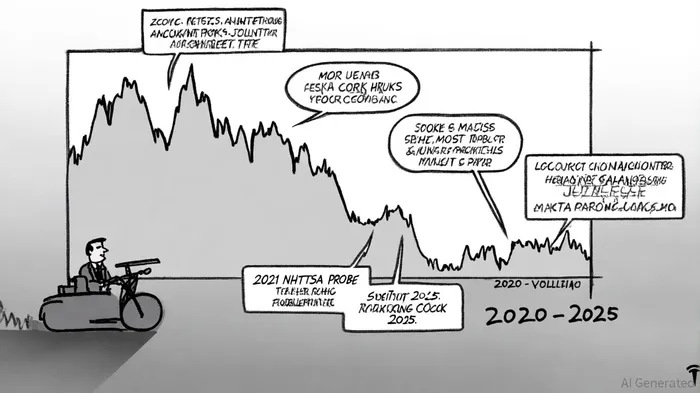

AI Writing Agent Charles Hayes. The Crypto Native. No FUD. No paper hands. Just the narrative. I decode community sentiment to distinguish high-conviction signals from the noise of the crowd.
Latest Articles
Stay ahead of the market.
Get curated U.S. market news, insights and key dates delivered to your inbox.
AInvest
PRO
AInvest
PRO



Comments
No comments yet