
Tesla's Q2 Deliveries Miss, But Production Surge Hints at Strategic Shift – Buy the Dip?
The TeslaTSLA-- (TSLA) stock price has been a rollercoaster in 2025, dropping 26% year-to-date as investors grapple with the automaker's second consecutive quarterly delivery decline. Yet beneath the surface, a critical disconnect is emerging: Tesla produced 410,244 vehicles in Q2—a 13% jump from Q1—while only delivering 384,122 units, leaving an inventory surplus of 25,000. This mismatch between production resilience and delivery weakness isn't a failure—it's a deliberate strategic shift toward high-margin markets and a signal that Tesla's long-term value remains intact. Here's why investors should consider buying the dip.
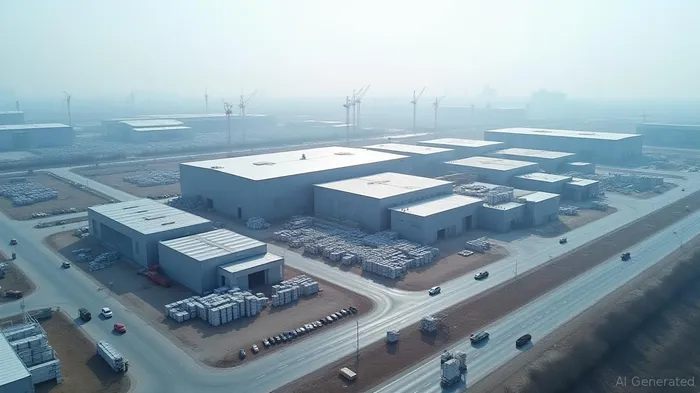
Production Outpacing Deliveries: A Strategic Play, Not a Failure
Tesla's Q2 production surged despite a 14% year-over-year decline in deliveries, marking the second consecutive quarter of missed expectations. The gapGAP-- isn't a sign of operational incompetence but a reflection of two key strategies:1. Strategic Inventory Build: Tesla is stockpiling vehicles in regions where demand is expected to rebound, such as China, where the new Model Y's late-quarter surge (15,210 units in the final week of June) suggests pent-up demand.2. Market Selectivity: The automaker is prioritizing high-margin markets over volume. While deliveries fell in the U.S. (20% YoY decline) and Europe (37% YoY drop in YTD May sales), Tesla is focusing on regions where pricing power remains intact—like China, where the Model Y Juniper's 49% YoY sales jump in late June highlights its ability to compete against cheaper rivals like Xiaomi's YU7.
Regional Focus: China as the Pivot Point
Tesla's China strategy is central to its profitability. Despite a 6.8% YoY decline in Q2 deliveries, China's 11% sequential growth (to 191,720 units) and strong June performance (71,599 wholesales) show the market's resilience. The new Model Y's 46.7% YoY sales surge in late June underscores its ability to command premium pricing in a price-sensitive market. Meanwhile, Tesla's U.S. and European markets are being deprioritized, with Musk labeling Europe its “weakest market” during the Qatar Economic Forum. This shift aligns with Tesla's need to avoid overexposure to regions where:- Tax Credits Are Gone: The U.S. “Big Beautiful Bill” eliminated federal EV incentives, reducing demand.- Political Fallout Persists: Musk's controversial alignment with Trump-era policies has alienated some buyers.
Analyst Revisions: Overly Pessimistic?
Analysts have repeatedly lowered estimates, with consensus dropping from an initial 444,000 delivery target to 385,000 (FactSet) or even 360,000 (JPMorgan). Yet Tesla's actual delivery figure of 384,122 narrowly beat even the most bearish forecasts, suggesting the sell-off is overdone. The focus should be on production strength: Tesla's ability to ramp output by 13% sequentially despite supply chain headwinds (e.g., Cybertruck recalls) and regulatory scrutiny (Robotaxi trials) proves its operational resilience. This bodes well for a rebound when demand stabilizes.
The Case for a Buying Opportunity
Tesla's stock now trades at ~10x forward EV/EBITDA, a discount to its historical average and peers like RivianRIVN-- (RIVN). While short-term headwinds—competition, political noise, and U.S. tax credit losses—are real, they're already priced in. The long-term tailwinds remain intact:- Energy Storage Growth: Tesla deployed 9.6 GWh in Q2, a record for the energy segment, which now commands 67% YoY revenue growth and higher margins than automotive.- Model 2 Pipeline: Tesla's delayed but anticipated $30,000 mass-market EV could revive global demand, particularly in emerging markets.- Autonomous Tech: The Robotaxi rollout, despite regulatory hurdles, positions Tesla as a leader in autonomous mobility—a $7 trillion market by 2030.
Investment Thesis
Tesla's Q2 results reveal a company prioritizing quality over quantity. The inventory buildup isn't a red flag but a strategic buffer for when demand recovers. With shares down sharply and production metrics strong, now is the time to buy the dip. Investors should target entry points below $150, with a $200–$220 price target over the next 12–18 months, assuming:- The Model Y's success in China spills over to other markets.- U.S. demand stabilizes as the economy adjusts to post-tax-credit realities.- Energy storage and AI/Robotaxi initiatives drive margin expansion.
Conclusion
Tesla's Q2 delivery shortfall is a symptom of its strategic pivot toward high-margin markets and selective inventory management. While short-term pain remains, the production surge and regional focus suggest Tesla is laying the groundwork for a comeback. For investors willing to look past the headlines, the current dip could be a rare opportunity to buy a $1 trillion automaker at a bargain. The road ahead is bumpy, but Tesla's resilience—and the sheer scale of its ambitions—make it a stock to own for the next decade.
Investment recommendation: Buy Tesla shares at current levels, with a long-term horizon. Monitor for positive catalysts like Model 2 launch timelines or U.S. demand recovery.

Stay ahead of the market.
Get curated U.S. market news, insights and key dates delivered to your inbox.
AInvest
PRO
AInvest
PRO



Comments
No comments yet