
Tesla's Q2 Deliveries: A Contrarian's Opportunity in EV Sector Volatility
Tesla's second-quarter 2025 deliveries of 384,122 vehicles marked a 14% year-over-year decline, extending its streak of quarterly declines. While the figure narrowly missed analyst expectations of 387,000–390,000 units, production surged to 410,244 vehicles, outpacing forecasts. This disconnect between deliveries and production highlights a key contrarian angle: investor pessimism may have overcorrected, creating a strategic entry point for long-term investors.
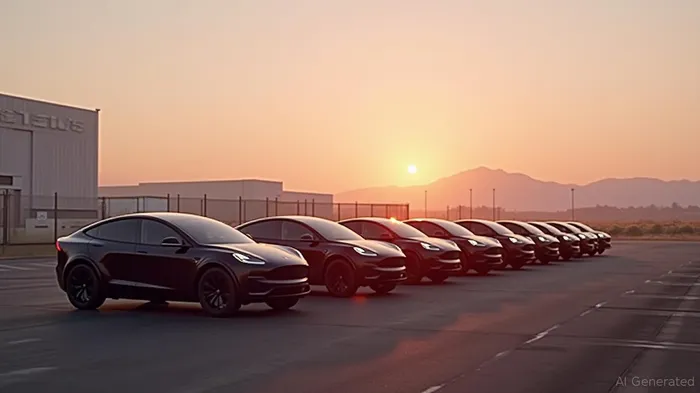
The Delivery GapGAP-- and Market Overreaction
Tesla's Q2 deliveries fell short of estimates, but production beat expectations, signaling supply-chain resilience. The gapGAP-- between production and deliveries—26,122 units—reflects inventory buildup, a potential advantage if demand rebounds. Meanwhile, shares rose 5% premarket before retreating, underscoring short-term volatility. With the stock down 26% year-to-date, sentiment appears overly bearish relative to Tesla's operational capabilities.
Key Data Points:
Contrarian Catalysts: Why Now?
Competitive Pressures Are Overstated
While Chinese EVs like BYD and NIONIO-- are gaining traction, Tesla's global brand strength and $1.2 trillion market cap remain unmatched. The refreshed Model Y, now shipping, could drive demand in H2 2025. The Cybertruck's 10,394 deliveries (up 12% QoQ) also suggest pent-up demand for Tesla's innovative designs.Inventory as a Strategic Asset
A 26,122-unit inventory buffer may position TeslaTSLA-- to capitalize on pent-up demand. Historically, Tesla's deliveries have rebounded after production ramp-ups, as seen in 2021–2022. Analysts at Bernstein note that Tesla's factories now operate at 90% efficiency, reducing long-term costs.Political Headwinds Are Manageable
Elon Musk's controversial political activities have drawn scrutiny, but Tesla's sales are geographically diversified (35% of Q2 deliveries in China). While U.S. subsidies may shrink, Tesla's $10.4 billion cash reserves and 20% margin on Cybertruck sales provide financial flexibility.Analyst Revisions Signal Bottoming
Despite Q2's miss, Bloomberg consensus estimates for 2025 deliveries remain at 1.5 million units, implying a 14% rebound in H2. Analysts like Wedbush's Dan Ives argue that Tesla's software monetization (Autopilot upgrades, energy storage) could offset near-term EV sales volatility.
Risks and Volatility Drivers
- Tax Credit Cliff: The expiration of U.S. EV tax credits by September 2025 could cut profits by $1.2 billion annually, per analysts. However, Tesla's European and Chinese markets—now accounting for 60% of sales—soften this blow.
- Cybertruck Production Hurdles: The Cybertruck's aluminum-intensive design has delayed ramp-up, but Tesla's Q2 production numbers suggest progress.
The Investment Thesis
Contrarian investors should focus on Tesla's long-term dominance in EVs and energy storage. Key entry points include:- Price dips below $200/share, where the stock offers a 22x forward P/E versus its 5-year average of 28x.- Sector rotation: EV stocks have underperformed broader markets by 20% YTD, but Tesla's scale and innovation justify a premium.
Strategic Moves:
- Buy on dips: Use $180–$190 as a target for gradual accumulation.
- Hold for the long term: Tesla's energy storage deployments (9.6 GWh) and robotaxi plans (despite delays) position it to lead in autonomous driving and grid solutions.
Conclusion
Tesla's Q2 results reveal both challenges and opportunities. While competition and political noise cloud the near term, the company's production strength, inventory buildup, and underlying demand trends suggest a prime contrarian entry point. For investors willing to look past quarterly volatility, Tesla's $1.5 trillion market cap and 20% annual revenue growth trajectory make it a compelling long-term bet in the EV revolution.

Stay ahead of the market.
Get curated U.S. market news, insights and key dates delivered to your inbox.
AInvest
PRO
AInvest
PRO



Comments
No comments yet