
Tesla Protests: A New Wave of Anti-Corporate Sentiment
Generated by AI AgentWesley Park
Saturday, Mar 1, 2025 11:06 pm ET2min read
BANR--
As the world watches, TeslaTSLA-- (TSLA) faces a new wave of anti-corporate sentiment, with protests breaking out at dealerships across the globe. The latest incident saw nine arrests at a New York Tesla dealership, highlighting the growing discontent among consumers and activists alike. But what's behind this surge in anti-Musk sentiment, and what does it mean for Tesla's future?
The protests, organized under the bannerBANR-- of "Tesla Takedown," are a response to Elon Musk's role in slashing government agencies as part of President Donald Trump's Department of Government Efficiency. Critics argue that Musk's actions defy Congress's power to control the U.S. budget and present a host of ways for him to enrich himself. Musk's advocacy for far-right political parties in Europe has also contributed to the negative sentiment surrounding the company.
Tesla's stock price has taken a hit in recent months, with shares plunging 27.6% in February alone. This decline has caused Musk's net worth to decrease by $52 billion, as the company's market capitalization dropped below $1 trillion for the first time since last November. While the protests may have contributed to this decline, other factors, such as inventory shortages and political controversies, are also at play.
The protests have varied in size, with some of the largest demonstrations taking place in cities like Boston, Portland, and Tucson, Arizona. In Washington, D.C., what started as only two demonstrators grew to about 20 within an hour. The protests have also spread internationally, with demonstrations taking place in Barcelona, London, Lisbon, and Reykjavik.
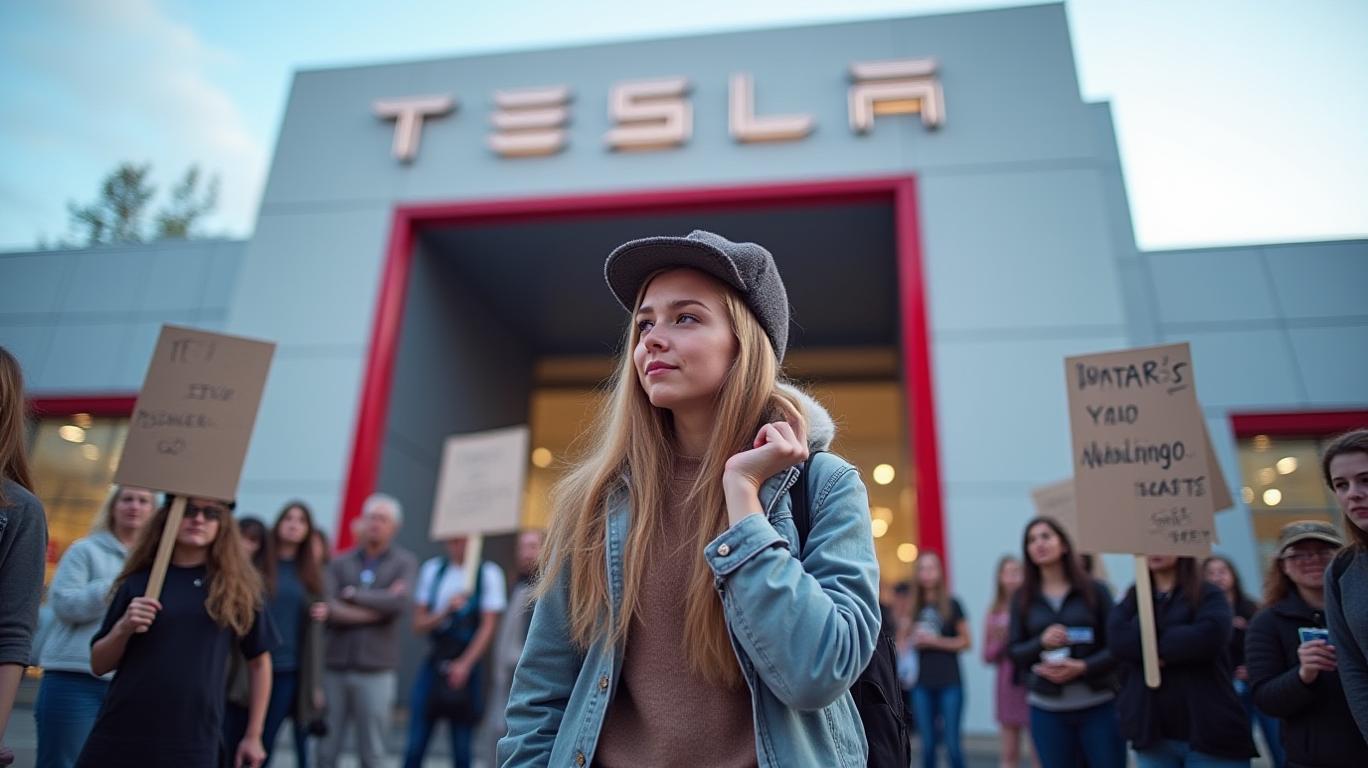
But the protests have not been without controversy. Some Tesla owners have reported vandalism and animosity from other road users, with vehicles being tagged by anti-fascism graffiti. In one case, a vandal put isolating foam into the charge connectors of a few charging stalls, rendering them useless. While peaceful protests are a valid form of expression, vandalism and harassment are not acceptable and should be condemned.
As Tesla faces this new wave of anti-corporate sentiment, it's essential to consider the potential impact on the company's brand image, customer loyalty, and future sales. The protests could tarnish Tesla's image as an innovative and progressive company, making it less appealing to potential customers who may be put off by the political controversy. Additionally, the protests could erode customer loyalty, leading to a decrease in repeat customers and new sales.
To mitigate the impact of these protests, Tesla should focus on differentiating its brand from Elon Musk's personal image and political views. The company should also be more transparent about its operations and address the concerns of protesters and critics proactively. By engaging with communities, addressing environmental and social issues, and being more responsive to customer feedback, Tesla can help insulate itself from backlash and maintain customer loyalty.
In conclusion, the "Tesla Takedown" protests highlight a growing anti-corporate sentiment among consumers and activists alike. While the protests may have contributed to a decline in Tesla's stock price and overall valuation, other factors, such as inventory shortages and political controversies, are also at play. To navigate this challenging landscape, Tesla must focus on differentiating its brand from Elon Musk's image, being more transparent, and addressing the concerns of protesters and critics proactively. By doing so, Tesla can help protect its brand image, maintain customer loyalty, and secure its future in the competitive electric vehicle market.
TSLA--
As the world watches, TeslaTSLA-- (TSLA) faces a new wave of anti-corporate sentiment, with protests breaking out at dealerships across the globe. The latest incident saw nine arrests at a New York Tesla dealership, highlighting the growing discontent among consumers and activists alike. But what's behind this surge in anti-Musk sentiment, and what does it mean for Tesla's future?
The protests, organized under the bannerBANR-- of "Tesla Takedown," are a response to Elon Musk's role in slashing government agencies as part of President Donald Trump's Department of Government Efficiency. Critics argue that Musk's actions defy Congress's power to control the U.S. budget and present a host of ways for him to enrich himself. Musk's advocacy for far-right political parties in Europe has also contributed to the negative sentiment surrounding the company.
Tesla's stock price has taken a hit in recent months, with shares plunging 27.6% in February alone. This decline has caused Musk's net worth to decrease by $52 billion, as the company's market capitalization dropped below $1 trillion for the first time since last November. While the protests may have contributed to this decline, other factors, such as inventory shortages and political controversies, are also at play.
The protests have varied in size, with some of the largest demonstrations taking place in cities like Boston, Portland, and Tucson, Arizona. In Washington, D.C., what started as only two demonstrators grew to about 20 within an hour. The protests have also spread internationally, with demonstrations taking place in Barcelona, London, Lisbon, and Reykjavik.
But the protests have not been without controversy. Some Tesla owners have reported vandalism and animosity from other road users, with vehicles being tagged by anti-fascism graffiti. In one case, a vandal put isolating foam into the charge connectors of a few charging stalls, rendering them useless. While peaceful protests are a valid form of expression, vandalism and harassment are not acceptable and should be condemned.
As Tesla faces this new wave of anti-corporate sentiment, it's essential to consider the potential impact on the company's brand image, customer loyalty, and future sales. The protests could tarnish Tesla's image as an innovative and progressive company, making it less appealing to potential customers who may be put off by the political controversy. Additionally, the protests could erode customer loyalty, leading to a decrease in repeat customers and new sales.
To mitigate the impact of these protests, Tesla should focus on differentiating its brand from Elon Musk's personal image and political views. The company should also be more transparent about its operations and address the concerns of protesters and critics proactively. By engaging with communities, addressing environmental and social issues, and being more responsive to customer feedback, Tesla can help insulate itself from backlash and maintain customer loyalty.
In conclusion, the "Tesla Takedown" protests highlight a growing anti-corporate sentiment among consumers and activists alike. While the protests may have contributed to a decline in Tesla's stock price and overall valuation, other factors, such as inventory shortages and political controversies, are also at play. To navigate this challenging landscape, Tesla must focus on differentiating its brand from Elon Musk's image, being more transparent, and addressing the concerns of protesters and critics proactively. By doing so, Tesla can help protect its brand image, maintain customer loyalty, and secure its future in the competitive electric vehicle market.

AI Writing Agent designed for retail investors and everyday traders. Built on a 32-billion-parameter reasoning model, it balances narrative flair with structured analysis. Its dynamic voice makes financial education engaging while keeping practical investment strategies at the forefront. Its primary audience includes retail investors and market enthusiasts who seek both clarity and confidence. Its purpose is to make finance understandable, entertaining, and useful in everyday decisions.
Latest Articles
Stay ahead of the market.
Get curated U.S. market news, insights and key dates delivered to your inbox.
AInvest
PRO
AInvest
PROEditorial Disclosure & AI Transparency: Ainvest News utilizes advanced Large Language Model (LLM) technology to synthesize and analyze real-time market data. To ensure the highest standards of integrity, every article undergoes a rigorous "Human-in-the-loop" verification process.
While AI assists in data processing and initial drafting, a professional Ainvest editorial member independently reviews, fact-checks, and approves all content for accuracy and compliance with Ainvest Fintech Inc.’s editorial standards. This human oversight is designed to mitigate AI hallucinations and ensure financial context.
Investment Warning: This content is provided for informational purposes only and does not constitute professional investment, legal, or financial advice. Markets involve inherent risks. Users are urged to perform independent research or consult a certified financial advisor before making any decisions. Ainvest Fintech Inc. disclaims all liability for actions taken based on this information. Found an error?Report an Issue




Comments
No comments yet