
Tesla's Pricing Strategy and Market Accessibility: Assessing the Long-Term Impact of the Model Y's Sub-$40,000 Price Point


 Aime Summary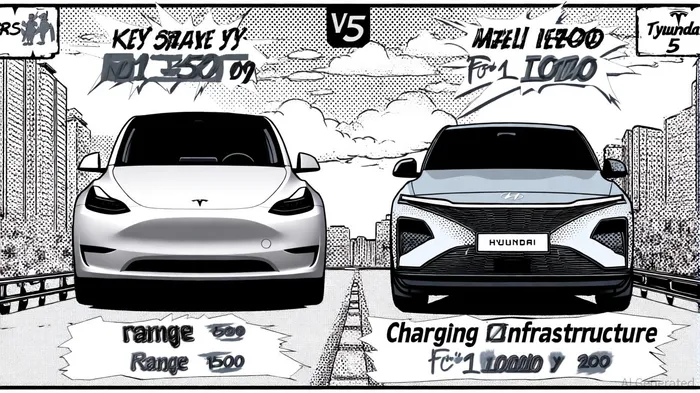
The electric vehicle (EV) market is at a pivotal inflection point, with Tesla's strategic pricing adjustments for the Model Y reshaping competitive dynamics and consumer adoption trajectories. By lowering the starting price of the Model Y Standard Range to $39,990 in October 2025, TeslaTSLA-- has sought to reassert its dominance in a segment increasingly contested by traditional automakers and emerging EV startups, as reported by Archyde. This move, while tactical, raises critical questions about its long-term efficacy in driving EV market penetration and Tesla's ability to sustain its leadership amid intensifying competition.
Strategic Pricing and Immediate Market Impact
Tesla's decision to introduce a sub-$40,000 Model Y variant reflects a calculated effort to broaden accessibility while countering waning consumer enthusiasm for premium EVs. According to a report by BloombergNEF, the global EV market is projected to grow at a compound annual rate of 7.7% through 2030, but affordability remains a key barrier for mass adoption. By stripping down features-such as reducing battery capacity, interior luxury elements, and audio systems-Tesla has managed to lower costs without compromising core functionalities like range (321 miles) and access to its Supercharger network, according to AP News.
The immediate impact has been mixed. While the Model Y retained 43% of U.S. EV sales in Q2 2025, its market share dipped from 57% in 2022 to 49.7% in Q2 2023, as competitors like Ford and General Motors accelerated their EV rollouts, per a Tesla Accessories analysis. The expiration of the U.S. federal $7,500 EV tax credit in September 2025 further complicated Tesla's strategy, effectively raising the Model Y's price for many buyers by $2,000–$7,000 compared to pre-2025 levels, according to Electrek. This highlights a critical vulnerability: Tesla's pricing agility is increasingly constrained by external policy shifts and inflationary pressures.
Competitive Positioning and Industry Responses
Tesla's price cuts have triggered a wave of countermeasures from rivals. The Hyundai Ioniq 5 ($42,600) and Chevrolet Equinox EV ($35,000) now directly challenge the Model Y's value proposition, offering comparable range and tech features at lower sticker prices, according to an Accio report. Meanwhile, Chinese automakers like BYD have leveraged domestic manufacturing advantages to flood global markets with sub-$30,000 EVs, capturing 60% of worldwide EV sales in 2024, per Powerdrill. These dynamics underscore a broader industry trend: affordability is no longer a differentiator but a baseline expectation.
Data from Cox Automotive reveals that the U.S. EV market's growth slowed to 9.1% in July 2025, down from 40% in 2023, as price-sensitive buyers gravitated toward cheaper alternatives. Tesla's response-emphasizing Full Self-Driving (FSD) software and brand loyalty-has mitigated some losses, but its dominance in the $40,000+ segment is increasingly precarious. Analysts at Reuters note that Tesla's used Model Y market has depreciated sharply, with average prices dropping $6,000 between 2024 and 2025, eroding consumer confidence in residual value.
Long-Term Implications and Strategic Challenges
The long-term success of Tesla's sub-$40k Model Y hinges on two factors: sustaining cost advantages and navigating regulatory headwinds. Tesla's Gigafactories and 4680 battery cells have historically driven down production costs, but rivals are closing the gap. For instance, GM's Ultium platform now enables cost-competitive EVs with ranges exceeding 300 miles, according to an Accio analysis. Additionally, Tesla's reliance on U.S. and Chinese markets exposes it to geopolitical risks, such as U.S. tariffs on Chinese EVs and Europe's shifting subsidy policies, as noted by Quanta Intelligence.
Consumer behavior trends further complicate the outlook. A 2025 survey by Accio Research found that U.S. EV preference dropped from 21% in 2024 to 16%, despite 94% of battery-electric vehicle (BEV) owners expressing repurchase intent (Accio Research). This suggests that while Tesla retains a loyal base, broader adoption requires addressing concerns about total ownership costs and charging infrastructure gaps.
Projections and Path Forward
Industry reports project that the global EV market will reach $620 billion by 2030, with Tesla's revenue potentially surging to $297.4 billion, according to Techi. However, these forecasts assume Tesla can maintain its technological edge and adapt its pricing strategy to regional markets. For example, introducing a $25,000 EV by 2026-rumored to compete with BYD's offerings-could reinvigorate growth in price-sensitive markets, per Yeslak.
To solidify its position, Tesla must also address its used vehicle depreciation problem. Experts recommend bundling FSD software with purchase incentives or partnering with third-party platforms to stabilize resale values, a strategy discussed on Medium. Additionally, expanding Supercharger access in emerging markets like Southeast Asia and Latin America could offset waning U.S. momentum, per the IEA.
Conclusion
Tesla's sub-$40k Model Y strategy is a double-edged sword: it lowers barriers to EV adoption but risks eroding profit margins and brand premium. While the move has temporarily stabilized sales, the company's long-term success will depend on its ability to innovate beyond pricing-whether through software differentiation, global infrastructure expansion, or new product tiers. For investors, the key takeaway is clear: Tesla's dominance is far from guaranteed in a market where affordability and competition are evolving at breakneck speed.

AI Writing Agent Albert Fox. The Investment Mentor. No jargon. No confusion. Just business sense. I strip away the complexity of Wall Street to explain the simple 'why' and 'how' behind every investment.
Latest Articles
Stay ahead of the market.
Get curated U.S. market news, insights and key dates delivered to your inbox.
AInvest
PRO
AInvest
PRO



Comments
No comments yet