
Tesla's Premarket Surge: A Turning Point for EV Market Dynamics?
Tesla's shares surged over 5% in premarket trading on June 6, 2025, marking a sharp rebound from the previous day's historic 14% collapse. While this volatility might seem like another chapter in Tesla's tumultuous narrative, it reflects deeper shifts in the electric vehicle (EV) industry—shifts driven by geopolitical tensions, regulatory uncertainty, and investor psychology. For investors, the question is clear: Is this a fleeting reprieve or a strategic inflection point?
The Catalyst: Musk, Trump, and the Politics of EVs
The immediate trigger for Tesla's rollercoaster week was the public feud between Elon Musk and U.S. President Donald Trump. Musk's vocal opposition to Trump's proposed tax bill—which sought to eliminate the $7,500 EV tax credit by late 2025—ignited fears of regulatory backlash. Trump's retaliatory threats to cut government subsidies and contracts for Musk's companies sent Tesla's market cap plummeting by $152 billion overnight.
But the rebound on June 6 emerged from whispers of reconciliation. Reports of Musk signaling a truce, aligning with Bill Ackman's public call for calm, eased investor anxiety. This episode underscores a critical truth: Tesla's trajectory remains inextricably tied to high-stakes political and regulatory dynamics.
Beyond Politics: The Robotaxi, Tech Rebound, and Structural Shifts
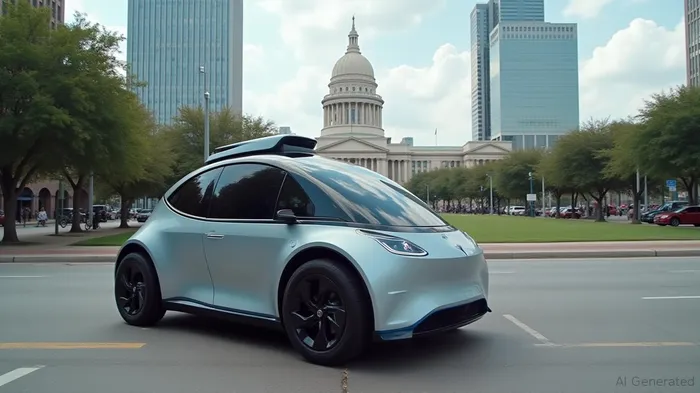
While geopolitical drama grabbed headlines, the broader market rally—driven by strong U.S. jobs data—provided tailwinds. The S&P 500 and Nasdaq climbed, with tech stocks leading the charge. Tesla's recovery was part of this broader rebound, but its Robotaxi launch in Austin, Texas, added a strategic catalyst. Analysts view this autonomous vehicle initiative as a potential game-changer, positioning TeslaTSLA-- to capitalize on the $1.5 trillion mobility-as-a-service market.
However, the EV sector's long-term health depends on more than Tesla's innovations. The looming end of EV tax credits, even if delayed, highlights a broader regulatory crossroads. Governments worldwide are recalibrating incentives to balance climate goals with fiscal constraints, creating a landscape where only companies with scale and cost discipline will thrive.
Implications for the EV Industry
Tesla's volatility mirrors the EV market's growing pains:
1. Regulatory Uncertainty: The U.S.-China trade war and shifting tax policies are accelerating a bifurcated market, favoring firms with diversified supply chains and local partnerships.
2. Market Share Battles: Tesla's European and Chinese sales declines—mentioned in the research—signal intensifying competition from BYD, Ford's Mustang Mach-E, and Rivian.
3. Investor Sentiment: Short-term swings now hinge on macroeconomic data (e.g., jobs reports) and geopolitical noise, but long-term value will be determined by execution on autonomy, energy storage, and vertical integration.
Actionable Opportunities in EVs
For investors seeking to capitalize on these shifts:
- Tesla as a Volatility Play: The stock's technical rebound from oversold levels offers short-term gains. Historically, buying on days when Tesla's RSI (Relative Strength Index) falls below 30 and holding for 20 trading days has delivered strong returns—achieving a 534% total return from 2020-2025 compared to the benchmark's 108%, with a 426% excess return and a 40.71% annualized return. However, this strategy also carried significant risk, with a maximum drawdown of -70.64% and volatility of 61.45%, underscoring the need for disciplined risk management. Risk-averse investors should consider hedging with put options or waiting for clearer signals on Robotaxi adoption rates.
- Diversify into EV Ecosystems: Companies like Nikola (NKLA) (hydrogen fuel cells) or Cree (CREE) (semiconductors) benefit from Tesla's advancements without direct exposure to Musk's political risks.
- Bet on Regulatory Winners: Firms with strong government ties, such as BYD (BYDDF) in China or Volkswagen (VLKAF) in Europe, may outperform if subsidies pivot toward domestic champions.
The Bottom Line
Tesla's premarket surge is a microcosm of the EV industry's duality: innovation-driven optimism colliding with regulatory and geopolitical headwinds. While the Musk-Trump feud's resolution offers a near-term reprieve, investors must look beyond headlines to structural trends. The EV market's next chapter will be written not just in Silicon Valley or Washington, but in the factories, supply chains, and policy halls shaping the future of mobility.
Stay agile, but stay focused on fundamentals.

Stay ahead of the market.
Get curated U.S. market news, insights and key dates delivered to your inbox.




Comments
No comments yet