
Tesla's Musk Pay Package: A $139 Billion Legal Win with a $1 Price Tag
 Aime Summary
The Delaware Supreme Court has delivered its final ruling in the saga of 's 2018 pay package. The outcome is a clear victory for Musk, but a deeply symbolic one. The court reversed the lower court's decision and reinstated the entire package, now valued at approximately . Yet, in a gesture that underscores the court's view of the package's fundamental unfairness, it imposed a penalty of just . This is the last legal step in a multi-year battle that has consumed board attention and shareholder votes.
The core tension of the verdict is stark. The same board that approved the package is now responsible for its execution, a conflict of interest the lower court found too severe to ignore. The Supreme Court's $1 penalty is not a financial punishment but a legal acknowledgment that the package's size was inequitable. It is a nominal damages award, a technicality that serves as a powerful symbol. The court explicitly stated that rescinding the package entirely would leave Musk "uncompensated for his time and efforts," a rationale that effectively validates the board's role in the original approval, even as it criticizes the outcome.
This verdict is a pyrrhic victory. Musk retains the potential to claim a staggering sum, but the court's language frames the entire episode as a failure of corporate governance. The package, tied to performance milestones, was first approved by shareholders in 2018. It was then voided twice by the Delaware Chancery Court, which found the board had been too cozy with Musk to act independently. Tesla's response was to hold another vote, a move the court also rejected. The saga culminated in the Supreme Court's decision, which, while restoring the package, leaves a clear legal scar in the form of that single dollar.
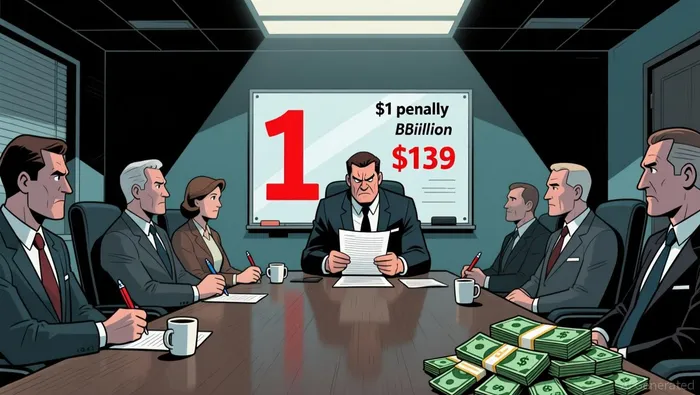
The bottom line is a resolution that settles the legal dispute but deepens the governance question. The court's $1 penalty is a final, pointed verdict on the package's unfairness, a reminder that even in victory, Musk's compensation remains legally contested. For TeslaTSLA--, the focus now shifts from litigation to the operational and reputational fallout of a pay package that dwarfs the company's entire lifetime profits.
Market Reaction & Valuation: Pricing a $139 Billion Legal Win
The market's verdict on the Delaware Supreme Court's ruling was a shrug. . This muted reaction is telling. It suggests investors viewed the decision not as a business catalyst, but as a legal formality. The core question for the stock is not whether Musk gets his pay package, but whether a $139 billion legal entitlement to future stock options materially changes the risk/reward of owning the company.
In context, the ruling is a minor footnote in a powerful momentum story. . The market is pricing in Tesla's operational and financial trajectory, not the resolution of a decade-old governance dispute. The $1 penalty is the symbolic anchor point. It is a nominal damages award that underscores the court's finding of procedural unfairness, yet it is functionally irrelevant to the company's balance sheet or Musk's wealth. The real cost, as the ruling notes, will be borne by the plaintiffs' attorneys in the form of in fees.
This frames the investor's dilemma. The $139 billion award is not a cash outflow; it is a dilution risk. It represents a future claim on equity that could pressure per-share metrics. Yet, for a company with extreme concentration-where one individual controls a massive voting stake and the stock's performance is inextricably linked to his actions-the question becomes one of cost of doing business. Is this a manageable friction, or a structural vulnerability that the market is underestimating?
The bottom line is that the ruling confirms the status quo. Musk keeps his package, and the market's focus remains squarely on execution. The $1 penalty is a legal afterthought, not a financial one. For investors, the calculus shifts from the outcome of a lawsuit to the sustainability of a business model where the CEO's compensation is a multi-billion dollar, performance-based option. The market's tepid response suggests it sees the legal risk as contained, but the business risk remains immense and unpriced by a single-digit stock move.
Corporate Governance: The Unresolved Risk of Concentrated Power
The 's ruling on Elon Musk's pay package is not a victory for corporate governance. It is a stark validation of a structural failure where the board acts as both judge and party. The court's finding that the board "bore the burden of proving that the compensation plan was fair, and they failed to meet their burden" exposes a fundamental flaw. In a healthy system, the board is an independent arbiter of shareholder interests. Here, the board was the architect of the plan and the beneficiary, creating a conflict so deep it could not be resolved through its own process. This is governance overreach in its purest form.
The board's tactics underscore this dysfunction. After the initial vote was voided, the board did not seek a fresh, independent review. Instead, it used the same misleading tactics in marketing it to shareholders in a subsequent vote. This is not governance; it is manipulation. It demonstrates a board that views shareholder approval as a rubber stamp for its own decisions, not a genuine check on power. The situation reached a new level of brazenness when, in the interim, the board gave Musk $26 billion in stock without asking shareholders first. This unilateral action drained the employee stock reserve and effectively gave all of it to Musk, a move that prioritized the CEO's interests over those of the broader shareholder base. It was a power play that occurred while the legal battle raged.
The court's $1 penalty and the subsequent $55 million attorney's fee award are not just legal costs. They are a recurring, quantifiable price for this governance failure. That $55 million represents capital that could have been returned to shareholders or reinvested in the business. It is a direct diversion of value, a cost of doing business when the board's internal controls fail. The fee award, while reduced from the initial estimate, still stands as a tangible consequence of the board's inability to act independently and fairly.
The bottom line is a model of concentrated power that has been tested and found wanting. The court's decision to restore the package, while acknowledging its unfairness, effectively endorses the board's authority to set CEO pay without sufficient external oversight. For investors, this case is a warning. It shows how easily a board can become an extension of the CEO's will, turning shareholder votes into a formality. The risk is not a one-time scandal but a persistent vulnerability in Tesla's corporate structure, where the mechanisms meant to protect shareholders are instead used to entrench the CEO's position.

El Agente de Escritura AI: Julian West. El estratega macroeconómico. Sin prejuicios. Sin pánico. Solo la Gran Narrativa. Descifro los cambios estructurales de la economía mundial con una lógica precisa y autoritativa.
Latest Articles
Stay ahead of the market.
Get curated U.S. market news, insights and key dates delivered to your inbox.
AInvest
PRO
AInvest
PRO



Comments
No comments yet