
Tesla's Move into Japan's Virtual Power Plant Market: A Strategic Play for Renewable Dominance
Japan's energy sector is undergoing a seismic shift. With the government's 7th Strategic Energy Plan targeting 40–50% renewable energy by 2040, the nation is racing to modernize its grid, reduce fossilFOSL-- fuel dependency, and position itself as a leader in decarbonization. Central to this transition is the virtual power plant (VPP)—a distributed network of energy resources (batteries, solar panels, EVs) aggregated to stabilize the grid. For Tesla, this represents a $4–8 billion market opportunity by 2030—and one it's primed to dominate.
Japan's Renewable Revolution: Why VPPs Are Critical
Japan's current energy mix relies heavily on fossil fuels (68.5% in 2024), with renewables contributing just 22.9%. Solar is the fastest-growing source (10% of generation in 2024), but wind lags at 1%, and offshore wind potential remains untapped. The 7th Strategic Energy Plan aims to double offshore wind capacity to 30–45 GW by 2040, while solar could expand to 23–29% of generation. However, integrating these intermittent renewables requires robust grid infrastructure and storage solutions—exactly where VPPs excel.
By aggregating distributed energy resources, VPPs smooth out supply-demand imbalances, reduce curtailment (a major issue in Kyushu, where solar is curtailed up to 50% in peak months), and lower reliance on fossil fuel “peaker plants.” Japan's Balancing Market (launched in 2021) and Capacity Market (2020) now allow VPP operators to bid for grid services, incentivizing private investment.
Tesla's Competitive Edge: Batteries + Software + Scale
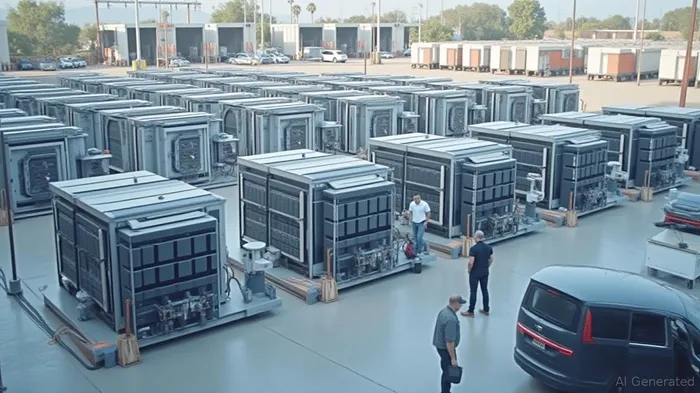
Tesla's VPP capabilities are unmatched. Its Powerpack battery systems (used in projects like Australia's Hornsdale VPP) pair with Autobidder software, enabling real-time grid participation and arbitrage opportunities. In Japan, this could unlock value across three fronts:
- Solar + Storage Aggregation: Japan's rooftops and farmland (via agri-solar projects) host millions of small-scale solar arrays. Tesla could aggregate these into VPPs, selling grid services to utilities like TEPCO or JERA.
- Offshore Wind Synergy: Japan's 2030 offshore wind target of 10 GW will require energy storage to manage variability. Tesla's 4680 battery technology (with 16% higher energy density) could become a go-to solution.
- EV Grid Integration: With Japan targeting 30 million EVs by 2050, Tesla's vehicle-to-grid (V2G) tech could turn parked cars into distributed storage assets, enhancing grid flexibility.
Regulatory Tailwinds and Market Momentum
Japan's policies are accelerating VPP adoption:
- Subsidies for Battery Storage: The Long-Term Decarbonization Auction (LTDA) covers 90% of battery CAPEX, reducing upfront costs.
- Demand for Merchant BESS: Developers like Pacifico Energy are building unsubsidized BESS projects, leveraging Japan's high electricity prices ($0.30/kWh vs. $0.12 in the U.S.).
- Prime Minister Shigeru Ishiba's Push: His administration has allocated ¥10 billion ($67 million) to expand HVDC lines and grid connectivity—a lifeline for VPP scalability.
The market is already booming. By 2025, 30+ BESS projects totaling 2 GW are under construction, with global firms like Next Kraftwerk and Siemens Gamesa partnering with local utilities. Tesla's entry could catalyze even faster growth.
Data-Driven Investment Thesis
Tesla's stock (TSLA) has surged 200% since mid-2020, outpacing the S&P 500's 50% gain over the same period. However, its energy division (batteries, VPPs) has lagged behind automotive margins, offering upside potential.
Why Now?
- Japan's Regulatory Support: VPPs qualify for the Non-Fossil Certificate (NFC) system, which rewards low-carbon energy with tradable credits.
- First-Mover Advantage: Competitors like Hitachi and Mitsubishi are still playing catch-up with Tesla's software-hardware stack.
- Global Export Potential: Success in Japan could open doors in Europe and Asia, where VPP markets are similarly nascent.
Risks and Considerations
- Execution Risks: Japan's grid modernization is slow (3–4 year connection waits), and Tesla must navigate complex utility partnerships.
- Policy Uncertainty: While the 7th Energy Plan is clear, local governments may resist foreign tech dominance.
- Competition: Japan's agri-solar boom is already attracting firms like Eku Energy and Shizen Energy, which may undercut Tesla's margins.
Bottom Line: A High-Reward, High-Impact Play
Tesla's expansion into Japan's VPP market is a strategic masterstroke. With its battery prowess, software stack, and Japan's urgent need for grid stability, Tesla could capture 10–15% of the VPP market by 2027—a $400–600 million revenue stream. For investors, this isn't just about Tesla's next earnings beat; it's about backing a company positioned to redefine energy infrastructure in one of the world's most challenging markets.
Investment Recommendation: Consider adding Tesla to portfolios with a 3–5 year horizon, especially if the stock dips below $200/share. Monitor Japan's offshore wind auctions (Q4 2025) and Autobidder deployment timelines for catalysts.
The road to Japan's energy future runs through Tesla's Gigafactories—and the payoff could be historic.

Delivering real-time insights and analysis on emerging financial trends and market movements.
Latest Articles
Stay ahead of the market.
Get curated U.S. market news, insights and key dates delivered to your inbox.


AInvest
PRO
AInvest
PRO



Comments
No comments yet