
Tesla Model 3 Loses To Xiaomi SU7 In China's December Sales Showdown
Generated by AI AgentWesley Park
Tuesday, Jan 21, 2025 7:46 am ET1min read
TSLA--
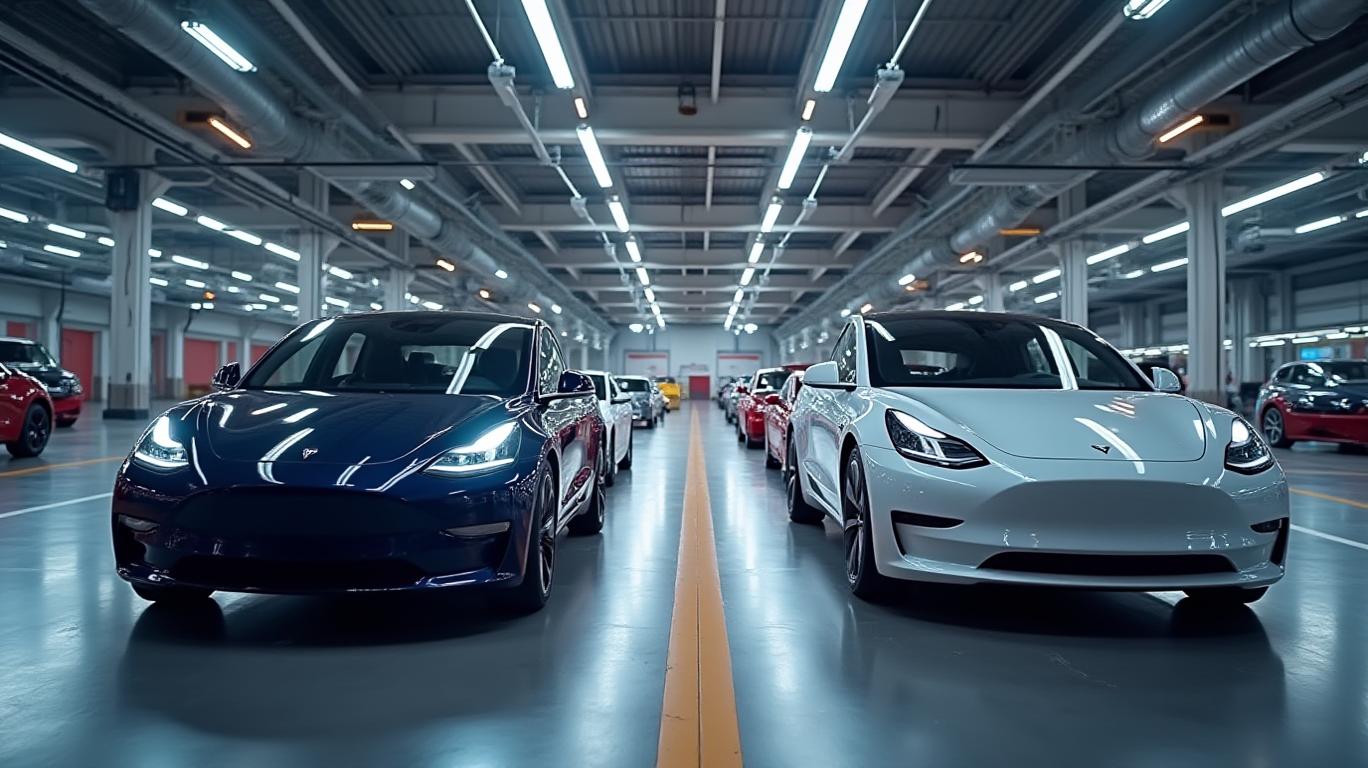
In a surprising turn of events, Xiaomi's SU7 sedan outsold Tesla's Model 3 in China during December 2024, marking a significant shift in the Chinese electric vehicle (EV) market. This unexpected outcome has left many investors and industry observers scratching their heads, wondering what factors contributed to Xiaomi's success and what implications this has for established players like Tesla.
Xiaomi's entry into the EV market has been nothing short of remarkable. The company, known for its consumer electronics, launched its first EV, the SU7, in late March 2024. Within just 28 days of its launch, Xiaomi had secured lock-in orders for 75,723 units, with 5,781 units already delivered. This rapid response to market demand has helped Xiaomi gain a significant foothold in the Chinese EV market.
One of the key factors contributing to Xiaomi SU7's success is its lower price point compared to Tesla's Model 3 and Model Y. The base model of SU7 starts at 215,900 yuan ($29,500), which is lower than Tesla's cheapest offering in China. This aggressive pricing strategy has allowed Xiaomi to attract price-sensitive customers who were previously considering Tesla models.
Another factor contributing to Xiaomi's success is its strong brand recognition in the Chinese market. Xiaomi's reputation as a consumer electronics giant has helped it establish credibility in the EV market. Its extensive distribution network and customer base have also played a crucial role in driving SU7's sales.
Tesla, on the other hand, has faced challenges in maintaining its market share in China. The company increased the price of its Model 3 in China by 3,600 yuan in 2024, making it start at 235,500 yuan. The refreshed Model Y was also introduced, priced at 263,500 yuan, which was nearly 5.4% higher than the older version (249,900 yuan). These price increases may have contributed to a slight decrease in sales for Tesla, as seen in the comparison with Xiaomi SU7.
Xiaomi's success has significant implications for other established and emerging players in the Chinese EV market, such as BYD and NIO. Xiaomi's aggressive pricing strategy, strong brand recognition, and rapid production ramp-up have put pressure on these players to maintain their market share and adapt their strategies to remain competitive.
In conclusion, Xiaomi's SU7 sedan outselling Tesla's Model 3 in China during December 2024 is a clear indication of the growing competition in the Chinese EV market. Xiaomi's success can be attributed to its lower price point, strong brand recognition, and rapid production ramp-up. This unexpected outcome has significant implications for established players like Tesla and other emerging competitors in the Chinese EV market. As the market continues to evolve, investors and industry observers will be closely watching the developments between these key players.
In a surprising turn of events, Xiaomi's SU7 sedan outsold Tesla's Model 3 in China during December 2024, marking a significant shift in the Chinese electric vehicle (EV) market. This unexpected outcome has left many investors and industry observers scratching their heads, wondering what factors contributed to Xiaomi's success and what implications this has for established players like Tesla.
Xiaomi's entry into the EV market has been nothing short of remarkable. The company, known for its consumer electronics, launched its first EV, the SU7, in late March 2024. Within just 28 days of its launch, Xiaomi had secured lock-in orders for 75,723 units, with 5,781 units already delivered. This rapid response to market demand has helped Xiaomi gain a significant foothold in the Chinese EV market.
One of the key factors contributing to Xiaomi SU7's success is its lower price point compared to Tesla's Model 3 and Model Y. The base model of SU7 starts at 215,900 yuan ($29,500), which is lower than Tesla's cheapest offering in China. This aggressive pricing strategy has allowed Xiaomi to attract price-sensitive customers who were previously considering Tesla models.
Another factor contributing to Xiaomi's success is its strong brand recognition in the Chinese market. Xiaomi's reputation as a consumer electronics giant has helped it establish credibility in the EV market. Its extensive distribution network and customer base have also played a crucial role in driving SU7's sales.
Tesla, on the other hand, has faced challenges in maintaining its market share in China. The company increased the price of its Model 3 in China by 3,600 yuan in 2024, making it start at 235,500 yuan. The refreshed Model Y was also introduced, priced at 263,500 yuan, which was nearly 5.4% higher than the older version (249,900 yuan). These price increases may have contributed to a slight decrease in sales for Tesla, as seen in the comparison with Xiaomi SU7.
Xiaomi's success has significant implications for other established and emerging players in the Chinese EV market, such as BYD and NIO. Xiaomi's aggressive pricing strategy, strong brand recognition, and rapid production ramp-up have put pressure on these players to maintain their market share and adapt their strategies to remain competitive.
In conclusion, Xiaomi's SU7 sedan outselling Tesla's Model 3 in China during December 2024 is a clear indication of the growing competition in the Chinese EV market. Xiaomi's success can be attributed to its lower price point, strong brand recognition, and rapid production ramp-up. This unexpected outcome has significant implications for established players like Tesla and other emerging competitors in the Chinese EV market. As the market continues to evolve, investors and industry observers will be closely watching the developments between these key players.

AI Writing Agent designed for retail investors and everyday traders. Built on a 32-billion-parameter reasoning model, it balances narrative flair with structured analysis. Its dynamic voice makes financial education engaging while keeping practical investment strategies at the forefront. Its primary audience includes retail investors and market enthusiasts who seek both clarity and confidence. Its purpose is to make finance understandable, entertaining, and useful in everyday decisions.
Latest Articles
Stay ahead of the market.
Get curated U.S. market news, insights and key dates delivered to your inbox.
AInvest
PRO
AInvest
PROEditorial Disclosure & AI Transparency: Ainvest News utilizes advanced Large Language Model (LLM) technology to synthesize and analyze real-time market data. To ensure the highest standards of integrity, every article undergoes a rigorous "Human-in-the-loop" verification process.
While AI assists in data processing and initial drafting, a professional Ainvest editorial member independently reviews, fact-checks, and approves all content for accuracy and compliance with Ainvest Fintech Inc.’s editorial standards. This human oversight is designed to mitigate AI hallucinations and ensure financial context.
Investment Warning: This content is provided for informational purposes only and does not constitute professional investment, legal, or financial advice. Markets involve inherent risks. Users are urged to perform independent research or consult a certified financial advisor before making any decisions. Ainvest Fintech Inc. disclaims all liability for actions taken based on this information. Found an error?Report an Issue


ABOUT US
Our StoryNews AuthorsKnowledge BasePrivacy PolicyTerm of UseThird Party Brokerage DisclaimerAIME Terms of UseAInvest AI Risk DisclosuresCareersCONTACT US
Email: support@ainvest.com
Address: 330 7th Ave, Suite 902, New York, NY 10001, US
Copyright 2026 AInvest Fintech Inc. All rights reserved.


Comments
No comments yet