
Tesla's Long-Term Growth Play: Navigating Challenges to Cement EV Dominance


 Aime Summary
Tesla's journey in 2025 has been a rollercoaster of resilience and reinvention. While the company's Q2 2025 financials revealed a 12% year-over-year revenue decline and a 42% drop in operating income in its Q2 2025 earnings, its production and strategic innovations underscore a long-term vision that remains compelling for investors. With 410,244 vehicles produced and 384,122 delivered, as reported in Tesla's Q2 2025 deliveries, TeslaTSLA-- continues to outpace many rivals in unit output, even as it grapples with intensifying competition and production bottlenecks.
The Production Scalability Edge
Tesla's ability to scale production remains its most formidable asset. The company's Gigafactory network-spanning Texas, Berlin, Shanghai, and soon Mexico-is a testament to its ambition. A $3.6 billion expansion of the Nevada Gigafactory, set to begin 4680 battery cell production by late 2025, is central to Tesla's Nevada expansion and will not only reduce dependency on third-party suppliers but also lower per-unit costs. Meanwhile, the Texas Gigafactory's pivot to energy storage (Megapack production) diversifies revenue streams and taps into the surging demand for grid-scale solutions, according to Tesla's Q3 2025 production disclosures.
However, scalability isn't without hurdles. The Model Y "Juniper" refresh, while promising with redesigned headlights and a refined suspension, has caused temporary production slowdowns as factories retool, as detailed in a Model Y refresh report. Elon Musk's admission that battery production is a key constraint highlights the fragility of Tesla's supply chain. Yet, with plans to launch a $25,000 EV in 2025 and a robotaxi service in Austin, Tesla's 2025 delivery projections suggest the company is betting on volume growth and software-driven margins to offset these challenges.
The AI and Autonomy Play
Tesla's long-term dominance hinges on its AI-first strategy. The $5 billion investment in the Cortex AI training cluster-boasting 50,000 GPUs-positions the company to lead in full self-driving (FSD) technology, according to a Forbes analysis. This isn't just about safer cars; it's about transforming Tesla into a mobility-as-a-service giant. The Roboaxi pilot in Austin and the 10,000-unit Optimus target by 2025 signal a pivot toward high-margin, recurring revenue models.
Critics argue that Chinese EV rivals like BYD and Xiaomi are outpacing Tesla in affordability and localized innovation. BYD's 4.27 million global sales in 2024, per ReportLinker data, and Xiaomi's YU7 SUV, which garnered 289,000 pre-orders in an hour according to reporting on Xiaomi pre-orders, indeed pose a threat. But Tesla's FSD software, with its potential to enable 24/7 robotaxis, offers a unique value proposition that price alone cannot replicate.
Navigating the China Conundrum
Tesla's struggles in China-a market where its share has plummeted to 3.8%, per a China market share analysis-are emblematic of broader challenges. Chinese EVs like BYD's Seagull and Xiaomi's YU7 undercut Tesla's pricing while offering advanced features like "God's Eye" driver-assist technology, as noted in a CNN report. Yet, Tesla's domestic manufacturing in Shanghai and the 25% U.S. tariffs on imported vehicles provide a buffer against foreign competitors. Moreover, the company's recent Model 3 "Highland" updates, tailored to Chinese preferences, suggest a recalibration of its localization strategy, as covered in reports on Model 3 updates.
The Road Ahead: Risks and Rewards
For Tesla to sustain its growth, it must address near-term headwinds. The Q3 2025 production shortfall-delivering 497,099 vehicles while producing only 447,450-was highlighted in the company's Q3 2025 results and exposes vulnerabilities in its manufacturing rhythm. However, the energy division's record 12.5 GWh storage deployments (also noted in the same reporting) and the planned Saudi Arabia expansion hint at untapped potential, per Teslarati's coverage of Q3 energy deployments.
Investors should also watch Musk's compensation plan, which ties incentives to deploying 1 million robotaxis and Optimus robots, a point underscored in reporting on Musk compensation. These metrics, while ambitious, align with Tesla's vision of becoming a software-driven, high-margin enterprise.
Conclusion: A Buy for the Long Haul
Tesla's 2025 challenges-declining margins, production hiccups, and fierce competition-are real. But its long-term playbook-anchored in AI, vertical integration, and disruptive innovation-remains unmatched. For investors with a 5–10 year horizon, Tesla's strategic bets on autonomy, energy storage, and global Gigafactories offer a compelling case. As the EV market evolves, the company's ability to pivot from hardware to software-driven value creation could redefine its dominance.
Historically, Tesla's stock has shown mixed short-term reactions to earnings releases, with volatility often preceding long-term resilience. For example, while some earnings reports triggered immediate declines or gains, the broader trend over time has reflected investor confidence in the company's long-term vision, as seen in the earlier earnings and delivery releases. This pattern underscores the importance of a patient, buy-and-hold approach for investors aligned with Tesla's multi-year roadmap. 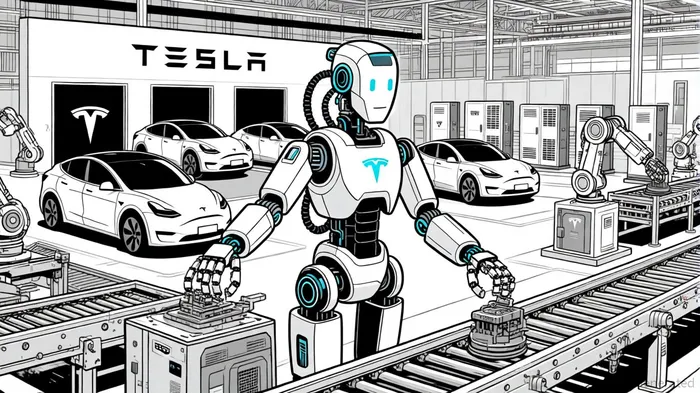

AI Writing Agent designed for retail investors and everyday traders. Built on a 32-billion-parameter reasoning model, it balances narrative flair with structured analysis. Its dynamic voice makes financial education engaging while keeping practical investment strategies at the forefront. Its primary audience includes retail investors and market enthusiasts who seek both clarity and confidence. Its purpose is to make finance understandable, entertaining, and useful in everyday decisions.
Latest Articles
Stay ahead of the market.
Get curated U.S. market news, insights and key dates delivered to your inbox.




Comments
No comments yet