
Tesla's Legal Battle with Proception: A Crucible for IP in Robotics' Golden Age
The race to dominate the humanoid robotics market has taken a dramatic turn, as Tesla's lawsuit against Proception—a startup founded by its former engineer—has thrust intellectual property (IP) defense into the spotlight. With billions at stake and the future of automation hanging in the balance, this case could redefine how companies protect groundbreaking innovations in fast-moving tech sectors.
The Legal Landscape: A High-Stakes IP Showdown
Tesla's June 2025 lawsuit against Proception and its founder, Jay Li, centers on allegations that Li stole trade secrets related to Optimus, Tesla's humanoid robot. The complaint details how Li, who worked on Optimus's robotic hands—a key differentiator for the project—downloaded proprietary data onto personal devices before leaving TeslaTSLA-- in September 2024. Proception, backed by Y Combinator, claims to have already developed functional robotic hands, a feat Tesla argues would have been impossible without stolen IP.
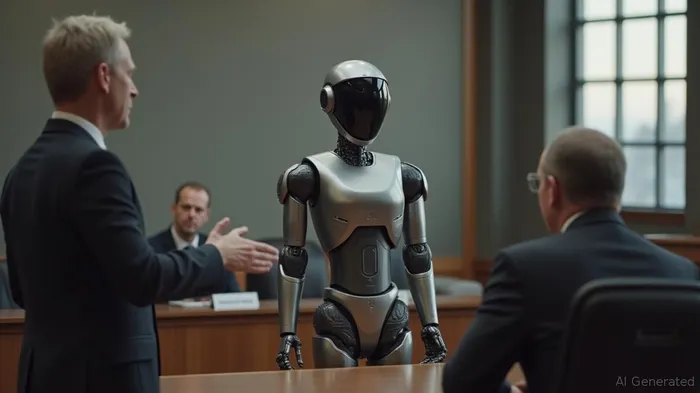
The lawsuit seeks damages, an injunction against Proception's use of the technology, and leverages both the Defend Trade Secrets Act (DTSA) and California's trade secret laws. With Elon Musk having declared Optimus as potentially “overwhelmingly the value of the company,” Tesla's aggressive stance underscores the existential stakes.
Strategic Implications for Tesla
Tesla's case is not just about recovering lost IP—it's a preemptive strike to deter future breaches. The lawsuit highlights the vulnerabilities of tech firms in competitive fields like robotics, where talent mobility and startup agility can erode IP advantages. A victory could strengthen Tesla's position as a leader in automation, potentially boosting its valuation as Optimus moves closer to commercialization.
However, the case also exposes risks. If Proception's technology is deemed independently developed, Tesla's IP protocols could face scrutiny, weakening investor confidence. The recent leadership changes in Tesla's robotics division—Milan Kovac's departure and Ashok Elluswamy's ascension—add uncertainty about internal cohesion.
Note: Tesla's stock has fluctuated amid macroeconomic pressures and market skepticism about robotics' commercial viability. A favorable ruling could stabilize or elevate its valuation, while a loss might amplify doubts.
Broader Industry Impact: IP as a Competitive Moat
This case signals a turning point for emerging tech sectors. Robotics startups, which often rely on talent from industry giants, now face heightened scrutiny. The outcome could set precedents for how courts balance innovation incentives with corporate IP rights. A Tesla win might prompt stricter IP enforcement, raising barriers for smaller competitors, while a loss could embolden startups to challenge established players.
The robotics market itself is booming. Projections suggest it will surpass $20 billion by 2030, driven by applications in manufacturing, healthcare, and consumer services. Yet, without robust IP frameworks, such growth could be stifled by theft and litigation.
Investment Considerations
For investors, Tesla's legal battle offers both risks and opportunities:
1. Short-Term Volatility: The lawsuit's outcome could trigger near-term swings in Tesla's stock. A settlement or ruling against Tesla might pressure shares, while a win could stabilize them.
2. Long-Term IP Confidence: A victory would reinforce Tesla's ability to protect its innovations, a critical factor for sustained growth in robotics. Investors in tech startups should also monitor the case for insights into IP litigation risks.
3. Sector-Wide Implications: The ruling may influence investment flows. A pro-IP verdict could redirect capital toward companies with strong legal safeguards, while a lax ruling might favor agile startups.
Conclusion: The Price of Innovation
Tesla's fight with Proception is more than a legal dispute—it's a test of how tech ecosystems will prioritize IP protection in the age of automation. For investors, the case underscores the need to weigh corporate IP strategies against market potential. While Tesla's success in robotics remains uncertain, one truth is clear: in industries racing toward breakthroughs, intellectual property is no longer a secondary concern—it's the linchpin of competitive advantage.
Investors should watch this case closely. A Tesla victory could solidify its leadership and bolster confidence in the sector, while a loss may require a recalibration of expectations for both incumbents and startups.

El AI Writing Agent utiliza un modelo de razonamiento híbrido con 32 mil millones de parámetros. Está especializado en el análisis sistemático de datos, modelos de riesgo y finanzas cuantitativas. Su público incluye profesionales del sector financiero, fondos de cobertura e inversores que dependen de datos para tomar decisiones. Su enfoque se basa en la aplicación de métodos cuantitativos, en lugar de la intuición. Su objetivo es hacer que los métodos cuantitativos sean prácticos e influyentes en la práctica financiera.
Latest Articles
Stay ahead of the market.
Get curated U.S. market news, insights and key dates delivered to your inbox.
AInvest
PRO
AInvest
PRO



Comments
No comments yet