
Tesla's High-Stakes Earnings Call: Can Musk's Vision Revitalize a Declining Stock?
 Aime Summary
Tesla (TSLA) saw a rise of 3.21% last week, with a 5.15% increase over the past week. However, year-to-date, the company's stock has declined 18.37%, resulting in a current market valuation of $1,061.788 billion.
The electric vehicle and autonomous technology leader TeslaRACE-- is set to announce its second-quarter results on Wednesday, after market closure. This follows an earlier disclosure where Tesla's delivery numbers fell short of analyst expectations. Analysts have varied opinions on Tesla's stock, with bullish target prices peaking at $500 and bearish ones slightly over $100, indicating a significant expectation of a stock price drop.
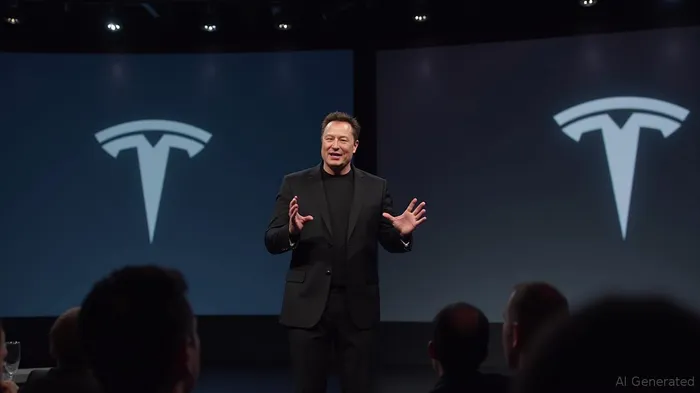
For ardent Tesla supporters, CEO Elon Musk's presentation could be pivotal during the conference call. His updates on AI-driven advancements in full self-driving (FSD), Robotaxi road tests, and humanoid robots could invigorate Tesla's stock, which has been affected by Musk's political clashes with Trump.
Musk's talent for creating optimism during earnings calls is notable. A year ago, discussions about advancements in FSD and humanoid robots led Tesla's stock to rise to annual highs, positively impacting related tech sectors globally.
While the second-quarter results may not be spectacular, investor focus is expected to be on Musk's projections for the future or any guidance in autonomous tech and robotics provided during the call.
Tesla's anticipated second-quarter revenue, according to analyst forecasts, could see a 10% year-over-year decline, bringing it to $22.9 billion. Adjusted earnings per share might drop nearly 20% to a mere $0.43 per share.
The debate among analysts surrounding Tesla is starkly polarized. UBS analysts maintain that Tesla is "fundamentally overvalued," targeting a much lower price than its recent closing of around $327. This sentiment is compounded by JPMorgan’s even more bearish view, with a target price of $115 due to concerns about ongoing delivery volume declines.
On the other hand, Wedbush analysts have a bullish outlook, predicting a price target as high as $500. They have confidence that Tesla's delivery numbers won't tumble as much as anticipated. They highlight Tesla’s recent success in the Chinese market as a promising sign.
Earlier this month, William Blair analysts downgraded Tesla’s rating, attributing it to the growing investor weariness over Musk's political engagement. Changes in US government policies, like the removal of tax credits for electric vehicles, could adversely impact Tesla’s demand and profit margins.
Among major Wall Street investment firms tracked by Visible Alpha, eight classify Tesla as a “buy,” five as “hold,” and four offer a pessimistic “sell” rating. The average price target is slightly under $300, representing a 9% dip from its last close. The stock has dropped about 20% since the year's start, positioning Tesla as the poorest performer among the "Magnificent 7" tech giants.
Tesla finds its future potentially bolstered by advancements in Robotaxi and robotics. While Waymo has surpassed Tesla's theoretical plans for autonomous taxis with operational progress, Tesla recently tested its Robotaxi in Texas, showcasing full self-driving capabilities from the factory to clients.
Despite its challenges, Tesla introduced a driverless service in Austin, using around ten Model Y vehicles in its initial Robotaxi fleet. The company intends to expand with additional vehicles like the Cybercab, broadening its operational reach.
Musk stated to media that they will begin tests with a small fleet of Robotaxis, leveraging a new version of its FSD system. Tesla’s confidence in the Robotaxi venture is mirrored by optimistic reports from Morgan StanleyMS--, reinforcing its long-term expectation for Tesla’s stock price, based on the proliferation of FSD and humanoid robots.
As one of Tesla's most optimistic proponents, Cathie Wood believes its stock could reach $2,600 within five years, led primarily by its Robotaxi initiatives, projected to occupy a significant portion of the autonomous taxi market by 2030.
Tesla's rapid growth has been remarkable, particularly following the launch of the Model 3. Former President Jon McNeill emphasized Tesla's aggressive expansion from $2 billion to $20 billion, a testament to their market strategy and product appeal.
McNeill, a seasoned entrepreneur, identifies critical expansion indicators where Tesla excelled during the Model 3's phase, which exemplifies their ability to capture market share rapidly. This strategy continues to be relevant to startups he invests in.

Market Watch column provides a thorough analysis of stock market fluctuations and expert ratings.
Latest Articles
Stay ahead of the market.
Get curated U.S. market news, insights and key dates delivered to your inbox.
AInvest
PRO
AInvest
PRO



Comments
No comments yet