
Tesla Gains Rideshare License in Texas
ByAinvest
Friday, Aug 8, 2025 6:25 pm ET1min read
LYFT--
The Texas Department of Licensing and Regulation has categorized Tesla Robotaxi LLC as a transportation network company, aligning it with established players like Uber Technologies Inc. (NYSE: UBER) and Lyft Inc. (NASDAQ: LYFT). This development comes as a new Texas law set to take effect on September 1 streamlines regulations for autonomous vehicles in rideshare services, treating them similarly to human-driven operations [1][2].
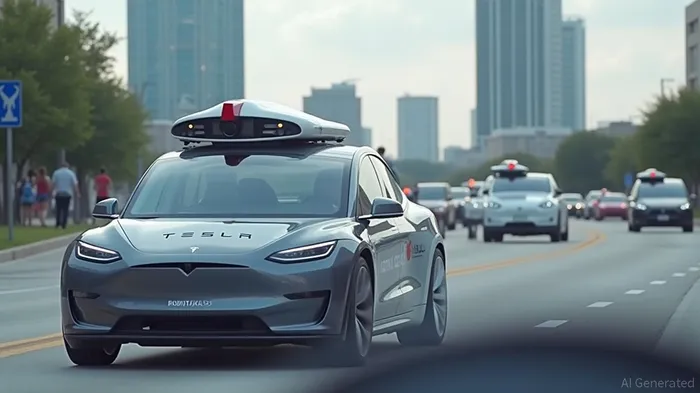
Tesla began operating an autonomous rideshare service in Austin in June, with a fleet of Model Y vehicles providing rides to invited users. The company's license removes key barriers, allowing it to scale without the same level of human intervention that hampered earlier autonomous efforts [2].
The license represents more than bureaucratic approval for Tesla; it's a gateway to monetizing its Full Self-Driving technology on a larger scale. This move aligns with Tesla's broader strategy to deploy self-driving vehicles for commercial use, building on pilot programs already underway in select markets [2].
Texas's permissive environment for innovation makes it an ideal proving ground for Tesla. Unlike California's more restrictive regime, Texas's framework emphasizes operational parity, which could accelerate Tesla's timeline for integrating robotaxi services into its app ecosystem [2].
However, challenges remain. The National Highway Traffic Safety Administration (NHTSA) has been scrutinizing Tesla's autonomous systems, with recent filings revealing agency interest in testing the robotaxi service directly. This license paves the way for Tesla to operate under more flexible rules, but it also invites closer federal oversight amid ongoing debates about safety and liability in driverless transport [2].
Financially, this could boost Tesla's valuation, with retail investors expressing optimism for stock gains. Analysts from Seeking Alpha describe it as an incremental win, potentially driving shares toward $330 amid robotaxi hype [2].
Looking ahead, Texas's model may influence other states, fostering a more unified approach to autonomous regulations. Tesla's license, combined with its San Francisco Bay Area expansions, positions the company at the forefront of disruption in the autonomous vehicle market [2].
References:
[1] https://finance.yahoo.com/news/tesla-gets-rideshare-license-texas-151800656.html
[2] https://www.webpronews.com/tesla-secures-texas-rideshare-license-for-robotaxi-expansion/
RACE--
TSLA--
UBER--
Tesla has been granted a rideshare license in Texas, joining Uber and Lyft. The license is held by "Tesla (TSLA) Robotaxi LLC", which suggests that Tesla plans to operate a self-driving ride-hailing service in the state. This move is significant for Tesla as it expands its presence in the autonomous vehicle market and potentially increases its revenue streams.
Tesla Inc. (NASDAQ: TSLA) has taken a significant step forward in its autonomous vehicle ambitions by securing a rideshare license in Texas. The license, granted to Tesla Robotaxi LLC, positions the company to expand its robotaxi operations under a newly enacted regulatory framework in the state [1][2].The Texas Department of Licensing and Regulation has categorized Tesla Robotaxi LLC as a transportation network company, aligning it with established players like Uber Technologies Inc. (NYSE: UBER) and Lyft Inc. (NASDAQ: LYFT). This development comes as a new Texas law set to take effect on September 1 streamlines regulations for autonomous vehicles in rideshare services, treating them similarly to human-driven operations [1][2].
Tesla began operating an autonomous rideshare service in Austin in June, with a fleet of Model Y vehicles providing rides to invited users. The company's license removes key barriers, allowing it to scale without the same level of human intervention that hampered earlier autonomous efforts [2].
The license represents more than bureaucratic approval for Tesla; it's a gateway to monetizing its Full Self-Driving technology on a larger scale. This move aligns with Tesla's broader strategy to deploy self-driving vehicles for commercial use, building on pilot programs already underway in select markets [2].
Texas's permissive environment for innovation makes it an ideal proving ground for Tesla. Unlike California's more restrictive regime, Texas's framework emphasizes operational parity, which could accelerate Tesla's timeline for integrating robotaxi services into its app ecosystem [2].
However, challenges remain. The National Highway Traffic Safety Administration (NHTSA) has been scrutinizing Tesla's autonomous systems, with recent filings revealing agency interest in testing the robotaxi service directly. This license paves the way for Tesla to operate under more flexible rules, but it also invites closer federal oversight amid ongoing debates about safety and liability in driverless transport [2].
Financially, this could boost Tesla's valuation, with retail investors expressing optimism for stock gains. Analysts from Seeking Alpha describe it as an incremental win, potentially driving shares toward $330 amid robotaxi hype [2].
Looking ahead, Texas's model may influence other states, fostering a more unified approach to autonomous regulations. Tesla's license, combined with its San Francisco Bay Area expansions, positions the company at the forefront of disruption in the autonomous vehicle market [2].
References:
[1] https://finance.yahoo.com/news/tesla-gets-rideshare-license-texas-151800656.html
[2] https://www.webpronews.com/tesla-secures-texas-rideshare-license-for-robotaxi-expansion/
Stay ahead of the market.
Get curated U.S. market news, insights and key dates delivered to your inbox.


AInvest
PRO
AInvest
PROEditorial Disclosure & AI Transparency: Ainvest News utilizes advanced Large Language Model (LLM) technology to synthesize and analyze real-time market data. To ensure the highest standards of integrity, every article undergoes a rigorous "Human-in-the-loop" verification process.
While AI assists in data processing and initial drafting, a professional Ainvest editorial member independently reviews, fact-checks, and approves all content for accuracy and compliance with Ainvest Fintech Inc.’s editorial standards. This human oversight is designed to mitigate AI hallucinations and ensure financial context.
Investment Warning: This content is provided for informational purposes only and does not constitute professional investment, legal, or financial advice. Markets involve inherent risks. Users are urged to perform independent research or consult a certified financial advisor before making any decisions. Ainvest Fintech Inc. disclaims all liability for actions taken based on this information. Found an error?Report an Issue


ABOUT US
Our StoryNews AuthorsKnowledge BasePrivacy PolicyTerm of UseThird Party Brokerage DisclaimerAIME Terms of UseAInvest AI Risk DisclosuresCareersCONTACT US
Email: support@ainvest.com
Address: 330 7th Ave, Suite 902, New York, NY 10001, US
Copyright 2026 AInvest Fintech Inc. All rights reserved.


Comments
No comments yet