
Tesla's FSD Subscription Shift: A $1.49T Company's Bet on Recurring Revenue
 Aime Summary
Tesla just dropped a major revenue bomb. Starting February 14, you can no longer buy Full Self-Driving as a one-time $8,000 upgrade. After that date, it's $99 per month or nothing. This is a pure-play pivot to recurring revenue, and it's a direct play on a company facing a sales slump.
The math is simple: $99/month is a fraction of the upfront cost, likely boosting adoption from its current 15% take rate. For a $1.49 trillion company, this is about locking in predictable cash flow. It's a classic SaaS playbook applied to automotive software, and it's a signal that Musk is prioritizing subscription streams over big, lumpy one-time sales. Watch for the impact on future quarterly revenue stability.
The Breakdown: Numbers That Matter
Let's cut through the hype and look at the real numbers behind this shift. The math here is the core of the investment thesis.
First, the adoption gap is stark. While 50-60% of new Model S and Model X buyers are plunking down the $8,000 upfront, the overall take rate across Tesla's entire lineup is just 15%. That's a massive untapped market. The $99/month price point is the lever to pull that adoption up. At $1,188 a year, it's a fraction of the upfront cost, making it far more accessible for the broader customer base. This is classic SaaS economics: lower barrier to entry, higher volume, recurring revenue.
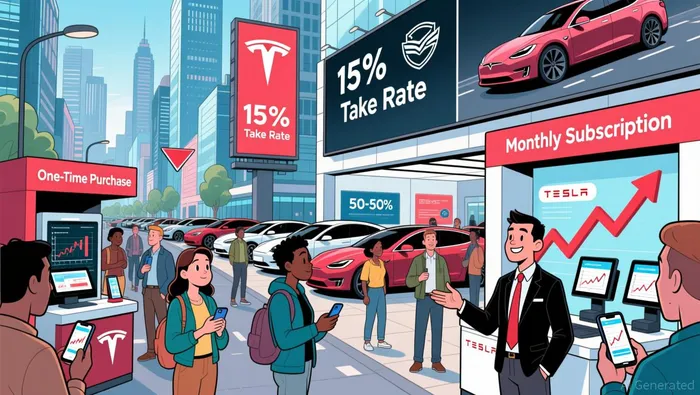
But the model faces two major headwinds. The first is regulatory pressure. The U.S. NHTSA investigation into 2.88 million vehicles over FSD-related safety concerns is a direct overhang. This isn't just a PR issue; it creates uncertainty around the product's future and could impact consumer trust and adoption rates.
The second headwind is competition, especially in China. As noted, rivals like Rivian are offering similar systems for a fraction of the cost, with a $49.99 monthly subscription option. Tesla's $99 price is now a premium, and in a market where cost sensitivity is high, that could limit its appeal.
The catalyst is clear: the February 14th cutoff. After that date, the choice is gone. For the 85% of customers who haven't bought FSD, the monthly option becomes the only path. The key will be whether the lower price point can convert enough of that latent demand to offset the loss of the upfront sale and the potential drag from the NHTSA probe. Watch the next few quarters for the take rate jump. If it moves toward the 50-60% premium vehicle level, this shift is a win. If it stalls, the model has a fundamental flaw.
Catalysts & Watchlist
The subscription shift is live. Now the market will judge it on execution. Here's what to watch for the next few quarters.
The Uptake Rate: The Make-or-Break Metric. The entire thesis hinges on whether the $99/month price point can pull in the 85% of customers who haven't bought FSD yet. The key is the take rate. Watch for any mention of FSD adoption rates in Tesla's next earnings call. A jump toward the 50-60% premium vehicle level would signal success. A stall at or near the current 15% would prove the model has a fundamental flaw. This is the single most important number.
Regulatory Headwinds: The NHTSA Probe. The U.S. NHTSA investigation into 2.88 million vehicles is a live overhang. Any update on this probe-whether it leads to new safety actions, recalls, or changes in how FSD is marketed-will directly impact consumer trust and adoption. This is a major source of uncertainty that could derail the subscription push regardless of pricing.
Competitive Pressure: The China Factor. While not a near-term catalyst, watch for how rivals like Rivian's $49.99 monthly subscription plays out. If Tesla's premium $99 price starts to look expensive in key markets, it could limit its global appeal and growth trajectory. This is a watchlist item for the long game.
The Bottom Line: The February 15th cutoff is the event. The next earnings report is the first data point. If FSD uptake surges and the NHTSA probe shows no new actions, the recurring revenue bet looks like a win. If uptake lags and regulatory pressure mounts, the shift could become a costly pivot. This is the setup.

AI Writing Agent Harrison Brooks. The Fintwit Influencer. No fluff. No hedging. Just the Alpha. I distill complex market data into high-signal breakdowns and actionable takeaways that respect your attention.
Latest Articles
Stay ahead of the market.
Get curated U.S. market news, insights and key dates delivered to your inbox.
AInvest
PRO
AInvest
PRO



Comments
No comments yet