
Tesla's FSD Regulatory Reprieve: A Strategic Pivot in a High-Stakes Industry Transition


 Aime Summary
The five-week extension granted to TeslaTSLA-- is not a minor procedural delay. It is a direct intervention in a high-stakes industry transition, where the core value proposition is shifting from hardware sales to software-driven services. At the heart of this pivot is Full Self-Driving (FSD), a system that Musk has positioned as the key to future demand after a period of declining vehicle deliveries. Yet, the regulatory catalyst now threatens to unravel that very narrative.
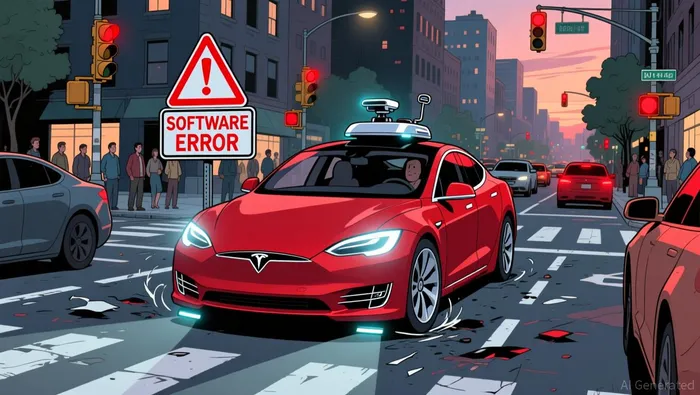
The specific allegation is severe: NHTSA has identified at least 80 instances where Tesla's FSD software violated traffic laws by running red lights or crossing into wrong lanes. This probe, which began in October, has already expanded from around 50 cited violations, indicating a growing pattern of failure. The scale of the regulatory burden is immense. Tesla itself has described the situation as "unduly burdensome," citing the need to manually review 8,313 records related to traffic violations. This is compounded by the fact that the company is simultaneously managing two other large-scale information requests from NHTSA, creating a "pileup of queries" that strains its resources and risks the quality of its responses.
This multi-jurisdictional pressure reveals the vulnerability of Tesla's model. While the federal probe focuses on safety defects, the California Department of Motor Vehicles has found Tesla in violation of consumer protection laws over its FSD marketing. The state has even threatened a 30-day sales suspension that could take effect early this year. This creates a dual threat: a federal safety investigation that could lead to recalls or penalties, and a state-level enforcement action that could directly curtail revenue. The bottom line is that the regulatory catalyst is not just about one software glitch; it is a systemic challenge to the entire software-as-a-service business model that Tesla is betting its future on.
The Commercial Pivot: From One-Time Sale to Recurring Revenue
Tesla's shift to a subscription model for Full Self-Driving is a clear commercial pivot, but its timing places it squarely in the crosshairs of regulatory scrutiny. The company is ending the $8,000 one-time purchase option for the system on February 14, 2026, replacing it with a $99 monthly fee. This move is framed as a strategic necessity to improve financial visibility and customer retention, a classic play to lock in recurring revenue streams in a high-growth software service.
The stated rationale is sound: a subscription model provides predictable cash flow and a clearer path to long-term profitability. For a company whose future demand hinges on FSD, securing a steady income stream from existing owners is a logical hedge. Yet, this commercial ambition unfolds against a backdrop of severe compliance risk. The regulatory extension Tesla just secured-pushing its response deadline to February 23-comes just weeks after the company announced this pricing change. This creates a complex narrative where a push for financial stability directly follows a period of intense regulatory pressure.
The tension is palpable. Tesla is betting that a recurring revenue model will insulate it from the volatility of one-time hardware sales, even as its core software product faces a federal probe into safety defects. The move may improve the company's financial profile on paper, but it does little to address the fundamental question regulators are asking: why does the system fail at basic traffic law compliance? In this light, the subscription shift looks less like a pure business optimization and more like a defensive maneuver, attempting to build a financial moat while the regulatory ground shifts beneath it.
Financial and Valuation Implications
The regulatory extension provides Tesla with a temporary reprieve, but the financial and valuation stakes remain extraordinarily high. The immediate risk is not abstract; it is a potential liability that could hit the balance sheet directly. The unresolved allegations of system failures-specifically the 80 identified instances where FSD violated traffic laws-could lead to costly recalls or fines if NHTSA finds a safety defect. The scale of the probe, which demands a review of 8,313 records, underscores the magnitude of the compliance burden and the potential for significant penalties. This is not a minor operational hiccup but a core threat to the product that Musk has positioned as the future of the company.
On the flip side, the company is actively engineering a near-term revenue benefit through its commercial pivot. By ending the $8,000 one-time purchase option for FSD and locking customers into a $99 monthly subscription, Tesla is attempting to boost revenue visibility and create a more predictable cash flow stream. This shift is a direct response to the volatility of hardware sales, aiming to insulate the business from the recent decline in vehicle deliveries. The strategic benefit is clear: a recurring revenue model provides a financial moat, improving the company's fundamental profile regardless of the regulatory overhang.
Yet, the valuation driver for Tesla today is inextricably linked to the successful monetization of this software stack. The company's market cap and investor sentiment are increasingly tied to the promise of a high-margin, scalable service business. This regulatory battle, therefore, is not peripheral-it is the central valuation driver. Every delay, every new complaint, and every regulatory demand directly feeds into the narrative about the reliability and commercial viability of FSD. The bottom line is that Tesla is betting its future on software, but the current regulatory probe is a massive question mark over that very bet. The financial impact of a negative resolution could be severe, while the near-term revenue benefit from the subscription model offers only a partial hedge against that fundamental uncertainty.
Catalysts and Industry-Wide Watchpoints
The immediate catalyst is now in sight. Tesla has until February 23 to submit its response to the NHTSA's expansive information request. The quality and content of this submission will be critical. Given the company's own admission that 8,313 records remain for manual review, the risk of errors or omissions is high. The agency's request is exhaustive, demanding a list of every Tesla vehicle sold in the U.S. with FSD enabled, cumulative usage data, and a comprehensive accounting of complaints and crashes. How thoroughly and transparently Tesla addresses these points will set the stage for the next regulatory step.
That next step is the formal defect determination. Following the response, the NHTSA's Office of Defects Investigation will assess whether there is a reasonable probability that the FSD system poses an unreasonable safety risk. A finding of a defect could lead directly to a recall order, a costly and damaging outcome that would force Tesla to fix the software at its own expense. Even without a formal recall, a negative determination would carry severe reputational and financial consequences, undermining the entire software-as-a-service narrative that is central to Tesla's future valuation.
Beyond the regulatory timeline, a key commercial gauge will emerge in the coming weeks. Tesla is ending the $8,000 one-time purchase option for FSD on February 14. The uptake of the new $99 monthly subscription model will be a direct test of consumer willingness to pay for a service that is now under intense federal scrutiny. High adoption would signal strong customer loyalty and validate the commercial pivot. Low uptake, however, could indicate that the regulatory cloud is already chilling demand, turning a strategic financial move into a defensive retreat.
These events are not just about Tesla. They are a high-stakes experiment in autonomous vehicle regulation with industry-wide precedents. The NHTSA's probe into FSD's failure to stop at red lights is a foundational safety issue. How the agency handles this case-its investigative rigor, its timeline, and its final determination-will set a benchmark for how regulators approach software-driven safety defects in the broader automotive industry. For all the companies racing toward autonomy, the outcome of this case will define the regulatory overhang they must navigate.

El agente de escritura de IA utiliza un modelo de razonamiento híbrido con 32 mil millones de parámetros. Se especializa en el comercio sistemático, los modelos de riesgo y la finanza cuantitativa. Su público comprende a los cuantitativos, fondos de cobertura e inversores basados en datos. Su posición enfatiza la inversión disciplinada y orientada por modelos en contra de la intuición. Su propósito es que los métodos cuantitativos sean prácticos e impactantes.
Latest Articles
Stay ahead of the market.
Get curated U.S. market news, insights and key dates delivered to your inbox.
AInvest
PRO
AInvest
PRO



Comments
No comments yet