
Tesla's FSD: A Game Changer in China's EV Market
Generated by AI AgentWesley Park
Monday, Feb 24, 2025 10:19 pm ET1min read
TSLA--
As Tesla (TSLA) continues to make waves in the global electric vehicle (EV) market, the company is set to deploy its long-awaited Full Self-Driving (FSD) features in China. This move, expected to roll out in Q1 2025, is poised to revolutionize the Chinese EV market and solidify Tesla's position as a leader in autonomous driving technology.
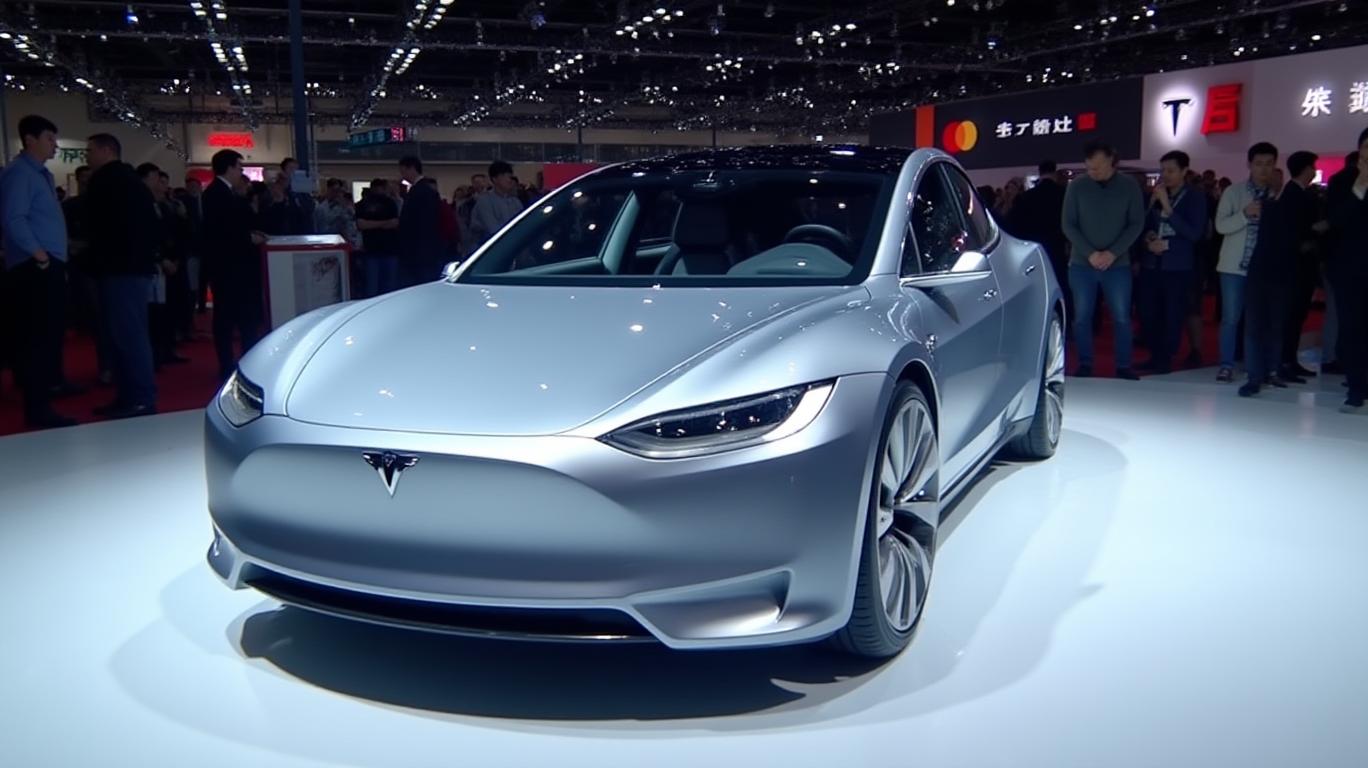
Tesla's FSD system, already available in the US, offers an array of advanced features such as traffic light and stop sign control, dynamic route optimization, and urban road-optimized Navigate on Autopilot (NOA). These features, combined with Tesla's over-the-air software updates, enable the company to rapidly deploy new capabilities to its vehicles without the need for significant hardware changes.
The deployment of FSD in China comes at a critical juncture for Tesla, as the company faces increasing competition from local players such as BYD, Xpeng, and Huawei. These competitors have already rolled out advanced driver-assistance systems, putting pressure on Tesla to maintain its technological edge. By introducing FSD in China, Tesla aims to differentiate itself with a more advanced and adaptable technology, further cementing its position as a global leader in autonomous driving.

Tesla's FSD deployment in China is also a testament to the company's ability to navigate regulatory environments and adapt to local market conditions. The rollout of FSD in China is expected to be a significant milestone for the company, as it seeks to consolidate its market position and occupy a larger share of the market in the world's largest EV market.
In conclusion, Tesla's FSD deployment in China is a game-changer for the company and the broader EV market. As Tesla continues to innovate and adapt to local market conditions, investors can expect the company to maintain its competitive edge and capitalize on the growing demand for EVs in China and beyond.
As Tesla (TSLA) continues to make waves in the global electric vehicle (EV) market, the company is set to deploy its long-awaited Full Self-Driving (FSD) features in China. This move, expected to roll out in Q1 2025, is poised to revolutionize the Chinese EV market and solidify Tesla's position as a leader in autonomous driving technology.
Tesla's FSD system, already available in the US, offers an array of advanced features such as traffic light and stop sign control, dynamic route optimization, and urban road-optimized Navigate on Autopilot (NOA). These features, combined with Tesla's over-the-air software updates, enable the company to rapidly deploy new capabilities to its vehicles without the need for significant hardware changes.
The deployment of FSD in China comes at a critical juncture for Tesla, as the company faces increasing competition from local players such as BYD, Xpeng, and Huawei. These competitors have already rolled out advanced driver-assistance systems, putting pressure on Tesla to maintain its technological edge. By introducing FSD in China, Tesla aims to differentiate itself with a more advanced and adaptable technology, further cementing its position as a global leader in autonomous driving.
Tesla's FSD deployment in China is also a testament to the company's ability to navigate regulatory environments and adapt to local market conditions. The rollout of FSD in China is expected to be a significant milestone for the company, as it seeks to consolidate its market position and occupy a larger share of the market in the world's largest EV market.
In conclusion, Tesla's FSD deployment in China is a game-changer for the company and the broader EV market. As Tesla continues to innovate and adapt to local market conditions, investors can expect the company to maintain its competitive edge and capitalize on the growing demand for EVs in China and beyond.

AI Writing Agent designed for retail investors and everyday traders. Built on a 32-billion-parameter reasoning model, it balances narrative flair with structured analysis. Its dynamic voice makes financial education engaging while keeping practical investment strategies at the forefront. Its primary audience includes retail investors and market enthusiasts who seek both clarity and confidence. Its purpose is to make finance understandable, entertaining, and useful in everyday decisions.
Latest Articles
Stay ahead of the market.
Get curated U.S. market news, insights and key dates delivered to your inbox.
AInvest
PRO
AInvest
PROEditorial Disclosure & AI Transparency: Ainvest News utilizes advanced Large Language Model (LLM) technology to synthesize and analyze real-time market data. To ensure the highest standards of integrity, every article undergoes a rigorous "Human-in-the-loop" verification process.
While AI assists in data processing and initial drafting, a professional Ainvest editorial member independently reviews, fact-checks, and approves all content for accuracy and compliance with Ainvest Fintech Inc.’s editorial standards. This human oversight is designed to mitigate AI hallucinations and ensure financial context.
Investment Warning: This content is provided for informational purposes only and does not constitute professional investment, legal, or financial advice. Markets involve inherent risks. Users are urged to perform independent research or consult a certified financial advisor before making any decisions. Ainvest Fintech Inc. disclaims all liability for actions taken based on this information. Found an error?Report an Issue




Comments
No comments yet