
Tesla Faces Employee Morale Issues, CEO Elon Musk's Leadership Under Scrutiny
ByAinvest
Wednesday, Jun 4, 2025 4:09 am ET2min read
AAPL--
Tesla's latest quarterly earnings report revealed a 13% drop in vehicle deliveries compared to the previous year, reaching only 337,000 vehicles — the lowest figure since Q2 2022. The company is also facing intensifying competition from Chinese electric vehicle manufacturers and has seen investment funds pulling out since Musk's involvement in the Trump administration [1].
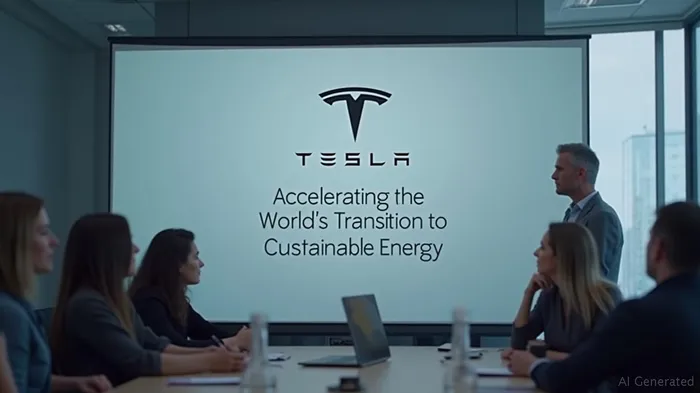
Musk's strategic shift includes renewed focus on the company's mission to accelerate the transition to electric transport and sustainable energy. He is emphasizing the importance of Tesla's "higher purpose" and the need for employees to focus on this mission [1]. This strategic change is aimed at transforming Tesla from a car company into a technological infrastructure for an autonomous world.
Tesla's first advantage is its control over the entire value chain. Like Apple, Tesla develops both the hardware and software for its products, allowing it to offer a smooth and customized user experience. The company manufactures the batteries, motors, and computing systems for its electric cars and integrates these components seamlessly. Additionally, Tesla provides remote software updates for its vehicles, enabling performance and functionality improvements even after the sale [1].
Beyond cars, Tesla is building an entire ecosystem around renewable energy. It offers products like solar panels, energy storage batteries (Powerwall), and a network of fast-charging stations (Supercharger). By providing energy solutions for homes and businesses, Tesla strengthens customer relationships and increases their dependence on the company's products [1].
Another leading area for Tesla is autonomous driving. By collecting data from millions of kilometers of driving, Tesla improves its AI systems and advances toward a future where vehicles drive themselves. The investment in the Dojo supercomputer, designed to train machine learning models, highlights Tesla's commitment to advanced technologies [1].
If Tesla succeeds in launching a commercial robotaxi service, it won't just shift from a "vehicle sales" model to a Mobility-as-a-Service model — it will create an entirely new category. Similar to how Apple turned the iPhone into a monthly revenue platform through services, Tesla aims to turn every vehicle into an autonomous robot that generates income — 24/7 [1].
The vision is to transform Tesla from a car brand into an infrastructure company — providing transportation, energy, data, and autonomous solutions. If successful, it won't just catch up to Apple — it may reinvent the way we move, consume, and interact with the world [1].
Tesla's future no longer lies in selling cars — but in leading a model shift that could redefine the company's entire identity. After Musk's strategic change, Tesla is no longer just a car company, but a technological infrastructure for an autonomous world [1].
References:
[1] https://www.ynetnews.com/business/article/hyduvyqgle
[2] https://www.morningstar.com/news/marketwatch/20250603112/elon-musk-calls-trump-tax-bill-an-abomination-does-he-have-the-clout-to-stop-it
TSLA--
A leaked recording of a Tesla training program reveals the company is addressing employee morale issues, citing high turnover and negative experiences among departing employees. The instructor emphasized the importance of Tesla's "higher purpose" and the need for employees to focus on the company's mission to accelerate the transition to electric transport and sustainable energy. Tesla's mission has shifted in recent years, with CEO Elon Musk prioritizing autonomous driving and backing the Republican party, which has historically opposed electric vehicles and renewable energy.
In the face of slowing sales and increasing competition, Tesla is pivoting its business model. Inspired by Apple's transformation, Elon Musk is steering the company towards autonomous transport, energy ecosystems, and AI, with robotaxis at the center of the plan [1].Tesla's latest quarterly earnings report revealed a 13% drop in vehicle deliveries compared to the previous year, reaching only 337,000 vehicles — the lowest figure since Q2 2022. The company is also facing intensifying competition from Chinese electric vehicle manufacturers and has seen investment funds pulling out since Musk's involvement in the Trump administration [1].
Musk's strategic shift includes renewed focus on the company's mission to accelerate the transition to electric transport and sustainable energy. He is emphasizing the importance of Tesla's "higher purpose" and the need for employees to focus on this mission [1]. This strategic change is aimed at transforming Tesla from a car company into a technological infrastructure for an autonomous world.
Tesla's first advantage is its control over the entire value chain. Like Apple, Tesla develops both the hardware and software for its products, allowing it to offer a smooth and customized user experience. The company manufactures the batteries, motors, and computing systems for its electric cars and integrates these components seamlessly. Additionally, Tesla provides remote software updates for its vehicles, enabling performance and functionality improvements even after the sale [1].
Beyond cars, Tesla is building an entire ecosystem around renewable energy. It offers products like solar panels, energy storage batteries (Powerwall), and a network of fast-charging stations (Supercharger). By providing energy solutions for homes and businesses, Tesla strengthens customer relationships and increases their dependence on the company's products [1].
Another leading area for Tesla is autonomous driving. By collecting data from millions of kilometers of driving, Tesla improves its AI systems and advances toward a future where vehicles drive themselves. The investment in the Dojo supercomputer, designed to train machine learning models, highlights Tesla's commitment to advanced technologies [1].
If Tesla succeeds in launching a commercial robotaxi service, it won't just shift from a "vehicle sales" model to a Mobility-as-a-Service model — it will create an entirely new category. Similar to how Apple turned the iPhone into a monthly revenue platform through services, Tesla aims to turn every vehicle into an autonomous robot that generates income — 24/7 [1].
The vision is to transform Tesla from a car brand into an infrastructure company — providing transportation, energy, data, and autonomous solutions. If successful, it won't just catch up to Apple — it may reinvent the way we move, consume, and interact with the world [1].
Tesla's future no longer lies in selling cars — but in leading a model shift that could redefine the company's entire identity. After Musk's strategic change, Tesla is no longer just a car company, but a technological infrastructure for an autonomous world [1].
References:
[1] https://www.ynetnews.com/business/article/hyduvyqgle
[2] https://www.morningstar.com/news/marketwatch/20250603112/elon-musk-calls-trump-tax-bill-an-abomination-does-he-have-the-clout-to-stop-it
Stay ahead of the market.
Get curated U.S. market news, insights and key dates delivered to your inbox.
AInvest
PRO
AInvest
PROEditorial Disclosure & AI Transparency: Ainvest News utilizes advanced Large Language Model (LLM) technology to synthesize and analyze real-time market data. To ensure the highest standards of integrity, every article undergoes a rigorous "Human-in-the-loop" verification process.
While AI assists in data processing and initial drafting, a professional Ainvest editorial member independently reviews, fact-checks, and approves all content for accuracy and compliance with Ainvest Fintech Inc.’s editorial standards. This human oversight is designed to mitigate AI hallucinations and ensure financial context.
Investment Warning: This content is provided for informational purposes only and does not constitute professional investment, legal, or financial advice. Markets involve inherent risks. Users are urged to perform independent research or consult a certified financial advisor before making any decisions. Ainvest Fintech Inc. disclaims all liability for actions taken based on this information. Found an error?Report an Issue


ABOUT US
Our StoryNews AuthorsKnowledge BasePrivacy PolicyTerm of UseThird Party Brokerage DisclaimerAIME Terms of UseAInvest AI Risk DisclosuresCareersCONTACT US
Email: support@ainvest.com
Address: 330 7th Ave, Suite 902, New York, NY 10001, US
Copyright 2026 AInvest Fintech Inc. All rights reserved.


Comments
No comments yet