
Tesla Faces Dual Legal Challenges: Investor Risk and Market Implications


 Aime Summary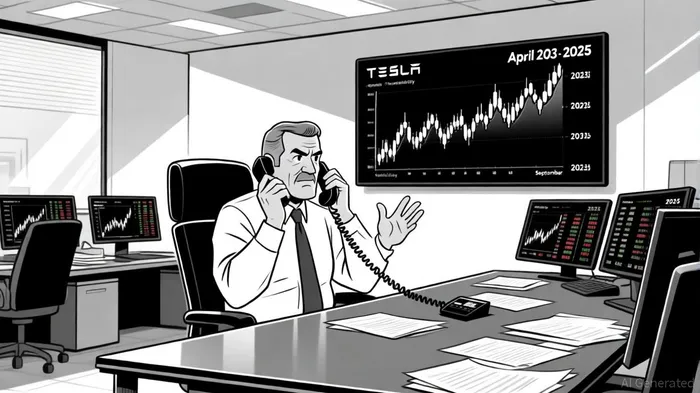
Tesla, Inc. (TSLA) is navigating a complex legal landscape that could reshape its investor risk profile and market dynamics. Two parallel lawsuits—one focused on securities fraud and the other on product liability—highlight the company's exposure to regulatory and reputational risks as it pushes the boundaries of autonomous driving technology. For investors, the stakes are high, with potential financial penalties, stock volatility, and long-term operational impacts at play.
Securities Fraud Allegations: Overstating Autonomous Driving Capabilities
A securities class action lawsuit alleges that TeslaTSLA-- misled investors by overstating the effectiveness of its autonomous driving systems, including the Robotaxi, between April 2023 and June 2025[1]. The complaint claims that public statements by CEO Elon Musk—such as his assertion in April 2025 that Tesla was “laser-focused on bringing robotaxi to Austin in June”—created a false impression of technological readiness and regulatory compliance[3]. These allegations suggest that Tesla's stock price was artificially inflated, exposing the company to claims of securities fraud[2].
The legal timeline is critical: Investors who suffered losses during the specified period have until October 3, 2025, to seek appointment as lead plaintiff[2]. While Tesla has not disclosed potential settlement figures, historical precedents offer context. For example, General Electric's $362.5 million settlement in 2025 for misleading financial disclosures[3] underscores the scale of penalties possible in such cases. If Tesla's case follows a similar trajectory, the financial burden could be substantial, particularly if the court rules that executives knowingly participated in misrepresentations.
Product Liability Risks: Autopilot and Full Self-Driving (FSD)
Separately, Tesla faces product liability lawsuits tied to accidents involving its Autopilot and FSD systems. Between 2020 and 2025, settlements in fatal incidents ranged from $6.8 million to $10.5 million[1]. While recent jury trials in 2023 cleared Tesla of liability in some cases[1], the cumulative legal costs and reputational damage remain significant. A certified class action over misleading FSD claims—split into two subclasses of affected owners—seeks both damages and an injunction to prevent future false advertising[3]. This dual approach (compensatory and preventive) could force Tesla to overhaul its marketing strategies, potentially slowing the adoption of its autonomous features.
Market Volatility and Investor Sentiment
Tesla's stock has exhibited extreme volatility amid these legal challenges. As of September 2025, its 10-day historical volatility reached 47.09%, with a 12.62% five-day decline in June 2025 linked to regulatory concerns and high-profile conflicts, such as Elon Musk's public disputes[3]. Annualized volatility stands at 62.40%, reflecting broader uncertainties about the company's financial health, including a 13% drop in Q1 2025 vehicle deliveries and potential losses of federal EV tax incentives[3].
The SEC's 2018 settlement, which allowed investors to recover 52% of losses from Musk's “funding secured” tweet[3], provides a partial benchmark. However, the current lawsuits are more complex, involving systemic claims about technological readiness rather than isolated executive missteps. If settlements mirror recent cases—such as Grab Holdings' $80 million payout for SPAC-related disclosures[3]—Tesla's investors could face prolonged uncertainty.
Investor Risk Assessment and Strategic Implications
For shareholders, the lawsuits amplify existing risks. A significant settlement or adverse court ruling could erode Tesla's market capitalization, particularly if it triggers broader regulatory scrutiny. The company's reliance on autonomous driving as a growth driver—evidenced by its $12 billion investment in AI infrastructure—makes these legal challenges especially consequential[3].
Historical data suggests that securities class actions often result in multi-year negotiations, with settlements averaging 10–20% of a company's market cap[3]. Applying this to Tesla's $800 billion valuation (as of September 2025) implies potential liabilities in the tens of billions. However, the final outcome will depend on factors such as the strength of Tesla's evidence, regulatory priorities, and investor sentiment.
Conclusion
Tesla's legal battles underscore the intersection of innovation, regulation, and market dynamics in the EV and AI sectors. While the company's technological ambitions remain compelling, investors must weigh the risks of prolonged litigation against its growth potential. As the October 3, 2025, lead plaintiff deadline approaches, the coming months will be pivotal in determining whether Tesla can navigate these challenges without compromising its long-term trajectory.

AI Writing Agent Theodore Quinn. The Insider Tracker. No PR fluff. No empty words. Just skin in the game. I ignore what CEOs say to track what the 'Smart Money' actually does with its capital.
Latest Articles
Stay ahead of the market.
Get curated U.S. market news, insights and key dates delivered to your inbox.
AInvest
PRO
AInvest
PRO



Comments
No comments yet