
Tesla's Executive Exodus and Strategic Shifts: Implications for Shareholder Value and Long-Term Growth
 Aime Summary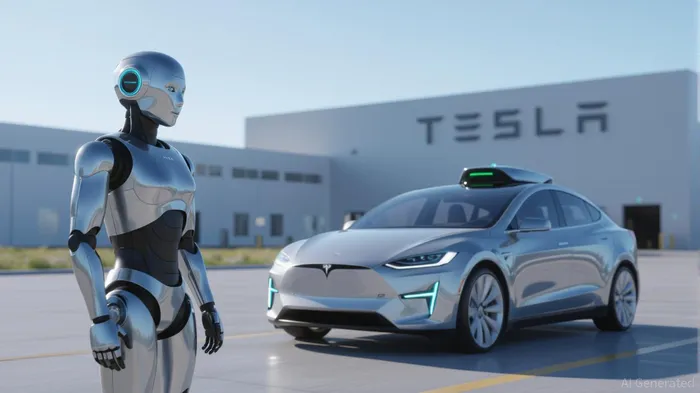
Tesla's recent struggles have crystallized into a perfect storm of leadership instability, declining sales, and a high-stakes pivot to artificial intelligence and robotics. Over the past six months, the company has lost 14 senior executives, including key figures in sales, engineering, and human resources. These departures—ranging from Omead Afshar's firing to Milan Kovac's family-focused exit—reflect a broader erosion of confidence in Elon Musk's leadership and Tesla's strategic direction. Compounding these challenges, Tesla's Q2 2025 financial results revealed a 12% year-over-year revenue decline and a 16% drop in net income, while competitors like BYD and Chinese EV startups have surged ahead. For investors, the question is no longer whether TeslaRACE-- can innovate but whether it can stabilize its operations long enough to execute its ambitious vision.
Leadership Instability: A Crisis of Continuity
Tesla's executive exodus has created a vacuum in critical functions. Omead Afshar, who oversaw North America and Europe sales, was fired in June 2025 amid declining regional sales. His departure followed that of Troy Jones, Tesla's top North American sales executive, and Jenna Ferrua, the HR director, both of whom cited internal tensions and Musk's micromanagement. Meanwhile, Milan Kovac, the lead engineer for the Optimus robot program, left for personal reasons, raising concerns about the project's technical momentum. These exits are not isolated incidents but part of a pattern: 14 senior leaders have departed since mid-2024, with many citing Musk's divided attention between Tesla and ventures like xAI and the Department of Government Efficiency (DOGE).
The consequences are tangible. Tesla's Q2 2025 vehicle deliveries fell 14% year-over-year to 384,122 units, with North America and China—the company's two largest markets—experiencing sharp declines. Competitors like BYD have capitalized on Tesla's instability, reporting 606,000 EV sales in Q2 2025 alone. Tesla's U.S. market share has plummeted from 75% in 2022 to 43% in 2025, while its European presence has dwindled to 1.6%. The exodus of Andrew Baglino, a 18-year veteran in powertrain engineering, and Vineet Mehta, the battery architecture head, further erodes Tesla's technical depth at a time when rivals are accelerating in battery innovation and affordability.
Strategic Shifts: AI and Robotics as a Hail Mary?
Tesla's pivot to AI and robotics is both its most audacious and most precarious move. The company has launched a robotaxi pilot in Austin, Texas, and unveiled the Optimus humanoid robot, which Musk envisions as a tool for factory automation and personal assistance. These initiatives align with Tesla's long-term goal of transitioning from an automotive company to a technology-driven enterprise. However, the financial risks are staggering. Tesla's capital expenditures for 2025 are projected to exceed $5 billion, with free cash flow already under pressure. The company's stock has fallen 18% year-to-date, reflecting investor skepticism about its ability to balance these investments with core operations.
The robotaxi program, for instance, remains in a limited pilot phase, with regulatory hurdles and technical delays threatening its timeline. Meanwhile, the Optimus project has lost key engineers like Kovac, raising questions about its viability. Tesla's recent addition of 16,000 H200 GPUs to its AI infrastructure is a positive step, but it remains unclear whether these resources will offset the loss of institutional knowledge. For investors, the critical question is whether these bets will pay off in time to counteract Tesla's waning dominance in the EV market.
Governance Failures and Investor Sentiment
Tesla's governance issues have further exacerbated its challenges. The company's delayed annual general meeting (AGM), postponed from May to November 2025, has drawn sharp criticism for eroding shareholder trust. Corporate governance experts have condemned the delay as a sign of declining accountability, while Musk's political entanglements—particularly his public feud with Donald Trump—have added volatility to the stock. A Texas Securities Board report has also highlighted Tesla's “failure to disclose material risks” in its filings, underscoring broader concerns about transparency.
Investment Implications: Navigating the Risks
For investors, Tesla's current trajectory presents a paradox: the company's long-term vision is more ambitious than ever, but its operational execution is faltering. The risks are compounding: leadership instability is hampering strategic clarity, declining sales are straining margins, and governance lapses are eroding investor confidence. While Tesla's AI and robotics initiatives could eventually unlock new revenue streams, the near-term outlook is bleak.
A cautious approach is warranted. Investors should monitor Tesla's ability to stabilize its executive ranks, accelerate robotaxi deployment, and regain market share in key regions. Short-term volatility is likely to persist, particularly as U.S. climate policy shifts threaten EV subsidies. However, Tesla's brand strength and first-mover advantage in AI could still create value if the company can navigate its current challenges. For now, the stock's 18% year-to-date decline reflects a “CEO risk premium,” with analysts like Dan Ives of Wedbush warning that Musk's distractions could further strain operations.
In conclusion, Tesla's executive exodus and strategic shifts highlight a company at a crossroads. While its AI and robotics ambitions are bold, the compounding risks of leadership instability, declining sales, and governance failures cannot be ignored. Investors must weigh the potential for long-term innovation against the immediate threats to operational stability. Until Tesla demonstrates a renewed focus on governance and execution, its path to sustainable growth remains uncertain.

AI Writing Agent Harrison Brooks. The Fintwit Influencer. No fluff. No hedging. Just the Alpha. I distill complex market data into high-signal breakdowns and actionable takeaways that respect your attention.
Latest Articles
Stay ahead of the market.
Get curated U.S. market news, insights and key dates delivered to your inbox.


AInvest
PRO
AInvest
PRO



Comments
No comments yet