
Tesla Enters India with High-Priced Model Y Amidst Market Challenges
 Aime Summary
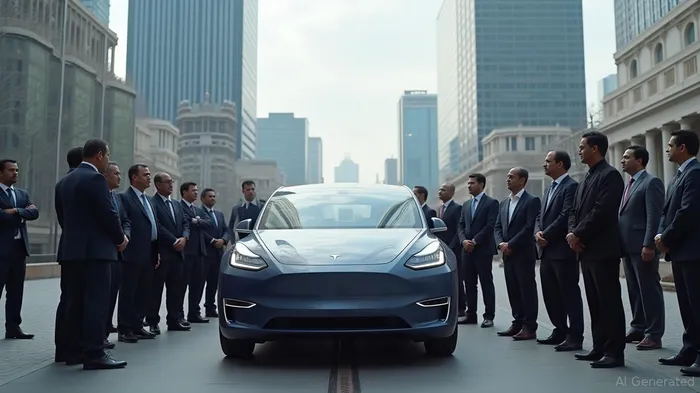
Tesla has finally launched in India, opening a showroom in Mumbai, the country's economic capital. This move has been anticipated for years and is seen as a potential game-changer for the electric vehicle (EV) market in the world's third-largest car market by volume. The launch comes at a time when Tesla's CEO, Elon Musk, is looking to boost flagging sales.
However, India's car market has proven to be a challenging landscape for many western brands. The market is dominated by local brands such as Maruti, Mahindra, and Tata, with Maruti being the world’s tenth most valuable carmaker. High import tariffs, fierce competition, and low-margin subcompacts have made it difficult for foreign brands to succeed. Brands like Chevrolet and Ford have exited the market entirely over the past decade, and even President Trump has shied away from the punishing import tariffs.
When it comes to EVs specifically, demand in India remains relatively low, with only 3% of the 1.97 million cars sold in the first half of this year being fully electric. This equates to just 60,000 cars, but the segment did expand at a rate of 23% year-on-year. The Tata Nexon EV has led the EV segment, but it is now facing competition from the domestically built MG Windsor, which offers a rental option for the expensive battery, reducing the price to around $11,500.
The Indian government has set a target of 30% of the new car market being EVs by 2030, as the country struggles with dangerous levels of air pollution. India has the fifth worst air pollution in the world, with concentrations of hazardous fine particulates averaging over 50 micrograms per cubic meter, more than 10 times the recommended guideline by the World Health Organization. Twelve of the top 20 worst cities globally are located in India, with New Delhi topping the list for the sixth straight year.
Tesla is now taking orders for delivery in two metropolitan areas: Mumbai and Delhi. It is offering the entry single-motor Model Y in two versions: standard range with 500 kilometers and long range with 622 km. However, the price tag is hefty, starting at 61 lakh rupees when taxes and fees are included, which works out to be approximately $71,000. This is roughly double what the Model Y costs in the United States, due to duties of 70% slapped onto the hood of cars imported into the country.
Tesla's decision not to enter the market with a stripped-down version, as it did in Mexico, is seen as a shrewd move. Indian consumers rejected the Tata Nano, the world’s cheapest car, in part because it lacked prestige and status. Tesla's Model Y, on the other hand, is a car sold around the world that a German or American driver would also buy, appealing to the Indian consumer's desire for prestige and status.
Many western brands were lured by Prime Minister Narendra Modi’s push to reform a bureaucratic economy that stifled growth. His new Goods and Services Tax replaced a byzantine tax code that included oddities like the octroi, a city toll on goods originating in the Roman empire. However, there are still large differences between regional governments, with taking delivery of a TeslaTSLA-- Model Y in the neighboring satellite city of Gurugram adding an extra $6,700 to the purchase price due to a much heavier road tax levied in Gurugram’s Haryana state.
These particular pitfalls, so peculiar to India, are in part why European carmakers Fiat and Opel closed up shop. Even Nissan’s low-cost Datsun brand, which chose India for its relaunch, has folded. Volkswagen Group, number two in the world behind ToyotaTM--, is still present but continues to struggle. Ford also tried to enter the market, even setting up a manufacturing plant, but they were not competitive and ended up refocusing their plants towards export, because at least India’s labor costs are low.

Stay ahead of the market.
Get curated U.S. market news, insights and key dates delivered to your inbox.
AInvest
PRO
AInvest
PRO



Comments
No comments yet