
Tesla and Elon Musk Sued Over Misleading Claims About Robotaxi Safety
ByAinvest
Tuesday, Aug 5, 2025 12:33 pm ET2min read
RACE--
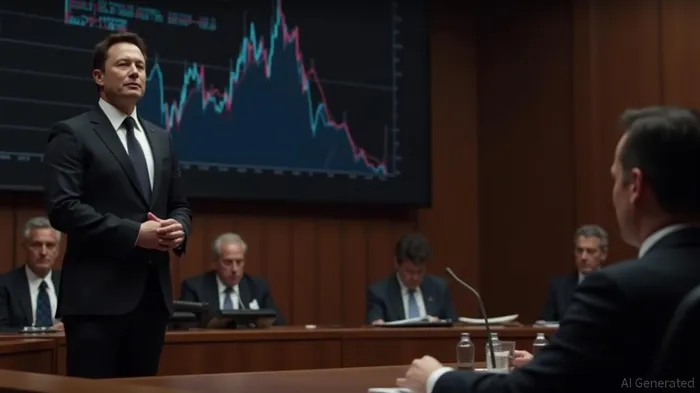
The proposed class action, led by Tesla shareholder Denise Morand, seeks unspecified damages for shareholders between April 19, 2023, and June 22, 2025. The lawsuit claims that Musk and Tesla overstated the effectiveness of their autonomous driving technology, inflating the company's financial prospects and stock price. Tesla's share price fell by 6.1% over two trading days following the test, wiping out about $68 billion of market value [1][2][3].
The lawsuit follows a public test of Tesla's Robotaxi service in Austin, Texas, where vehicles were observed speeding, braking suddenly, driving over a curb, entering the wrong lane, and dropping off passengers in the middle of multilane roads. Musk had assured investors on an April 22 conference call that Tesla was "laser-focused on bringing robotaxi to Austin in June," and the company claimed its approach to autonomous driving would deliver "scalable and safe deployment across diverse geographies and use cases" [1][2].
Tesla did not immediately respond to requests for comment. Chief Financial Officer Viabhav Taneja and his predecessor Zachary Kirkhorn are also named as defendants in the lawsuit. The case is Morand v Tesla Inc et al, U.S. District Court, Western District of Texas, No. 25-01213 [1][2].
Expanding robotaxis is crucial for Tesla as the company faces falling demand for its aging electric vehicles and a backlash over Musk's politics. Musk aims to offer the service to half the U.S. population by year-end but must convince regulators and assure the public that his technology is safe [1][2].
Tesla has faced regulatory scrutiny and public concerns over the safety of its autonomous driving technology. In August 2023, a Florida jury found Tesla 33% responsible for a 2019 crash involving its self-driving software, which killed a 22-year-old woman and injured her boyfriend, and ordered it to pay about $243 million in damages to victims. Tesla blamed the driver and plans to appeal [1][2].
The lawsuit is the latest challenge for Musk and Tesla, who are also dealing with a potential activist shareholder campaign. Musk has warned that activist shareholders pose a threat to both the company and his position as CEO [5].
References:
[1] https://www.reuters.com/sustainability/boards-policy-regulation/tesla-musk-sued-by-shareholders-over-robotaxi-claims-2025-08-05/
[2] https://www.tradingview.com/news/reuters.com,2025:newsml_L1N3TX0ST:0-tesla-elon-musk-sued-by-shareholders-over-robotaxi-claims/
[3] https://www.investors.com/news/tesla-stock-robotaxi-lawsuit-stock-market/
[4] https://www.reuters.com/sustainability/boards-policy-regulation/tesla-elon-musk-sued-by-shareholders-over-robotaxi-claims-2025-08-05/
[5] https://www.teslarati.com/tesla-activist-shareholders-sue-company-elon-musk-robotaxi-rollout/
TSLA--
Tesla and Elon Musk are being sued by shareholders for allegedly concealing the risk of its self-driving vehicles, including Robotaxi, being dangerous. The lawsuit claims that Musk and Tesla overstated the effectiveness of their autonomous driving technology, inflating the company's financial prospects and stock price. The lawsuit seeks damages for shareholders between April 19, 2023 and June 22, 2025. Tesla faces a backlash over Musk's politics and must convince regulators and the public that its technology is safe.
Tesla Inc. (TSLA) and its CEO, Elon Musk, are facing a lawsuit from shareholders alleging securities fraud. The lawsuit, filed in Austin, Texas, federal court, accuses the company of concealing significant risks associated with its self-driving vehicles, including the Robotaxi, which were publicly tested in late June [1][2][3][4][5].The proposed class action, led by Tesla shareholder Denise Morand, seeks unspecified damages for shareholders between April 19, 2023, and June 22, 2025. The lawsuit claims that Musk and Tesla overstated the effectiveness of their autonomous driving technology, inflating the company's financial prospects and stock price. Tesla's share price fell by 6.1% over two trading days following the test, wiping out about $68 billion of market value [1][2][3].
The lawsuit follows a public test of Tesla's Robotaxi service in Austin, Texas, where vehicles were observed speeding, braking suddenly, driving over a curb, entering the wrong lane, and dropping off passengers in the middle of multilane roads. Musk had assured investors on an April 22 conference call that Tesla was "laser-focused on bringing robotaxi to Austin in June," and the company claimed its approach to autonomous driving would deliver "scalable and safe deployment across diverse geographies and use cases" [1][2].
Tesla did not immediately respond to requests for comment. Chief Financial Officer Viabhav Taneja and his predecessor Zachary Kirkhorn are also named as defendants in the lawsuit. The case is Morand v Tesla Inc et al, U.S. District Court, Western District of Texas, No. 25-01213 [1][2].
Expanding robotaxis is crucial for Tesla as the company faces falling demand for its aging electric vehicles and a backlash over Musk's politics. Musk aims to offer the service to half the U.S. population by year-end but must convince regulators and assure the public that his technology is safe [1][2].
Tesla has faced regulatory scrutiny and public concerns over the safety of its autonomous driving technology. In August 2023, a Florida jury found Tesla 33% responsible for a 2019 crash involving its self-driving software, which killed a 22-year-old woman and injured her boyfriend, and ordered it to pay about $243 million in damages to victims. Tesla blamed the driver and plans to appeal [1][2].
The lawsuit is the latest challenge for Musk and Tesla, who are also dealing with a potential activist shareholder campaign. Musk has warned that activist shareholders pose a threat to both the company and his position as CEO [5].
References:
[1] https://www.reuters.com/sustainability/boards-policy-regulation/tesla-musk-sued-by-shareholders-over-robotaxi-claims-2025-08-05/
[2] https://www.tradingview.com/news/reuters.com,2025:newsml_L1N3TX0ST:0-tesla-elon-musk-sued-by-shareholders-over-robotaxi-claims/
[3] https://www.investors.com/news/tesla-stock-robotaxi-lawsuit-stock-market/
[4] https://www.reuters.com/sustainability/boards-policy-regulation/tesla-elon-musk-sued-by-shareholders-over-robotaxi-claims-2025-08-05/
[5] https://www.teslarati.com/tesla-activist-shareholders-sue-company-elon-musk-robotaxi-rollout/
Stay ahead of the market.
Get curated U.S. market news, insights and key dates delivered to your inbox.


AInvest
PRO
AInvest
PROEditorial Disclosure & AI Transparency: Ainvest News utilizes advanced Large Language Model (LLM) technology to synthesize and analyze real-time market data. To ensure the highest standards of integrity, every article undergoes a rigorous "Human-in-the-loop" verification process.
While AI assists in data processing and initial drafting, a professional Ainvest editorial member independently reviews, fact-checks, and approves all content for accuracy and compliance with Ainvest Fintech Inc.’s editorial standards. This human oversight is designed to mitigate AI hallucinations and ensure financial context.
Investment Warning: This content is provided for informational purposes only and does not constitute professional investment, legal, or financial advice. Markets involve inherent risks. Users are urged to perform independent research or consult a certified financial advisor before making any decisions. Ainvest Fintech Inc. disclaims all liability for actions taken based on this information. Found an error?Report an Issue


ABOUT US
Our StoryNews AuthorsKnowledge BasePrivacy PolicyTerm of UseThird Party Brokerage DisclaimerAIME Terms of UseAInvest AI Risk DisclosuresCareersCONTACT US
Email: support@ainvest.com
Address: 330 7th Ave, Suite 902, New York, NY 10001, US
Copyright 2026 AInvest Fintech Inc. All rights reserved.


Comments
No comments yet