
Tesla's Earnings Miss and Musk's Warning Signal a Pivotal Moment for EV Market Confidence
 Aime Summary
The electric vehicle (EV) sector is at a crossroads. Tesla's Q2 2025 earnings report, coupled with Elon Musk's blunt warnings about “a few rough quarters,” has sent shockwaves through investor sentiment. While the company's revenue narrowly beat expectations and earnings per share aligned with forecasts, the broader implications of its performance—declining regulatory credit revenue, expiring tax incentives, and rising tariffs—have raised urgent questions about the sustainability of EV growth. For investors, this moment demands a careful balancing act: recognizing near-term risks while evaluating the long-term strategic positioning of EV stocks in a rapidly shifting landscape.
Short-Term Risks: A Perfect Storm of Policy and Profit Pressures
Tesla's Q2 2025 results revealed a sharp decline in auto revenue, dropping from $19.9 billion in Q2 2024 to $16.7 billion this year. A key culprit: the 51% year-over-year drop in revenue from auto regulatory credits, which fell to $439 million from $890 million. This decline reflects the impending expiration of the $7,500 federal EV tax credit under the “One Big Beautiful Bill,” a policy shift that has forced TeslaRACE-- to accelerate sales before the incentive vanishes at the end of September.
Compounding the issue are Trump-era tariffs, which have added $300 million in costs to Tesla's operations. The company's CFO, Vaibhav Taneja, acknowledged during the earnings call that these tariffs, combined with the loss of regulatory credit revenue, will pressure margins in the short term. Meanwhile, shifting consumer preferences—particularly a growing demand for hybrids and more affordable models—have further strained Tesla's ability to maintain its market dominance.
The market reacted swiftly to these headwinds. Tesla's stock fell more than 8% in post-earnings trading, marking a new low for the year. Analysts at UBSUBS-- downgraded the stock to “Sell,” while Morgan StanleyMS-- maintained a cautious “Top Pick” rating, emphasizing the need for patience as Tesla navigates this transition period.
Investor Sentiment: A Tug-of-War Between Optimism and Caution
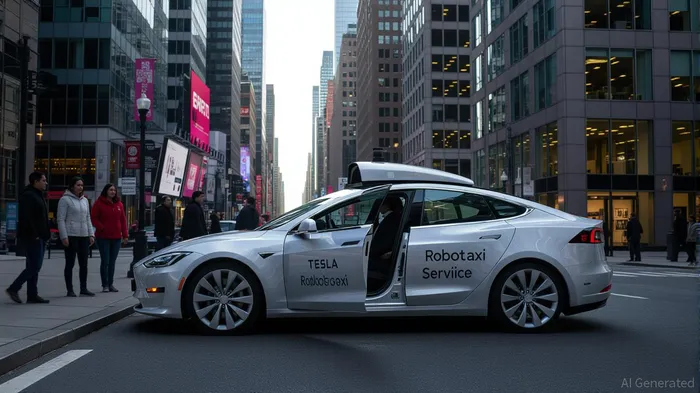
Investor sentiment has been split. On one hand, Musk's focus on AI, robotics, and robotaxi services has reignited long-term optimism. The launch of Tesla's robotaxi service in Austin, Texas, and plans to expand to other U.S. cities by year-end highlight the company's ambition to transition from an EV manufacturer to a tech-driven infrastructure platform. Musk's assertion that FSD-equipped Tesla vehicles are “10 times safer” than conventional cars has also bolstered confidence in the company's autonomous driving roadmap.
On the other hand, near-term challenges loom large. The expiration of EV tax credits, coupled with Trump-era tariffs, has created a volatile environment for automakers. Tesla's global delivery numbers fell 13.5% year-over-year in Q2, and its U.S. market share dropped to 43.4%, a significant decline in a sector once dominated by the company. With production delays for its more affordable “Model 2” and rising competition from Chinese automakers like BYD and XpengXPEV--, investors are bracing for a period of uncertainty.
Long-Term Strategic Positioning: Can Tesla Weather the Storm?
Despite the immediate headwinds, Tesla's long-term vision remains ambitious. The company's investments in AI, robotics, and energy infrastructure—exemplified by its Optimus humanoid robot and the expansion of its Supercharging network—position it to capitalize on emerging markets. The robotaxi service, in particular, represents a high-stakes bet on the future of mobility. If successful, it could unlock new revenue streams and redefine Tesla's role in the transportation ecosystem.
However, execution will be critical. Tesla must scale its robotaxi service while managing the transition to higher-margin products. The company's ability to navigate regulatory hurdles for autonomous vehicles and maintain leadership in AI-driven innovation will determine whether it can outpace competitors like Waymo and UberUBER--.
For the broader EV market, Tesla's struggles are a bellwether. The expiration of tax credits and tariffs are likely to slow EV adoption in the U.S., but they also force automakers to innovate. Companies that can adapt—by reshoring production, optimizing supply chains, or developing unique value propositions—may emerge stronger.
Investment Advice: Balancing Risk and Opportunity
For investors, the key lies in hedging against short-term volatility while staying positioned for long-term growth. Here's how to approach the EV sector:
Short-Term Cautiousness: Avoid overexposure to EV stocks in the near term, especially those heavily reliant on regulatory incentives. Tesla's stock remains volatile, and further declines could occur if Musk's “rough quarters” materialize.
Diversify Within the Sector: Look for EV companies with strong balance sheets and diversified revenue streams. For example, firms investing in energy storage, battery recycling, or AI-driven logistics could benefit from the broader transition to electrification.
Monitor Regulatory and Tariff Developments: The EV sector is highly sensitive to policy changes. Track updates on tax credit extensions, tariff adjustments, and international trade agreements, particularly in markets like Europe and China.
Long-Term Bet on Innovation: For investors with a higher risk tolerance, Tesla's AI and robotaxi initiatives represent a compelling long-term opportunity. However, success hinges on execution and regulatory approvals.
Global Perspective: While the U.S. market faces headwinds, EV adoption is growing in Europe and Asia. Consider companies with a strong international presence, such as BYD or RivianRIVN--, to mitigate U.S.-centric risks.
Conclusion: A Pivotal Moment for EVs
Tesla's Q2 2025 earnings and Musk's warnings signal a pivotal moment for the EV market. The near-term risks—expiring incentives, tariffs, and production delays—are undeniable. Yet, the long-term potential of autonomous driving, AI, and robotics remains a powerful catalyst. For investors, the challenge is to separate noise from signal, balancing caution with conviction. As the EV sector navigates this transition, those who adopt a strategic, diversified approach will be best positioned to weather the storm and capitalize on the opportunities ahead.

Delivering real-time insights and analysis on emerging financial trends and market movements.
Latest Articles
Stay ahead of the market.
Get curated U.S. market news, insights and key dates delivered to your inbox.
AInvest
PRO
AInvest
PRO



Comments
No comments yet