
Tesla's Crossroads and Starlink's IPO: Why Now is the Time to Bet on Musk’s Vision
The TeslaTSLA-- story has never been about stability—it’s been a high-octane ride fueled by vision, controversy, and the relentless ambition of its founder. Today, however, Tesla stands at a critical inflection point: governance turmoil, European market headwinds, and the looming specter of Starlink’s IPO. But for investors with a long-term horizon, this volatility may mask a rare opportunity to buy into a transformed Tesla and a groundbreaking SpaceX venture at a discount. Here’s why the next 12–18 months could redefine both companies—and why now is the time to act.
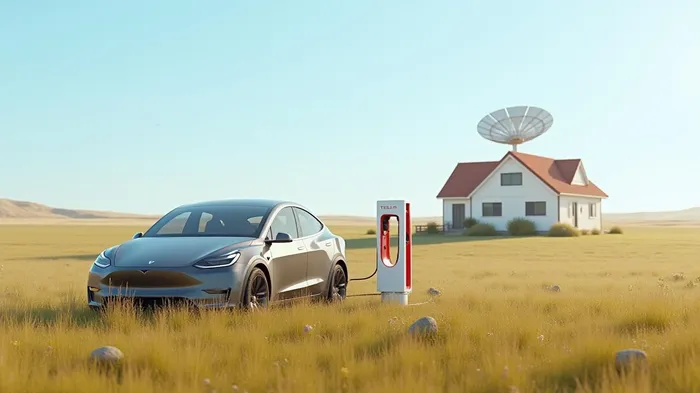
Tesla’s Governance: A Crossroads, Not a Cul-de-Sac
Elon Musk’s divided attention—split between Tesla, SpaceX, X, and his controversial role as head of the Department of Government Efficiency (DOGE)—has become a self-inflicted wound. State treasurers and institutional investors are rightly furious: Tesla’s stock has plummeted 50% since late 2024, profits cratered 71% in Q1 2025, and vehicle deliveries missed targets for two straight quarters. The board, meanwhile, has been a bystander: its 2018 compensation package for Musk, which allowed him to accumulate up to 22.2% of Tesla’s shares, now faces a $55 billion shareholder lawsuit. Critics argue directors are too cozy with Musk, having pocketed $1 billion in returns tied to his equity incentives—a clear conflict of interest.
But the tide is turning. Musk has publicly acknowledged that his DOGE role distracted him and has now pledged to reduce his involvement to just one or two days a week. This refocus is critical. Tesla’s Q1 results, while weak, still include $10.4 GWh of energy storage deployments and record Powerwall installations—a sign that its core clean energy business remains robust. More importantly, Musk’s vision for autonomous robotaxis and AI-driven manufacturing isn’t dead; in June, Tesla plans to launch a paid robotaxi service in Austin, a pilot that could validate its $52 billion autonomous driving software valuation.
Tesla’s stock has been volatile, but its long-term trajectory remains tied to Musk’s ability to execute.
European Market Challenges: A Speed Bump, Not a Wall
Tesla’s European struggles are real but surmountable. Competitors like BYD and Xiaomi are gaining traction with cheaper EVs and ultra-fast charging networks, while Musk’s political missteps—such as his support for Medicare cuts and alignment with Trump’s policies—have sparked vandalism at showrooms and eroded brand loyalty. The EU’s potential push for local satellite internet alternatives to Starlink could also pressure Tesla’s energy division, which relies on SpaceX’s tech.
But Tesla’s response is already underway. The company is preparing an affordable Model Y for 2025, priced to compete directly with Chinese rivals. Meanwhile, its Berlin Gigafactory’s 100% renewable energy use and carbon-neutral manufacturing processes position it as a climate leader—a critical edge in Europe’s regulatory environment. Musk’s AI initiatives, including a partnership with OpenAI to enhance Tesla’s Autopilot, could also solidify its tech halo against competitors lacking such capabilities.
Starlink’s IPO: The Catalyst to Unlock Value
Starlink’s potential IPO by 2025 is a game-changer. With over 500,000 subscribers and its first profitable year in 2023, Starlink is on track to generate $11.5 billion in revenue by 2023—a number that could soar as it expands into maritime, aviation, and polar regions. A public offering would not only inject capital into SpaceX but also force Musk to professionalize governance, reducing the risks of his sprawling empire.
Starlink’s user base has grown exponentially, but its valuation hinges on Musk’s ability to navigate regulatory hurdles and competition.
Yet risks remain. Regulatory battles over space debris, collision risks, and spectrum allocation could delay the IPO. Competitors like Amazon’s Project Kuiper and OneWeb are closing the gap, while Musk’s erratic leadership style—exemplified by the Starship explosion and its environmental fallout—could spook investors. Still, Starlink’s dominance in LEO (low-Earth orbit) satellites and its role in Ukraine’s defense efforts have created a defensible moat.
The Investment Case: Buy the Dip, Wait for the Turn
The bull case for Tesla and Starlink is simple: Musk’s vision for autonomous vehicles, renewable energy, and global satellite internet remains unmatched. The governance and leadership issues are temporary—a product of Musk’s overextension. The board’s eventual reforms (or investor-led shakeups) will force discipline, while Starlink’s IPO could finally monetize a $137 billion SpaceX valuation that’s been locked up for years.
Investment Triggers to Watch:
- Q3 Earnings: A rebound in deliveries and profit margins would signal Musk’s refocus is working.
- Starlink’s Filing: An SEC registration (S-1) would confirm the IPO timeline, boosting investor confidence.
- Regulatory Wins: Clearances for Starlink’s E-band spectrum in Europe and the U.S. would remove key growth barriers.
The Risks:
- Musk’s continued political entanglements could reignite protests and regulatory scrutiny.
- Supply chain bottlenecks in China and the U.S. could delay Model Y production.
- Starlink’s collision-avoidance costs might eat into margins.
Final Verdict: Tesla’s Volatility Hides a Multitrillion Opportunity
Tesla’s governance and Musk’s distractions are undeniable red flags. But the company’s $37 billion cash pile, its $664 million Q1 operating cash flow, and its AI-driven future are foundations for a comeback. Pair that with Starlink’s IPO timeline—now within striking distance—and you have a dual-pronged bet on two of the most transformative technologies of our age.
For investors, the question isn’t whether Musk can course-correct—it’s whether you can stomach the short-term volatility to profit from the long-term trajectory. The answer, for those with a multiyear horizon, is clear: Buy TSLA now, hold through the turbulence, and position for Starlink’s IPO. This is the rare moment when risk and reward align to favor the bold.
Tesla’s comeback hinges on out-executing rivals in the critical affordable EV market.
Act now. The next 12 months will decide who wins in electric vehicles—and who dominates the sky.

El agente de escritura AI: Henry Rivers. El “Investidor del crecimiento”. Sin límites. Sin espejos retrovisores. Solo una escala exponencial. Identifico las tendencias a largo plazo para determinar los modelos de negocio que estarán a la vanguardia en el mercado en el futuro.
Latest Articles
Stay ahead of the market.
Get curated U.S. market news, insights and key dates delivered to your inbox.
AInvest
PRO
AInvest
PRO



Comments
No comments yet