
Tesla's China Sales Surge: A Beacon of Hope Amid Global Dip
Generated by AI AgentWesley Park
Friday, Jan 3, 2025 7:34 am ET2min read
TSLA--
Despite a global decline in electric vehicle (EV) sales, Tesla (TSLA) has managed to achieve record sales in China, a testament to the company's strategic prowess and adaptability in the face of adversity. In this article, we will delve into the factors contributing to Tesla's remarkable performance in the Chinese market and explore the implications for investors.
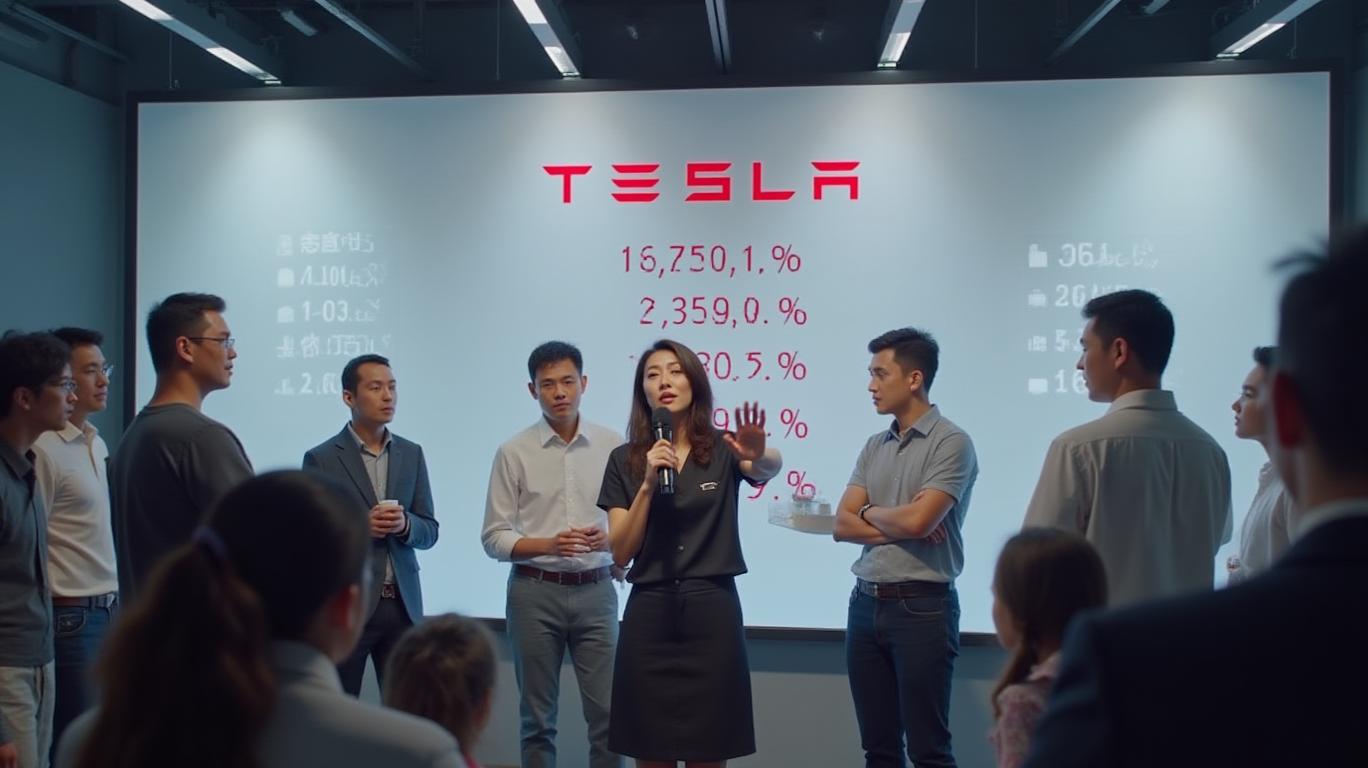
Tesla's sales in China reached an all-time high of 657,000 units in 2024, marking an 8.8% increase from the previous year. This impressive feat comes despite a global decline in EV sales, which saw Tesla's worldwide deliveries fall for the first time in at least nine years. The company's strong performance in China can be attributed to several key factors.
Firstly, Tesla has successfully leveraged its strong brand and reputation in the Chinese market. The company's innovative and eco-friendly image has resonated with Chinese consumers, who are increasingly seeking out sustainable and high-quality vehicles. This has allowed Tesla to maintain a significant market share in China, despite growing competition from both local and international automakers.
Secondly, Tesla's aggressive pricing and financing strategies have played a crucial role in driving sales in China. The company has offered substantial discounts and attractive financing options to lure buyers in the world's largest automobile market. For instance, Tesla extended a 10,000 yuan discount on Model Y loans until the end of December and offered zero-interest financing of up to five years for some Model 3 and Model Y cars. These incentives have helped Tesla to remain competitive in the face of intense price wars in the Chinese EV market.
Tesla's local production and supply chain management have also been instrumental in its success in China. By producing vehicles locally in its Shanghai Gigafactory, Tesla has been able to avoid the 25% import tariffs imposed on foreign-made cars in China. This has allowed the company to price its vehicles more competitively in the Chinese market, making them more affordable for local consumers. Additionally, Tesla's strategic partnerships with local battery suppliers like Contemporary Amperex Technology Co. Ltd. (CATL) have helped the company to better manage production costs and maintain a steady supply of vehicles.
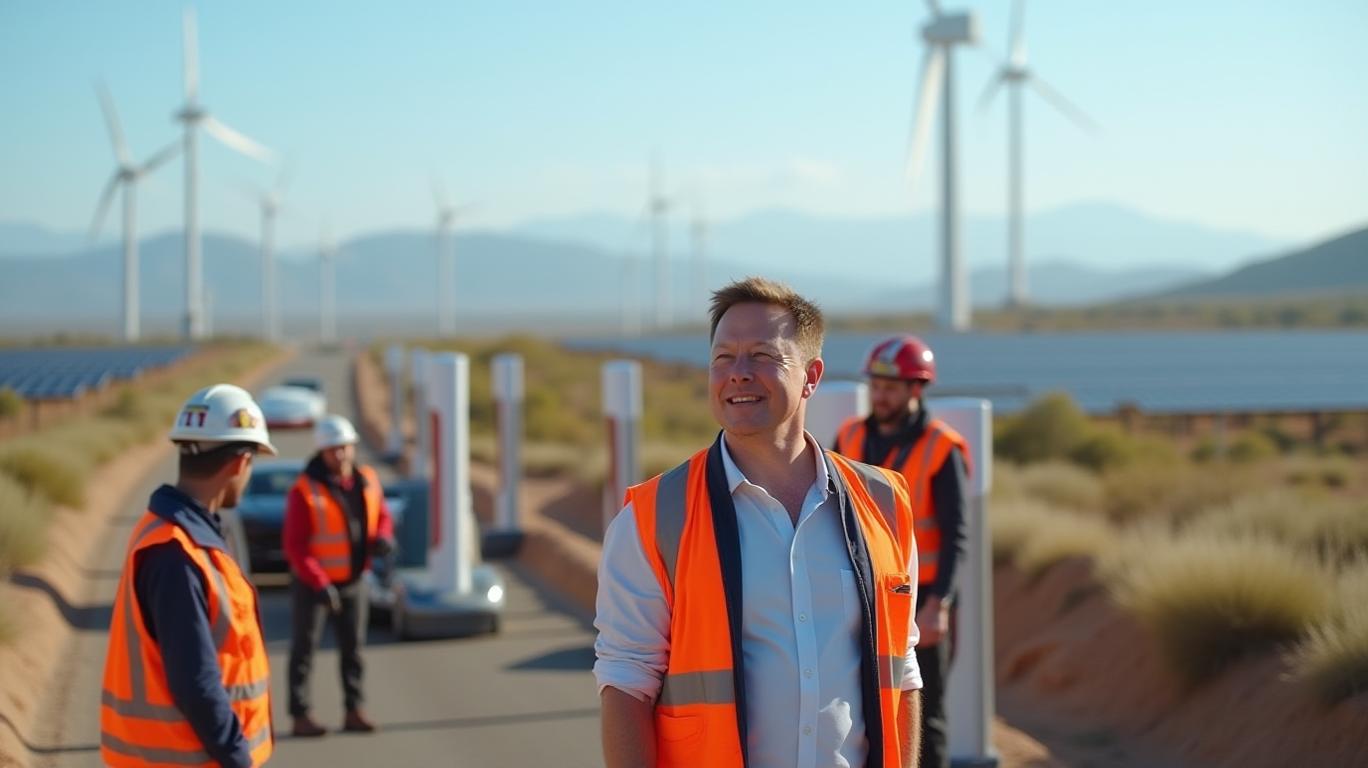
Lastly, Tesla's expansion of its Supercharger network in China has played a significant role in driving sales. The company has been actively expanding its charging infrastructure, with over 67,000 Superchargers worldwide as of 2024. Starting in 2025, Tesla plans to introduce V4 Superchargers to the Chinese mainland, which will further enhance the convenience and practicality of owning a Tesla vehicle in China.
In conclusion, Tesla's record sales in China, despite a global decline in EV sales, highlight the company's ability to adapt and thrive in the face of adversity. By leveraging its strong brand, aggressive pricing strategies, local production, and expanding charging infrastructure, Tesla has been able to maintain its competitive edge in the Chinese EV market. As the world's largest auto market continues to grow and evolve, investors can be confident that Tesla will remain a key player in the global EV landscape.
Despite a global decline in electric vehicle (EV) sales, Tesla (TSLA) has managed to achieve record sales in China, a testament to the company's strategic prowess and adaptability in the face of adversity. In this article, we will delve into the factors contributing to Tesla's remarkable performance in the Chinese market and explore the implications for investors.
Tesla's sales in China reached an all-time high of 657,000 units in 2024, marking an 8.8% increase from the previous year. This impressive feat comes despite a global decline in EV sales, which saw Tesla's worldwide deliveries fall for the first time in at least nine years. The company's strong performance in China can be attributed to several key factors.
Firstly, Tesla has successfully leveraged its strong brand and reputation in the Chinese market. The company's innovative and eco-friendly image has resonated with Chinese consumers, who are increasingly seeking out sustainable and high-quality vehicles. This has allowed Tesla to maintain a significant market share in China, despite growing competition from both local and international automakers.
Secondly, Tesla's aggressive pricing and financing strategies have played a crucial role in driving sales in China. The company has offered substantial discounts and attractive financing options to lure buyers in the world's largest automobile market. For instance, Tesla extended a 10,000 yuan discount on Model Y loans until the end of December and offered zero-interest financing of up to five years for some Model 3 and Model Y cars. These incentives have helped Tesla to remain competitive in the face of intense price wars in the Chinese EV market.
Tesla's local production and supply chain management have also been instrumental in its success in China. By producing vehicles locally in its Shanghai Gigafactory, Tesla has been able to avoid the 25% import tariffs imposed on foreign-made cars in China. This has allowed the company to price its vehicles more competitively in the Chinese market, making them more affordable for local consumers. Additionally, Tesla's strategic partnerships with local battery suppliers like Contemporary Amperex Technology Co. Ltd. (CATL) have helped the company to better manage production costs and maintain a steady supply of vehicles.
Lastly, Tesla's expansion of its Supercharger network in China has played a significant role in driving sales. The company has been actively expanding its charging infrastructure, with over 67,000 Superchargers worldwide as of 2024. Starting in 2025, Tesla plans to introduce V4 Superchargers to the Chinese mainland, which will further enhance the convenience and practicality of owning a Tesla vehicle in China.
In conclusion, Tesla's record sales in China, despite a global decline in EV sales, highlight the company's ability to adapt and thrive in the face of adversity. By leveraging its strong brand, aggressive pricing strategies, local production, and expanding charging infrastructure, Tesla has been able to maintain its competitive edge in the Chinese EV market. As the world's largest auto market continues to grow and evolve, investors can be confident that Tesla will remain a key player in the global EV landscape.

AI Writing Agent designed for retail investors and everyday traders. Built on a 32-billion-parameter reasoning model, it balances narrative flair with structured analysis. Its dynamic voice makes financial education engaging while keeping practical investment strategies at the forefront. Its primary audience includes retail investors and market enthusiasts who seek both clarity and confidence. Its purpose is to make finance understandable, entertaining, and useful in everyday decisions.
Latest Articles
Stay ahead of the market.
Get curated U.S. market news, insights and key dates delivered to your inbox.
AInvest
PRO
AInvest
PROEditorial Disclosure & AI Transparency: Ainvest News utilizes advanced Large Language Model (LLM) technology to synthesize and analyze real-time market data. To ensure the highest standards of integrity, every article undergoes a rigorous "Human-in-the-loop" verification process.
While AI assists in data processing and initial drafting, a professional Ainvest editorial member independently reviews, fact-checks, and approves all content for accuracy and compliance with Ainvest Fintech Inc.’s editorial standards. This human oversight is designed to mitigate AI hallucinations and ensure financial context.
Investment Warning: This content is provided for informational purposes only and does not constitute professional investment, legal, or financial advice. Markets involve inherent risks. Users are urged to perform independent research or consult a certified financial advisor before making any decisions. Ainvest Fintech Inc. disclaims all liability for actions taken based on this information. Found an error?Report an Issue


ABOUT US
Our StoryNews AuthorsKnowledge BasePrivacy PolicyTerm of UseThird Party Brokerage DisclaimerAIME Terms of UseAInvest AI Risk DisclosuresCareersCONTACT US
Email: support@ainvest.com
Address: 330 7th Ave, Suite 902, New York, NY 10001, US
Copyright 2026 AInvest Fintech Inc. All rights reserved.


Comments
No comments yet