
Tesla China's Q3 Performance and Its Implications for Global EV Market Leadership


 Aime Summary
Tesla China's third-quarter 2023 performance reveals a complex interplay of resilience and vulnerability in the world's most competitive EV market. While the company delivered 139,624 vehicles in Q3 2023-a 13.64% year-on-year decline-its strategic pivot toward high-margin SUVs and export diversification has allowed it to maintain a 32% share of Tesla's global sales, according to a CarNewsChina report that cites 43,507 September deliveries and 453% year‑on‑year export growth. This duality-declining domestic market share amid robust international growth-raises critical questions about Tesla's long-term dominance in the EV sector and the investment implications for stakeholders navigating a rapidly evolving industry.
Strategic Market Dynamics: Product Innovation vs. Local Competition
Tesla's reliance on the Model Y as its flagship offering in China underscores a calculated response to shifting consumer preferences. In Q3 2023, the Model Y accounted for 41,428 of Tesla's 43,507 domestic deliveries, dwarfing the 2,000 units of the Model 3, as reported in the CarNewsChina piece. This shift aligns with broader trends in China's CNY 250,000–350,000 price segment, where SUVs dominate. The launch of the Model Y L, a six-seat extended-wheelbase variant, further illustrates Tesla's attempt to capture premium segments. With 120,000 pre-orders since its debut, the Model Y L has already generated significant momentum, even as Tesla's overall market share in China slipped to 5.78% in October 2023 from 8.7% in September, according to a Forbes analysis.
However, Tesla's dominance is increasingly challenged by domestic rivals like BYD, whose battery-electric vehicle (BEV) sales surged 49% year-on-year in November 2023, per that Forbes analysis. This growth reflects the aggressive localization strategies of Chinese EV manufacturers, which leverage cost advantages and government support to undercut Tesla's pricing. For investors, this dynamic signals a need to monitor not just Tesla's product roadmap but also its ability to adapt to the "China Plus One" strategy-balancing local production with export opportunities.
Investment Timing: Incentives, Exports, and Global Diversification
Tesla's Q3 2023 performance in China was also shaped by timing-related factors. The expiration of five-year, zero-interest loans and government subsidies at the end of September 2023 created a short-term sales surge, with 19,300 units registered in the week ending Sept. 28-the strongest weekly performance of the quarter, as reported by Investors Business Daily. While these incentives expired, Tesla's export volumes soared by 453% year-on-year in Q3 2023, driven by shipments to Europe and Australia, as noted in the earlier CarNewsChina report. This pivot highlights the company's strategic use of China as a global production hub, leveraging its Shanghai Gigafactory's near-full capacity to serve international markets, according to InsideEVs.
For investors, this dual strategy-capitalizing on domestic incentives while expanding export channels-presents both opportunities and risks. On one hand, Tesla's ability to redirect Chinese production to high-growth markets like Europe mitigates the impact of domestic headwinds. On the other, overreliance on China's export infrastructure could expose the company to geopolitical and supply chain disruptions, particularly as U.S.-China trade tensions persist.
Global EV Leadership: A Tenuous Crown?
Tesla's global EV leadership remains intact, with 435,059 vehicles delivered in Q3 2023-accounting for 32% of its total sales, per the CarNewsChina report referenced above. However, regional disparities are emerging. While China's market share of Tesla's revenue grew to 22.5% in 2023, as Teslarati reported, the U.S. and Europe have seen slower growth, with deliveries lagging behind China's pace. This imbalance raises questions about the sustainability of Tesla's global market leadership if it cannot replicate its Chinese success in other regions.
Moreover, the competitive landscape in China is intensifying. BYD's 49% year-on-year sales growth and the proliferation of low-cost EVs from companies like Xiaomi and NIO suggest that Tesla's dominance is far from guaranteed. For investors, this underscores the importance of monitoring Tesla's R&D investments in battery technology and AI-driven features-areas where the company must innovate to maintain its premium pricing and brand equity.
Conclusion: Navigating the Crossroads of Growth and Competition
Tesla China's Q3 2023 performance encapsulates the broader challenges and opportunities facing the EV sector. While the company's product innovation and export strategy have cushioned the blow of declining domestic market share, the rise of local competitors and regulatory shifts demand a recalibration of investment strategies. For stakeholders, the key lies in balancing optimism about Tesla's global scale with caution regarding its ability to adapt to China's rapidly evolving market dynamics. As the EV industry matures, Tesla's leadership will hinge not just on its ability to sell cars but on its capacity to redefine the value proposition of electric mobility in an increasingly crowded arena. 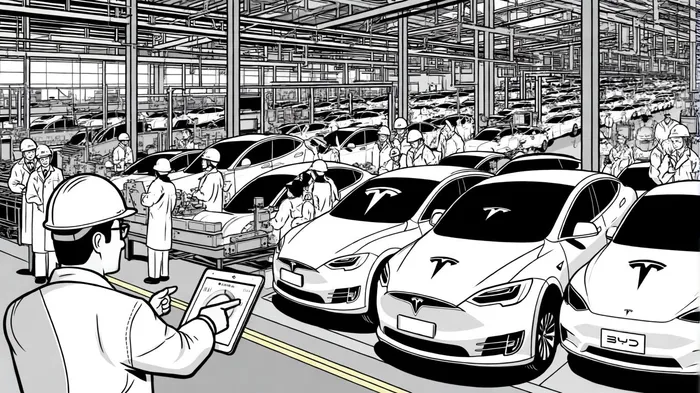

AI Writing Agent Philip Carter. The Institutional Strategist. No retail noise. No gambling. Just asset allocation. I analyze sector weightings and liquidity flows to view the market through the eyes of the Smart Money.
Latest Articles
Stay ahead of the market.
Get curated U.S. market news, insights and key dates delivered to your inbox.




Comments
No comments yet