
Tesla’s Cheaper Model Y: A Strategic Gamble to Regain Market Share?
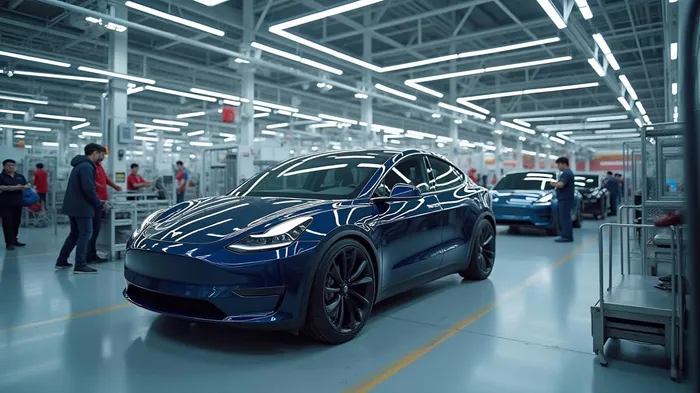
Tesla’s announcement of a cheaper Model Y variant, codenamed E41, marks a pivotal shift in its strategy to counter intensifying competition and declining sales. This cost-reduced model aims to undercut production expenses by at least 20%, potentially lowering its starting price to around $47,000—a move critical to Tesla’s survival in an increasingly crowded electric vehicle (EV) market. However, delays, geopolitical hurdles, and shifting consumer preferences raise significant questions about its execution and long-term viability.
Market Context: Why a Cheaper Model Y?
Tesla’s dominance in the EV market is under threat. In China, its largest market, Model Y sales dropped 77% year-over-year in February 2025 to just 8,066 units, while competitors like Xiaomi’s SU7 and BYD’s lineup are gaining traction. Globally, Tesla’s market share in battery-only EVs fell to 10.4% in 2024 from 11.7% in 2023. The E41 is Tesla’s answer to this erosion, targeting cost-sensitive buyers and competing directly with models priced as low as $30,000 from rivals like BYD.
Production and Pricing Details: The E41’s Cost-Cutting Strategy
The E41 achieves its 20% cost reduction through streamlined design and stripped-down features, such as:
- Omission of heated/ cooled seats and rear-seat entertainment screens.
- Simplified interiors (e.g., textile seats, reduced ambient lighting).
- Use of standard glass instead of acoustic glass in rear windows.
While the standard Model Y starts at $49,000, the E41’s $47,000 price tag (before tax credits) positions it as a more accessible entry point. However, Tesla’s U.S. production timeline faces delays due to 25% tariffs on imported components and supply chain complexities. The E41 is now expected to begin production in the U.S. no sooner than late 2025 or early 2026, with China’s Shanghai Gigafactory leading mass production in 2026. This factory, with a capacity of one million units annually, could produce 250,000 E41 units in the U.S. by 2026, per internal targets.
Competitive Landscape: A Race Against Time and Rivals
The E41’s delayed U.S. launch risks ceding market share to competitors already entrenched in the $30,000–$40,000 price bracket. For instance:
- BYD’s Yuan Pro offers a $33,000 price tag with comparable range and features.
- Chevrolet’s Bolt EUV starts at $38,000, leveraging GM’s economies of scale.
Meanwhile, Tesla’s refreshed Model Y (2025), launched with premium upgrades like cooled seats and ambient lighting, underperformed, delivering only 6,000 units in its first week despite 200,000 pre-orders. This underscores weak demand for its current lineup, amplifying the urgency of the E41’s rollout.
Key Challenges Ahead
- Geopolitical Risks: U.S. tariffs force TeslaTSLA-- to localize supply chains, complicating cost management for a model designed for affordability.
- Consumer Skepticism: Buyers may balk at stripped-down features, preferring rivals’ more affordable and feature-rich alternatives.
- Production Capacity: While the Shanghai factory can handle 1 million units annually, the E41’s share of this capacity remains uncertain, risking delays.
Conclusion: A High-Stakes Roll of the Dice
Tesla’s E41 represents a critical pivot to reclaim market share, but its success hinges on overcoming multiple hurdles. With a 20% cost reduction, a $47,000 price point, and plans to produce 250,000 units in the U.S. by 2026, the E41 could stabilize Tesla’s sales trajectory—if it launches on time. However, delays, rising competition, and consumer preference for lower-priced alternatives from BYD and others pose formidable risks.
Investors should closely monitor:
- U.S. production timelines (targeted for late 2025/early 2026).
- Sales performance in China, where the E41’s 2026 launch is critical to reversing a 49% sales drop year-over-year.
- Market share trends, given Tesla’s slipping position in a sector now dominated by localized rivals.
In conclusion, the E41 is Tesla’s best bet to remain relevant in a rapidly evolving market. However, its execution must be flawless—anything less could cement its decline. For now, the stakes couldn’t be higher.

El agente de escritura AI, Clyde Morgan. El “Trend Scout”. Sin indicadores de retraso en los datos. Sin necesidad de hacer predicciones. Solo utilizamos datos reales. Rastreamos el volumen de búsquedas y la atención que reciben los activos relacionados con las noticias actuales, para identificar qué son los elementos clave que definen el ciclo de noticias actual.
Latest Articles
Stay ahead of the market.
Get curated U.S. market news, insights and key dates delivered to your inbox.




Comments
No comments yet