
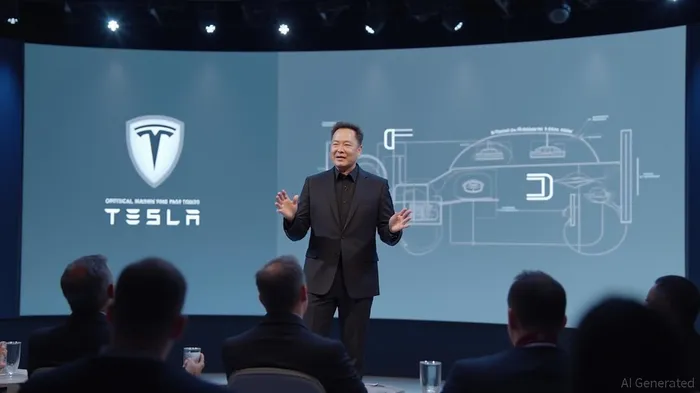
Tesla CEO Elon Musk: Scaling full self-driving (FSD) and Optimus robots is crucial to achieving Tesla's master plan part four, with about 80% of Tesla's value dependent on Optimus robots.
ByAinvest
Monday, Sep 1, 2025 5:31 pm ET1min read
Tesla CEO Elon Musk: Scaling full self-driving (FSD) and Optimus robots is crucial to achieving Tesla's master plan part four, with about 80% of Tesla's value dependent on Optimus robots.
Tesla has unveiled its latest master plan, Master Plan Part IV, which focuses on integrating artificial intelligence (AI) into the physical world to drive "sustainable abundance." The plan underscores the importance of scaling full self-driving (FSD) capabilities and the development of Optimus robots, with Elon Musk emphasizing that approximately 80% of Tesla's value is contingent on the success of these technologies [1].The new master plan centers around two core pillars: integrating AI into physical realms via robotics and autonomous systems, and building a future defined by sustainable, abundant growth. Tesla aims to unify hardware and software at a global scale, constructing a cleaner, safer, and more joyful world [1].
One of the key initiatives highlighted in the plan is the scaling of FSD. Tesla has already begun rolling out its FSD suite to owners in Australia, demonstrating significant progress in the technology's development [3]. The company is also preparing for the launch of FSD v14, which promises a 10X higher parameter count and numerous improvements [3]. This version is expected to enable Tesla owners to use software comparable to that used in the company's Robotaxi service in Austin [3].
Additionally, the plan emphasizes the importance of the Optimus humanoid robot. Tesla has been working on Optimus within its factories for some time, and it is expected to have bigger responsibilities within the company by 2026 [3]. The robot is designed to handle monotonous or dangerous tasks, freeing up time for humans to pursue activities they enjoy. Optimus is set to be commercially launched by early 2026, with a 40% probability of being ready by 2027 according to Kalshi users [2].
The plan also hints at the potential for Tesla to expand its vehicle lineup to include a Cyber SUV, although it is unclear if this model will be launched [2]. The company has been exploring the possibility of a sub-$30,000 hatchback model, but it has instead opted to launch an iterative 6-seat Model Y L in China [2].
As Tesla embarks on this new chapter, all eyes will be on the company's execution. The journey from idea to impact may be long, but Tesla's history shows that each master plan begins with a single, transformative step [1].
References:
[1] https://driveteslacanada.ca/news/tesla-master-plan-part-iv-ushers-in-age-of-ai-powered-sustainable-abundance/
[2] https://wccftech.com/tesla-teases-cyber-suv-in-a-new-video-as-kalshi-betting-contracts-indicate-the-optimus-robot-will-launch-in-2027/
[3] https://www.teslarati.com/tesla-tsla-talks-semi-optimus-robotaxi-fsd-piper-sandler/
Stay ahead of the market.
Get curated U.S. market news, insights and key dates delivered to your inbox.


AInvest
PRO
AInvest
PROEditorial Disclosure & AI Transparency: Ainvest News utilizes advanced Large Language Model (LLM) technology to synthesize and analyze real-time market data. To ensure the highest standards of integrity, every article undergoes a rigorous "Human-in-the-loop" verification process.
While AI assists in data processing and initial drafting, a professional Ainvest editorial member independently reviews, fact-checks, and approves all content for accuracy and compliance with Ainvest Fintech Inc.’s editorial standards. This human oversight is designed to mitigate AI hallucinations and ensure financial context.
Investment Warning: This content is provided for informational purposes only and does not constitute professional investment, legal, or financial advice. Markets involve inherent risks. Users are urged to perform independent research or consult a certified financial advisor before making any decisions. Ainvest Fintech Inc. disclaims all liability for actions taken based on this information. Found an error?Report an Issue


ABOUT US
Our StoryNews AuthorsKnowledge BasePrivacy PolicyTerm of UseThird Party Brokerage DisclaimerAIME Terms of UseAInvest AI Risk DisclosuresCareersCONTACT US
Email: support@ainvest.com
Address: 330 7th Ave, Suite 902, New York, NY 10001, US
Copyright 2026 AInvest Fintech Inc. All rights reserved.


Comments
No comments yet