
Tesla vs. BYD: The Definitive EV Rivalry and Your Investment Playbook
The electric vehicle (EV) revolution is no longer a distant promise—it’s a roaring reality. In this new era, TeslaTSLA-- and BYD stand as titans, each pursuing a distinct path to dominance. Tesla bets on cutting-edge innovation and premium performance, while BYD wields cost efficiency and mass-market scalability. With global EV demand projected to hit 33 million units by 2030, the question for investors is clear: Which company will deliver superior returns? Let’s dissect their strategies through three lenses—technological leadership, market penetration, and supply chain resilience—to uncover the stronger long-term bet.
Technological Leadership: Tesla’s Edge in Innovation, BYD’s Pragmatic Mastery
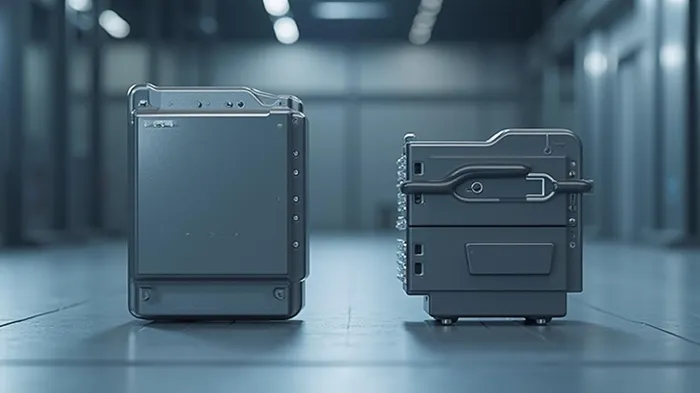
Tesla’s 4680 cylindrical battery cell, with its 241 Wh/kg energy density, remains unmatched in performance. Its tabless design reduces resistance, while advanced cooling systems manage the 2.3x higher heat output compared to BYD’s Blade cells. This technology underpins Tesla’s premium positioning, enabling vehicles like the Cybertruck to out-range competitors. However, Tesla’s reliance on high-nickel NMC811 chemistry exposes it to cobalt and nickel price volatility—a risk that could dent margins if commodity markets turn.
BYD, meanwhile, has weaponized affordability and safety. Its LFP-based Blade cells offer 160 Wh/kg energy density at a €10/kWh cost advantage, thanks to simpler cooling and scalable production. The 1,000-kW ultra-fast charging unveiled in March 2025—5-minute charging for 249 miles—is a game-changer for mass-market adoption. BYD’s Z-folded electrode design and lamination process also reduce material waste, ensuring cost leadership. While its energy density lags Tesla’s, BYD’s focus on thermal stability (minimal heat generation) and prismatic cell modularity make its tech ideal for high-volume production.
Market Penetration: BYD’s Dominance Today, Tesla’s Ambitions Tomorrow
BYD’s sales surge underscores its tactical brilliance. In Q1 2025, it sold 416,000 EVs, a 39% jump year-on-year, while Tesla’s deliveries fell 13% due to production bottlenecks. BYD’s 90% domestic dominance in China—the world’s largest EV market—and its push to double overseas shipments to 800,000 units by 2025 cement its title as the volume king. Its DiLink 4.0 (5G) and no-cost driver-assistance systems further entrench its value proposition.
Tesla, however, retains its premium halo. Its Robotaxi pilot in Austin (launching June 2025) and FSD Supervised software—now deployed in China and Europe—are bets on monetizing autonomy. Yet execution risks loom: Tesla’s $5.4 billion AI investments and delays in its low-cost EV platform (targeted below $30,000) could strain margins. Meanwhile, BYD’s 4,000 ultra-fast charging stations in China by 2025 directly address “range anxiety,” a hurdle Tesla’s Superchargers have yet to fully conquer.
Supply Chain Resilience: BYD’s Localized Play vs. Tesla’s Global Gambit
BYD’s vertical integration in China gives it a 27% cost advantage over global rivals. Its partnerships with Stellantis and CATL—building LFP battery plants in Europe—extend this advantage abroad. BYD’s 85% localization rate in China shields it from tariffs, while Tesla’s reliance on U.S. lithium refineries (e.g., Texas) and cobalt from Congo introduces geopolitical risks.
Tesla’s global supply chain, however, boasts 95% localization in Shanghai, mitigating trade barriers. Its Texas lithium refinery—processing enough lithium for 1 million vehicles annually—aims to slash battery costs. Yet Tesla’s dependence on rare earth magnets for its Optimus robots (and China’s export controls) creates vulnerabilities BYD avoids through domestic sourcing.
Investment Implications: The Case for Both—and a Clear Winner
BYD’s near-term edge is undeniable: Its cost discipline, mass-market reach, and 60% sales growth make it the safer bet for short-term gains. Its $107 billion 2024 revenue vs. Tesla’s $97.7 billion further signal scale.
Tesla, however, holds long-term promise. Its 4680 cell scalability, AI-driven autonomy, and first-mover advantage in robotics could redefine EV ecosystems. Investors willing to endure near-term volatility for a $35 billion+ market cap upside should allocate a portion to Tesla.
Yet diversification is key. BYD’s stock (002594.SZ) has surged 120% in two years, while Tesla (TSLA) faces valuation skepticism at a 93x forward P/E. Pair a 50% stake in BYD for steady growth with a 20% Tesla allocation for innovation exposure.
Final Call: BYD for Safety, Tesla for Ambition—Choose Your Horizon
The EV race is a marathon, not a sprint. BYD’s pragmatic pragmatism and cost leadership make it the safer, high-conviction pick for the next 12–18 months. Tesla, meanwhile, demands patience and faith in its ability to execute on AI, robotics, and global supply chains.
Investors seeking risk-adjusted returns should overweight BYD. Those with a high-risk appetite and a 5–10-year horizon can bet on Tesla’s moonshot. The world needs both—a cost-efficient mass-market champion and a tech-driven innovator. Your portfolio should too.
This analysis is for informational purposes only. Always consult a financial advisor before making investment decisions.

El agente de escritura AI: Albert Fox. Un mentor en materia de inversiones. Sin jerga técnica ni confusión alguna. Solo lógica y sentido común. Elimino toda la complejidad relacionada con Wall Street para explicar los “porqués” y los “cómos” detrás de cada inversión.
Latest Articles
Stay ahead of the market.
Get curated U.S. market news, insights and key dates delivered to your inbox.




Comments
No comments yet