
Tesla's Autopilot Trial: A Crossroads for Autonomous Tech Risk and Valuation
The ongoing federal trial in Miami involving Tesla's 2019 Autopilot-related fatality has thrust the company into the center of a pivotal debate over liability in autonomous technology. For investors, the case represents more than a legal battle—it's a stress test for Tesla's valuation amid rising regulatory scrutiny and evolving public expectations. The stakes are immense: a ruling against TeslaTSLA-- could reshape the landscape for autonomous vehicle (AV) development, while a victory would reinforce its narrative of driver responsibility. This article examines how the trial exposes systemic risks in tech innovation and why investors must recalibrate Tesla's risk premium.
The Miami Trial: A Litmus Test for Autonomous Liability
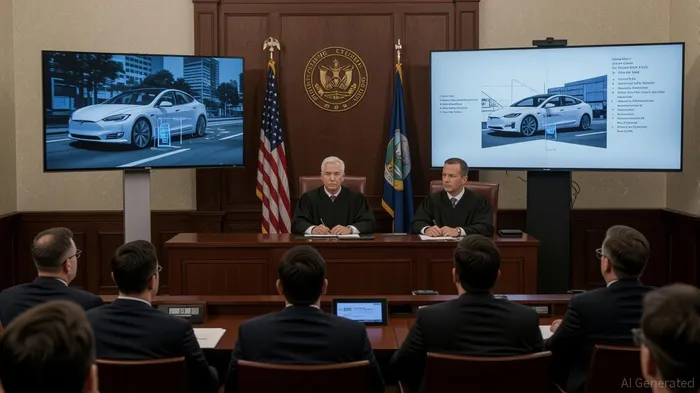
The lawsuit, stemming from a crash that killed Naibel Benavides Leon and injured her boyfriend, hinges on whether Tesla overstated Autopilot's capabilities, leading to driver overreliance. Plaintiffs argue Tesla recklessly allowed Autopilot to operate on roads it wasn't designed for, while Tesla defends its system as requiring constant driver supervision. A key point of contention is the failure of Autopilot to alert driver George McGee that the road was ending—a flaw experts say highlights gaps in current AV safety protocols.
The inclusion of punitive damages in the case marks a departure from prior trials, raising the specter of multi-billion-dollar liabilities if Tesla is found liable. This trial is also the first federal case to address third-party wrongful death claims tied to Autopilot, making it a precedent-setting moment.
Autonomous Safety Standards: A Moving Target
The trial underscores a broader industry challenge: defining safety in autonomous systems. Experts like Carnegie Mellon's Philip Koopman and law professor Matthew Wansley warn that AVs introduce novel risks—software glitches, coding errors, and misinterpretations of road conditions—that traditional safety frameworks can't fully address. The ACM's 2024 report further cautions that policymakers should not assume AVs will inherently reduce traffic fatalities, as human error is still a critical variable.
Tesla's defense relies on its terms of service emphasizing driver responsibility, but plaintiffs counter that marketing materials and driver testimonials suggest a more autonomous experience. This tension mirrors past tech failures, such as Boeing's 737 MAX crashes, where overconfidence in automation led to catastrophic outcomes.
Historical Precedents: When Tech Liability Shook Valuations
The stakes for Tesla are clear when comparing it to prior tech disasters:
1. Theranos (2018): A $9 billion valuation collapsed after its blood-testing technology was exposed as fraudulent.
2. Boeing 737 MAX (2019): Two fatal crashes led to a $20 billion+ liability hit and a 30% stock plunge.
3. FTX (2022): Mismanagement and fraud erased a $32 billion valuation in weeks.
These cases share a common thread: overpromising technology's capabilities while underestimating systemic risks. For Tesla, a loss in this trial could trigger a similar reassessment, particularly if punitive damages set a high bar for future claims.
The Investor's Dilemma: Repricing Risk in Autonomous Tech
Tesla's stock trades at a premium reflecting its dominance in EVs and autonomous software. However, the Miami trial forces investors to confront whether this premium accounts for:
- Regulatory Overhang: Federal agencies like NHTSA are intensifying scrutiny of AV systems, with recalls and software updates now routine.
- Reputational Damage: A loss could erode trust in Autopilot's reliability, impacting adoption of Tesla's planned Robotaxi service.
- Legal Exposure: The potential for punitive damages and class-action lawsuits could strain Tesla's balance sheet, diverting resources from R&D.
Investment Implications: Proceed with Caution
Investors should consider:
1. Short-Term Volatility: The trial's outcome (expected by late 2025) could trigger sharp swings in Tesla's stock.
2. Long-Term Risks: A loss might catalyze stricter AV regulations, increasing costs and slowing adoption.
3. Peer Comparisons: Companies like Waymo, which have invested in rigorous safety protocols and partnerships with regulators, may emerge as lower-risk alternatives.
For now, Tesla's valuation hinges on its ability to balance innovation with accountability. Until the trial concludes, investors should treat the stock with a heightened risk lens—perhaps reducing exposure or hedging with puts—until clarity emerges.
Final Take
The Miami trial is more than a legal showdown; it's a referendum on whether Tesla can sustain its leadership in autonomous tech without compromising safety or profitability. History shows that tech firms that mismanage these risks pay dearly. Investors would be wise to demand clearer evidence of Tesla's safeguards—and a willingness to adapt—before committing capital.
In the words of one analyst, “Autonomous vehicles won't just change roads—they'll redefine corporate liability.” For Tesla, the next few months could determine which side of that equation it ends up on.

Stay ahead of the market.
Get curated U.S. market news, insights and key dates delivered to your inbox.




Comments
No comments yet