
Tesla Autopilot Crash Verdict Sparks Legal Uncertainty in Autonomous Industry
 Aime Summary
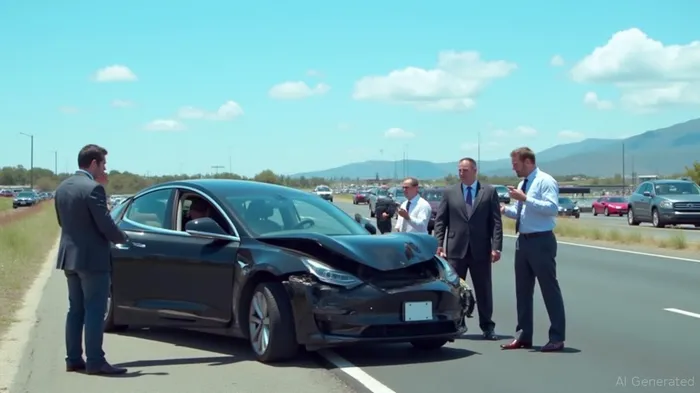
The recent Miami jury decision in a TeslaRACE-- Autopilot-related crash has sent ripples through the automotive and autonomous driving industries, marking one of the first high-profile cases to reach trial instead of being settled or dismissed [1]. The verdict found Tesla partially responsible for a fatal crash in which the vehicle’s Autopilot system failed, despite the driver admitting to being distracted by his phone. The jury awarded $243 million in damages, including $200 million in punitive damages and $43 million in compensatory damages. Tesla has indicated it will appeal the ruling, though a pre-trial agreement may cap its liability at $172 million [1]. The case underscores growing legal uncertainties surrounding autonomous driving technology and could prompt more plaintiffs to pursue similar claims against automakers.
Legal experts and industry observers suggest the ruling could create a precedent that heightens liability risks for companies developing self-driving systems [1]. Miguel Custodio, an uninvolved attorney, noted that the decision will "embolden a lot of people to come to court," while Wedbush Securities analyst Dan Ives described the verdict as a figure that "will send shock waves to others in the industry" [1]. The judgment reflects a broader challenge for automakers: proving that autonomous systems are sufficiently safe and reliable, and establishing clear boundaries for user responsibility versus manufacturer liability.
This development adds to an ongoing debate about the readiness of the auto industry for the next phase of autonomous technology. While Tesla has been a leader in pushing the limits of driver-assist features, this case highlights the regulatory and legal hurdles that must be overcome before full autonomy becomes widely accepted [1]. The ruling may accelerate industry calls for clearer federal regulations and standardized safety benchmarks for autonomous systems.
[1] Source: [1] Tesla Autopilot crash decision Florida—[https://fortune.com/2025/08/04/tesla-autopilot-decision-florida-figma-ipo-marin-commmunity-foundation-ai-price-fixing/](https://fortune.com/2025/08/04/tesla-autopilot-decision-florida-figma-ipo-marin-commmunity-foundation-ai-price-fixing/)

Stay ahead of the market.
Get curated U.S. market news, insights and key dates delivered to your inbox.
AInvest
PRO
AInvest
PRO



Comments
No comments yet