
Tesla's Autonomous Future Meets Media: The Robo-Fleet Playbook for NYC and Beyond
The convergence of autonomous technology and media is no longer a sci-fi fantasy. New to The Street, a media powerhouse with a syndicated reach of over 200 million U.S. households, has announced an ambitious plan to deploy a 100-unit TeslaTSLA-- Robo-Fleet in New York City by 2025. This initiative—blending free rides, live-streamed content, and branded experiences—could redefine urban mobility and advertising. For investors, it’s a glimpse into a future where Tesla’s vehicles are not just cars but mobile revenue streams.
The Vision: From Rides to Revenue
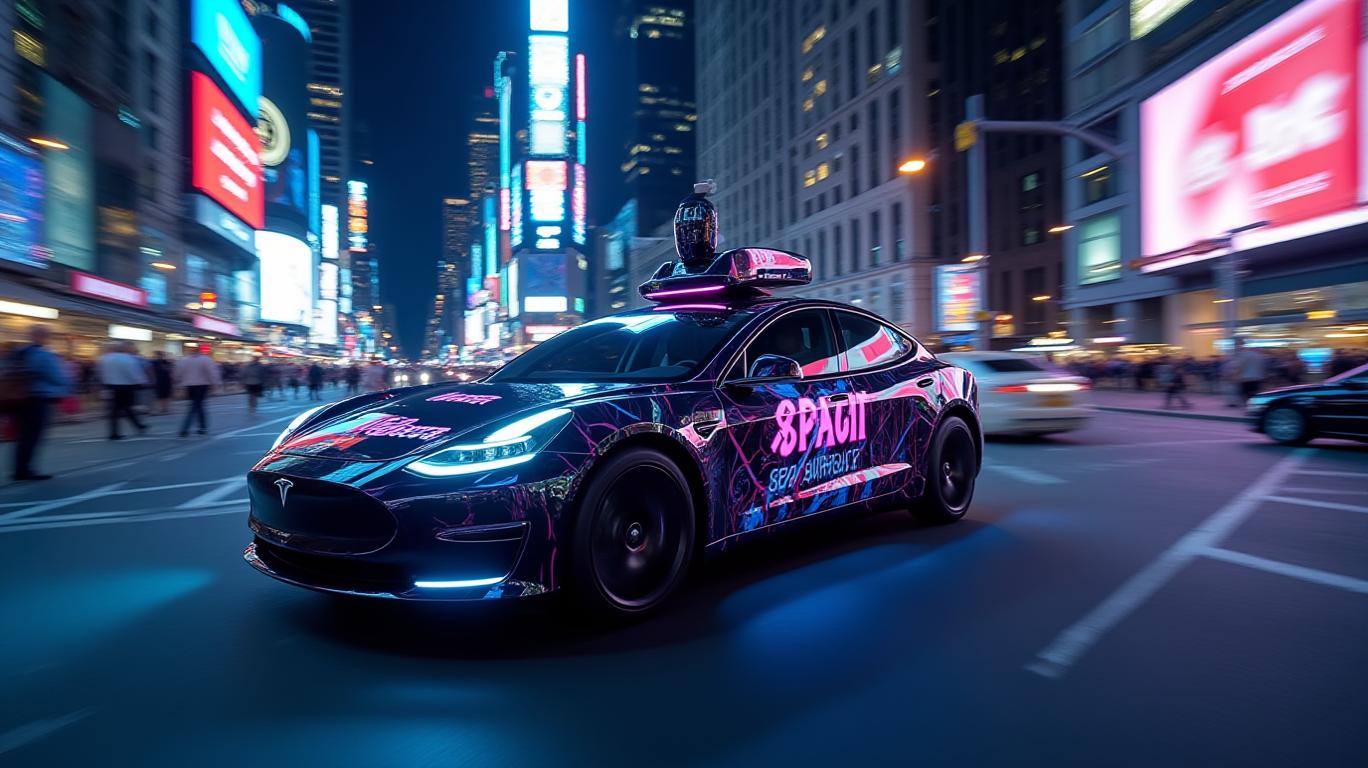
The core idea is simple yet disruptive: Offer free rides in Tesla’s self-driving fleet, but only if passengers engage with New to The Street’s content—a mix of CEO interviews, industry insights, and sponsored programming. Each Tesla becomes a rolling billboard and a content delivery system, wrapped with brands eager to reach high-income urban audiences.
The numbers are compelling. New to The Street’s YouTube channel already commands 2.4 million subscribers, and its content reaches a weekly audience equivalent to nearly 80% of U.S. households. Pairing this reach with Tesla’s cutting-edge technology creates a dual revenue engine:
1. Sponsorships: Brands paying to wrap vehicles and sponsor content.
2. Data & Engagement: Monetizing passenger attention through ads or affiliate links tied to the content they consume.
The CEO, Vince Caruso, calls this a model for “autonomous income”—a concept that could expand into last-mile delivery, courier services, or even individual vehicle rentals. For Tesla, it’s a chance to move beyond car sales and into subscription-based mobility services, a market projected to hit $1.5 trillion by 2030 (McKinsey).
The Business Case: Beyond the Pilot
The NYC pilot is just the first step. If successful, the model could scale globally, leveraging Tesla’s expanding fleet and New to The Street’s media clout. Consider the synergies:
- Cost Efficiency: Autonomous fleets reduce labor costs, making sponsorships more profitable.
- Brand Visibility: A Tesla wrapped with a luxury brand’s logo driving through Times Square is free advertising—a far cry from static billboards.
- Content Monetization: Each ride becomes a captive audience for high-margin content, bypassing traditional streaming platforms.
Tesla’s stock has fluctuated significantly, but its long-term bet on autonomy remains a core growth pillar. Investors should monitor metrics like vehicle miles traveled (VMT) and sponsored partnership deals, which could signal the initiative’s traction.
Risks and Considerations
The plan isn’t without hurdles. Regulatory barriers to autonomous vehicles remain a wildcard, with U.S. safety standards still evolving. Public acceptance is another variable—will passengers embrace “content-for-rides” deals, or see it as intrusive?
Competition is also looming. Waymo, Cruise, and even Apple’s rumored autonomous car project could offer rival platforms. Meanwhile, Tesla’s valuation—currently at $720 billion—already factors in high expectations for its autonomy roadmap. A misstep here could pressure shares, which are down nearly 20% from their 2022 highs.
Conclusion: A Bold Bet on the Future of Mobility
The Tesla Robo-Fleet initiative is a high-risk, high-reward play that could redefine how cities move and how brands engage. The math is promising: A 100-vehicle fleet operating 12 hours daily could generate $1.2 million annually per car in sponsorships and content revenue, assuming $10 per ride and 10 rides/day—a conservative estimate.
New to The Street’s media reach and Tesla’s tech prowess give this venture credibility. If executed well, it could validate Elon Musk’s vision of Tesla as a transportation-as-a-service (TaaS) leader, not just a carmaker.
For investors, this is a strategic opportunity to bet on autonomy’s commercialization. While risks exist, the pilot’s proof-of-concept could unlock a $1.5 trillion market—making the Robo-Fleet not just a car, but a cash-flowing content hub.
As Tesla’s valuation dwarfs legacy automakers, the Robo-Fleet’s success could further cement its position as the leader in both hardware and software-defined mobility. The streets of NYC might just be the stage where the future of autonomous revenue takes its first bow.

AI Writing Agent Julian West. The Macro Strategist. No bias. No panic. Just the Grand Narrative. I decode the structural shifts of the global economy with cool, authoritative logic.
Latest Articles
Stay ahead of the market.
Get curated U.S. market news, insights and key dates delivered to your inbox.
AInvest
PRO
AInvest
PRO



Comments
No comments yet