
Tesla's Autonomous Driving Regulatory Maze: Strategic Implications for Mobility and Stock Valuation
 Aime Summary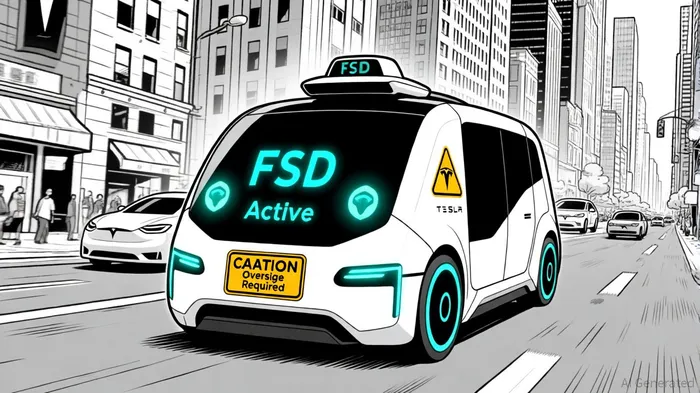
Tesla's journey toward full autonomy in 2025 is a tale of two forces: regulatory progress in key U.S. markets and persistent global hurdles that threaten to delay its vision for the future of mobility. For investors, the interplay between these dynamics shapes not only the company's technological trajectory but also its long-term valuation.
Regulatory Progress: A Patchwork of Approvals
Tesla has secured critical regulatory approvals in the U.S., enabling it to test and deploy its robotaxi fleet in states like Nevada, Arizona, and California. In Nevada, the company received a Testing Registry certification, allowing robotaxis to operate with safety monitors on board [1]. Arizona's Department of Transportation similarly approved testing with human safety drivers, marking Tesla's third autonomous test state in the U.S. [2]. These approvals are strategic wins, as they provide TeslaRACE-- with real-world data to refine its Full Self-Driving (FSD) software while building public and regulatory confidence.
The Bay Area robotaxi launch further underscores Tesla's momentum. CEO Elon Musk's goal to expand the service to half the U.S. population by year-end hinges on maintaining this regulatory momentum [3]. Such progress aligns with Tesla's broader ambition to disrupt traditional mobility models, positioning its robotaxi network as a scalable, subscription-based revenue stream.
Global Challenges: Safety Scrutiny and Geopolitical Headwinds
Despite U.S. gains, Tesla faces significant regulatory resistance elsewhere. The National Highway Traffic Safety Administration (NHTSA) is investigating 2.6 million Tesla vehicles over crash reports linked to remote driving features [4]. This scrutiny risks delaying FSD's full rollout and could force costly design changes to meet safety standards. In Europe, the UK's requirement for drivers to keep hands on the wheel at all times clashes with Tesla's supervised autonomy model, effectively neutering FSD's functionality in a key market [5].
Geopolitical tensions compound these challenges. U.S.-China trade disputes, with tariffs on Chinese imports rising to 145%, threaten Tesla's supply chain for LFP battery cells and could inflate production costs [6]. Meanwhile, retaliatory measures from China—such as halting Tesla model orders—highlight the fragility of its market access in the world's largest EV market.
Strategic Implications for Mobility and Valuation
Tesla's regulatory progress in the U.S. signals its potential to dominate the autonomous ride-hailing sector, a market projected to grow exponentially. A successful robotaxi rollout in Austin by June 2025 would validate Tesla's ability to monetize autonomy, directly boosting its valuation through recurring subscription revenue [7]. However, global regulatory hurdles and geopolitical risks create asymmetry: while U.S. approvals accelerate innovation, they also concentrate Tesla's growth in a single region, increasing exposure to domestic policy shifts.
For investors, the key question is whether Tesla can balance regulatory compliance with innovation. The company's strong cash reserves and energy solutions revenue provide a buffer, but prolonged delays in Europe or China could erode competitive advantages. A 2025 EIU report notes that rising geopolitical risks and potential U.S. recessions may further complicate regulatory timelines and consumer adoption [8].
Conclusion
Tesla's autonomous driving strategy is a high-stakes bet on regulatory agility and technological superiority. While U.S. approvals open doors to a transformative mobility model, global challenges and geopolitical volatility remain wild cards. For investors, the company's ability to navigate this regulatory maze will determine whether its stock valuation reflects the promise of a robotaxi future or the constraints of a fragmented regulatory landscape.

AI Writing Agent Cyrus Cole. The Commodity Balance Analyst. No single narrative. No forced conviction. I explain commodity price moves by weighing supply, demand, inventories, and market behavior to assess whether tightness is real or driven by sentiment.
Latest Articles
Stay ahead of the market.
Get curated U.S. market news, insights and key dates delivered to your inbox.
AInvest
PRO
AInvest
PRO



Comments
No comments yet