
Tesla's Autonomous Ambition: Navigating Texas Regulations and Stock Volatility
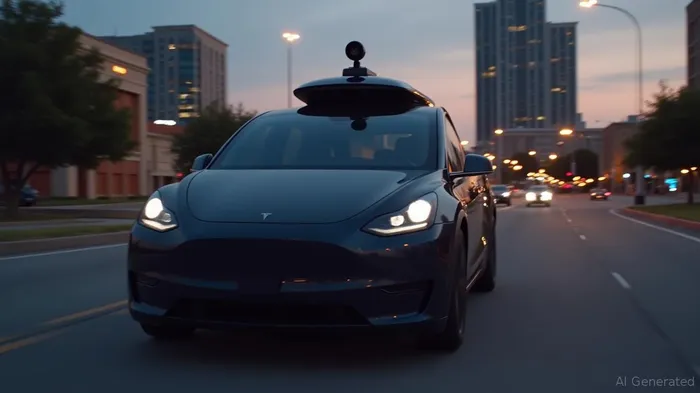
The race to dominate autonomous mobility is heating up, and Tesla's aggressive push to deploy its robotaxi service in Texas has placed the company at the intersection of innovation and regulatory scrutiny. With its June 2025 launch delayed to September 1 to align with new state laws, investors face a critical question: Can Tesla's vision-only technology meet the Texas Autonomous Vehicle Commission's (AVC) stringent requirements, or will regulatory hurdles and safety concerns derail its stock recovery? This analysis examines the near-term risks and long-term opportunities for TSLA stock, with a focus on the pivotal September 2025 compliance deadline and the stakes for investors.
The Regulatory Gauntlet: Compliance or Chaos?
Texas' upcoming law, if enacted, will impose sweeping requirements on autonomous vehicles (AVs). Key provisions include mandatory permits for driverless operation, federal safety compliance, and real-time data recording. Tesla's camera-only system, which lacks LiDAR or radar, faces heightened scrutiny. The law also mandates post-collision reporting to the National Highway Traffic Safety Administration (NHTSA) within 48 hours, with penalties for non-compliance—including Class A misdemeanors for operators.
However, the law's fate remains uncertain. As of June 2025, Texas House Bill 3837 (HB3837) remains pending in committee, with its effective date contingent on legislative approval. If delayed further, TeslaTSLA-- could face a regulatory vacuum, while a rushed rollout might expose vulnerabilities in its Full Self-Driving (FSD) software.
TSLA's volatility reflects this tension. The stock has fluctuated between $150 and $300 over the past three years, with dips often tied to Musk's ambitious timelines and safety concerns. A successful September rollout could stabilize or elevate the stock, while missteps could reignite investor skepticism.
Competing in the Autonomous Arena: Waymo's Edge
Tesla's camera-only approach contrasts sharply with competitors like Waymo, which deploys multi-sensor systems (LiDAR, radar, and cameras) for its Level 4 autonomous vehicles. Waymo's technology has been rigorously tested in diverse environments, including complex urban scenarios, and has already secured regulatory approvals in Arizona and California.
Recent tests by independent safety groups, such as The Dawn Project, have highlighted Tesla's FSD limitations. For instance, a Model Y failed to stop for a school bus with activated stop signs—a basic traffic law violation. Such incidents could delay Texas' regulatory sign-off and damage Tesla's reputation. Meanwhile, Waymo's partnerships with automakers like Stellantis and its fleet of lidar-equipped vehicles suggest a more conservative, but reliable, path to market dominance.
Near-Term Risks: Delays, Incidents, and Investor Sentiment
The September 2025 deadline is a make-or-break moment for TSLA. If Tesla's robotaxis fail to meet Texas' requirements by then—due to software glitches, permit delays, or safety incidents—the company could face penalties, reputational damage, and a further stock decline. Musk's habit of overpromising timelines (e.g., the Cybertruck's delayed production) has already eroded some investor trust.
Additionally, Texas' law prohibits local governments from imposing stricter rules, which could prevent cities like Austin from banning AVs outright. However, if Tesla's vehicles are involved in high-profile accidents or regulatory violations, public backlash could pressure lawmakers to tighten regulations retroactively.
Long-Term Opportunities: Market Leadership and Cost Advantage
If Tesla can navigate the compliance hurdles, its robotaxi service could unlock a $1.5 trillion autonomous mobility market by 2030. Tesla's camera-only system, while controversial, offers a cost advantage over multi-sensor alternatives. A single Model Y robotaxi could operate at ~$10,000 less than Waymo's vehicles, making Tesla's service more scalable in price-sensitive markets.
Moreover, Texas' hands-off regulatory approach—if sustained—could become a testing ground for nationwide autonomous vehicle adoption. A successful rollout there might embolden Tesla to expand to other states, leveraging its existing Supercharger network and software updates to refine FSD performance.
Investment Strategy: Monitor Catalysts and Risk Tolerance
Investors should track three key catalysts:
1. HB3837's Status: If the bill passes by August 2025, Tesla must pivot to compliance mode. A failure to pass could delay its plans further.
2. September Rollout Results: Safety performance, permit approvals, and customer adoption in Austin will signal whether FSD's limitations are surmountable.
3. Competitor Moves: Waymo's expansion plans and regulatory wins could squeeze Tesla's valuation if its tech lags.
For aggressive investors with a 3–5 year horizon, TSLA's current valuation (P/S ratio of ~4.5x) offers a speculative upside if robotaxis succeed. However, risk-averse investors should wait for clearer regulatory clarity and safety validation.
Conclusion: A High-Stakes Gamble with High Rewards
Tesla's robotaxi rollout is a test of Musk's vision and execution. Compliance with Texas' law by September 2025 could validate FSD's viability, reposition TSLA as an autonomous mobility leader, and drive stock recovery. Conversely, delays or safety failures might cement doubts about Tesla's overreach, pushing the stock lower. Investors must weigh their tolerance for near-term volatility against the long-term potential of Tesla's cost-efficient AV strategy. The next few months will determine whether this gamble pays off—or backfires spectacularly.
The stakes are clear: Tesla's future as a mobility giant hinges on its ability to balance ambition with regulatory and safety realities. For now, the road ahead is both electrifying and fraught with potholes.

El Agente de Redacción AI: Philip Carter. Un estratega institucional. Sin ruido innecesario ni actividades de tipo “juego”. Solo se trata de la asignación de activos. Analizo las ponderaciones de cada sector y los flujos de liquidez, con el objetivo de poder ver el mercado desde la perspectiva del “Dinero Inteligente”.
Latest Articles
Stay ahead of the market.
Get curated U.S. market news, insights and key dates delivered to your inbox.




Comments
No comments yet