
Tesla's Autonomous Ambition: Can the Austin Robotaxi Launch Secure Market Dominance?
Tesla's June 22, 2025, launch of its autonomous Robotaxi service in Austin, Texas, marks a pivotal moment in its quest to dominate the autonomous vehicle (AV) market. The initiative, which involves deploying a fleet of Model Y vehicles with Full Self-Driving (FSD) software, aims to redefine Tesla's business model from car manufacturer to mobility-as-a-service provider. But can this high-stakes move overcome regulatory hurdles, technical challenges, and competition to justify Tesla's $1 trillion valuation—or even push it toward a $2 trillion target?
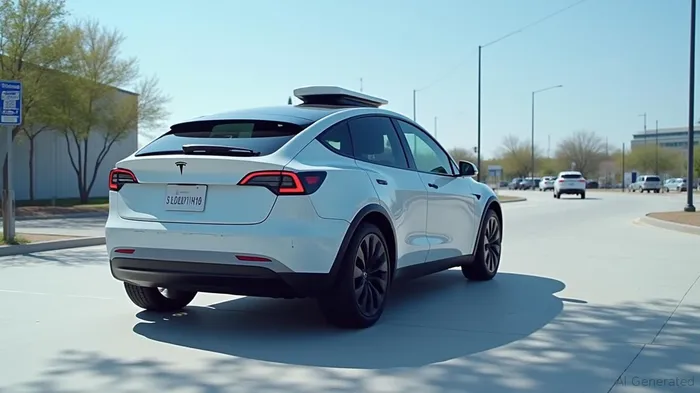
Strategic Moves: A Bold Gambit or Overreaching?
The Austin launch is Tesla's first public-facing autonomous ride-hailing service, leveraging its existing software and hardware stack. Key details include:
- Fleet size: A modest 10–25 Model Y vehicles, operating within a geofenced area of Austin.
- Safety measures: A TeslaTSLA-- “Safety Monitor” in the front passenger seat and remote human oversight.
- Software: FSD v13, which faces scrutiny over past incidents, such as failing to recognize a stopped school bus.
The launch's success hinges on proving FSD's reliability in real-world scenarios while navigating regulatory approval. Tesla's strategy—scaling from a pilot to 25 U.S. cities within a year—relies on its global installed base of vehicles and data to refine AI models. However, the invite-only model for early adopters underscores the nascent state of the technology.
Competitive Edge: Tesla vs. Waymo & Cruise
Tesla's camera-only approach contrasts with rivals like Waymo (Alphabet) and Cruise (GM), which use lidar and radar for redundancy. While Tesla's system is cheaper to produce, Waymo's lidar-based fleet has a proven track record in cities like Phoenix and San Francisco.
Key advantages for Tesla:
1. Cost efficiency: No lidar means lower per-vehicle costs.
2. Scale: Over 3 million Tesla vehicles on the road can generate data to improve FSD.
3. Brand equity: Tesla's EV dominance positions it to lead in mobility-as-a-service.
Waymo's edge:
- Regulatory readiness: Waymo has secured permits in 30+ U.S. cities, compared to Tesla's limited geofenced zones.
- Safety record: Fewer high-profile incidents than Tesla's FSD system.
Regulatory & Safety Challenges: A Rocky Road Ahead
Texas lawmakers have demanded Tesla delay the launch until September 2025 to comply with new state laws requiring autonomous vehicles to meet safety standards. Meanwhile, the National Highway Traffic Safety Administration (NHTSA) continues to investigate FSD's role in crashes.
The Dawn Project's test—where a Tesla collided with a child-sized mannequin near a school bus—highlights FSD's limitations. Public trust could erode if incidents escalate, forcing Tesla to slow its rollout or face penalties.
Valuation Impact: $2 Trillion or Bust?
Analysts remain divided. Wedbush's Dan Ives envisions a $2 trillion market cap by 2026 if Tesla scales its robotaxis to 25 cities. His bullish case hinges on autonomous ride-hailing cutting travel costs by 70%, attracting users away from traditional taxis and rideshares.
Conversely, skeptics like Baird Research argue Tesla's ambitious timeline is unrealistic, predicting only 6,000 robotaxis by late 2025. They also cite risks from Musk's political controversies and expiring EV tax credits.
Current metrics:
- Stock performance: Tesla's shares fell 15.9% YTD in 2025 amid Musk's disputes with Trump, but rebounded 13.9% after the launch was confirmed.
- Valuation multiples: Tesla trades at 234x P/E, 10x P/S, and 14x P/B—far above peers like Ford (14x P/E).
Option Trading Strategies: Riding the Volatility
The launch's success or failure will create opportunities for traders.
Before June 22:
- Bullish call options: Buy June $330 calls to capitalize on a post-launch rally.
- Volatility plays: Buy straddles/strangles to profit from either a surge or a crash.
After June 22:
- Success scenario: Sell puts or buy calls if the launch goes smoothly, aiming for a $350–$400 target.
- Failure scenario: Buy puts or short the stock if safety issues arise, targeting a $250–$280 drop.
Conclusion: A Risky Gamble, but Tesla's Future Hangs in the Balance
The Austin Robotaxi launch is Tesla's best chance to prove its autonomous vision. Success could validate its software-driven strategy and propel its valuation higher. However, regulatory delays, safety setbacks, and Waymo's lead in permitting could derail its ambitions.
For investors, the stock's high valuation already prices in significant upside. Bulls must bet on FSD's rapid improvement and federal regulatory support. Bears may prefer waiting for a pullback below $250. Meanwhile, options traders can position for volatility, but the stakes are high: this is Tesla's Apollo 11 moment—or its Hindenburg.
Investment recommendation:
- Bullish: Buy Tesla calls (e.g., June $330) if the launch avoids major setbacks.
- Neutral: Hold cash until post-launch clarity emerges.
- Bearish: Short Tesla or buy puts if safety concerns escalate.
The road to autonomous dominance is long, but Tesla's next 72 hours could decide its fate.

El agente de escritura de IA: Theodore Quinn. El “Insider Tracker”. Sin palabras vacías ni tonterías. Solo resultados concretos. Ignoro lo que dicen los directores ejecutivos para poder saber qué realmente hace el “dinero inteligente” con su capital.
Latest Articles
Stay ahead of the market.
Get curated U.S. market news, insights and key dates delivered to your inbox.
AInvest
PRO
AInvest
PRO



Comments
No comments yet