
Tesla Aims to Roll Out Autonomous Ride-Hailing Service to Half of US Population by End of Year
ByAinvest
Friday, Aug 8, 2025 11:50 am ET2min read
AMZN--
Key Announcements from the Earnings Call
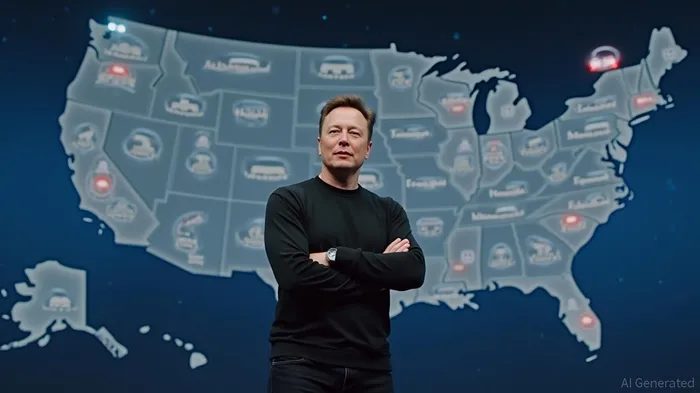
Tesla has been working behind the scenes with regulators in several jurisdictions, including the Bay Area, Nevada, Arizona, and Florida [1]. This marks a significant milestone in Tesla’s full self-driving (FSD) ambitions, which have faced both technical and regulatory hurdles in recent years. Musk hinted at a broader plan, stating, “As we get the approvals and prove out safety, we will be launching the autonomous ride-hailing across most of the country. I think we will probably have autonomous ride-hailing in probably half the population of the US by the end of the year” [1].
Hyper-Exponential Growth Ahead
While previous autonomous vehicle (AV) timelines from Tesla have drawn skepticism due to repeated delays, Musk emphasized safety and regulatory compliance as top priorities, projecting aggressive scaling [1]. The company anticipates a hyper-exponential growth in service areas and vehicle numbers as more locations come online and more users adopt the service.
What This Means for Tesla and the Industry
If successful, Tesla's autonomous ride-hailing network could reshape urban transportation, challenge existing players like Uber (UBER) and Lyft (LYFT), and redefine the economics of mobility. Tesla plans to use its own fleet of Robotaxis and potentially allow individual owners to enroll their vehicles in the network.
The economic implications for Tesla could be profound, creating a recurring revenue stream and drastically increasing vehicle utilization rates. Moreover, this move could place Tesla ahead of other companies in the race to scale driverless technology, such as Alphabet’s (GOOGL) Waymo and Amazon’s (AMZN) Zoox, which have also encountered regulatory and operational speed bumps in their expansion efforts [1].
Cautious Optimism or Overreach?
Despite the optimism, challenges remain. Tesla must not only prove the safety of its FSD technology to regulators but also gain public trust, a task made more complex by past incidents involving Autopilot and FSD beta software [2]. The company recently faced a lawsuit from shareholders accusing Musk and Tesla of making misleading statements about the safety of its self-driving vehicles [2]. The lawsuit was filed after videos surfaced showing Tesla’s robotaxis engaging in erratic driving behavior in Austin, Texas [2].
What This Means For Investors
If Tesla delivers on its timeline, the back half of 2025 could mark the dawn of a new era in autonomous transport. With regulatory green lights now emerging and a clear roadmap from Musk, Tesla’s robotaxi ambitions may finally be crossing from speculation into reality [1]. However, execution will be key, and Musk’s ambitious goal of covering half the country in four to five months seems unlikely, but gaining major markets across key states seems achievable [1].
Regardless of whether Tesla meets Musk’s lofty goal by the end of the year, it will prove to be an astronomically valuable business line. Given the substantial progress already made, there’s certainly more upside to be had as the rollout comes to fruition [1].
References:
[1] https://www.barchart.com/story/news/34004339/elon-musk-predicts-tesla-will-have-autonomous-ride-hailing-in-probably-half-the-population-of-the-us-by-the-end-of-the-year
[2] https://www.statesman.com/business/technology/article/shareholders-sue-elon-musk-tesla-robotaxi-safety-20804747.php
LYFT--
RACE--
TSLA--
UBER--
Tesla CEO Elon Musk predicts the company will have autonomous ride-hailing in nearly half of the US population by the end of the year. The company has gained regulatory approvals in several states, including the Bay Area, Nevada, Arizona, and Florida. Musk emphasized safety and regulatory compliance as top priorities while projecting aggressive scaling.
In a significant development during Tesla’s Q2 2025 earnings call, CEO Elon Musk announced that the company is actively gaining regulatory approvals for its long-promised autonomous ride-hailing service. With several states already preparing for launch, Tesla is targeting coverage for nearly half of the U.S. population by the end of the year [1].Key Announcements from the Earnings Call
Tesla has been working behind the scenes with regulators in several jurisdictions, including the Bay Area, Nevada, Arizona, and Florida [1]. This marks a significant milestone in Tesla’s full self-driving (FSD) ambitions, which have faced both technical and regulatory hurdles in recent years. Musk hinted at a broader plan, stating, “As we get the approvals and prove out safety, we will be launching the autonomous ride-hailing across most of the country. I think we will probably have autonomous ride-hailing in probably half the population of the US by the end of the year” [1].
Hyper-Exponential Growth Ahead
While previous autonomous vehicle (AV) timelines from Tesla have drawn skepticism due to repeated delays, Musk emphasized safety and regulatory compliance as top priorities, projecting aggressive scaling [1]. The company anticipates a hyper-exponential growth in service areas and vehicle numbers as more locations come online and more users adopt the service.
What This Means for Tesla and the Industry
If successful, Tesla's autonomous ride-hailing network could reshape urban transportation, challenge existing players like Uber (UBER) and Lyft (LYFT), and redefine the economics of mobility. Tesla plans to use its own fleet of Robotaxis and potentially allow individual owners to enroll their vehicles in the network.
The economic implications for Tesla could be profound, creating a recurring revenue stream and drastically increasing vehicle utilization rates. Moreover, this move could place Tesla ahead of other companies in the race to scale driverless technology, such as Alphabet’s (GOOGL) Waymo and Amazon’s (AMZN) Zoox, which have also encountered regulatory and operational speed bumps in their expansion efforts [1].
Cautious Optimism or Overreach?
Despite the optimism, challenges remain. Tesla must not only prove the safety of its FSD technology to regulators but also gain public trust, a task made more complex by past incidents involving Autopilot and FSD beta software [2]. The company recently faced a lawsuit from shareholders accusing Musk and Tesla of making misleading statements about the safety of its self-driving vehicles [2]. The lawsuit was filed after videos surfaced showing Tesla’s robotaxis engaging in erratic driving behavior in Austin, Texas [2].
What This Means For Investors
If Tesla delivers on its timeline, the back half of 2025 could mark the dawn of a new era in autonomous transport. With regulatory green lights now emerging and a clear roadmap from Musk, Tesla’s robotaxi ambitions may finally be crossing from speculation into reality [1]. However, execution will be key, and Musk’s ambitious goal of covering half the country in four to five months seems unlikely, but gaining major markets across key states seems achievable [1].
Regardless of whether Tesla meets Musk’s lofty goal by the end of the year, it will prove to be an astronomically valuable business line. Given the substantial progress already made, there’s certainly more upside to be had as the rollout comes to fruition [1].
References:
[1] https://www.barchart.com/story/news/34004339/elon-musk-predicts-tesla-will-have-autonomous-ride-hailing-in-probably-half-the-population-of-the-us-by-the-end-of-the-year
[2] https://www.statesman.com/business/technology/article/shareholders-sue-elon-musk-tesla-robotaxi-safety-20804747.php
Stay ahead of the market.
Get curated U.S. market news, insights and key dates delivered to your inbox.
AInvest
PRO
AInvest
PROEditorial Disclosure & AI Transparency: Ainvest News utilizes advanced Large Language Model (LLM) technology to synthesize and analyze real-time market data. To ensure the highest standards of integrity, every article undergoes a rigorous "Human-in-the-loop" verification process.
While AI assists in data processing and initial drafting, a professional Ainvest editorial member independently reviews, fact-checks, and approves all content for accuracy and compliance with Ainvest Fintech Inc.’s editorial standards. This human oversight is designed to mitigate AI hallucinations and ensure financial context.
Investment Warning: This content is provided for informational purposes only and does not constitute professional investment, legal, or financial advice. Markets involve inherent risks. Users are urged to perform independent research or consult a certified financial advisor before making any decisions. Ainvest Fintech Inc. disclaims all liability for actions taken based on this information. Found an error?Report an Issue




Comments
No comments yet