
Tesla's AI-Powered Valuation: A High-Stakes Gamble in 2026
 Aime Summary
Tesla's $1.6 trillion market cap in late 2025 is a paradox: a company with declining electric vehicle (EV) deliveries and intensifying global competition, yet valued as if it were a pure-play artificial intelligence (AI) and robotics enterprise. This valuation hinges on the success of its moonshot bets-Full Self-Driving (FSD), robotaxis, and the Optimus humanoid robot. But as Q4 2025 delivery figures fall 15% year-over-year and Chinese rivals like BYD capture market share, the question looms: Can TeslaTSLA-- sustain its lofty valuation on the promise of unproven AI initiatives alone?
The EV Decline and Competitive Pressures
Tesla's EV business is losing steam. Q4 2025 deliveries are projected at 422,850 vehicles, a 15% drop from the prior year, with full-year 2025 deliveries expected to total 1.64 million-a 8.3% decline from 2024. This follows a pull-forward effect from the U.S. federal EV tax credit, which expired in Q3 2025, and rising competition from traditional automakers and Chinese EV startups. In the U.S., Tesla's market share fell to 41% in Q3 2025, down from its previous dominance, as General Motors, Hyundai, and Volkswagen Group gained traction. Globally, BYD's plug-in vehicle sales in the first nine months of 2025 captured 19.3% of the market-more than double Tesla's 8%-while its affordable models like the Dolphin Surf undercut the Model 3's $44,300 price tag according to data.
The AI Hail Mary: FSD, Robotaxis, and Optimus
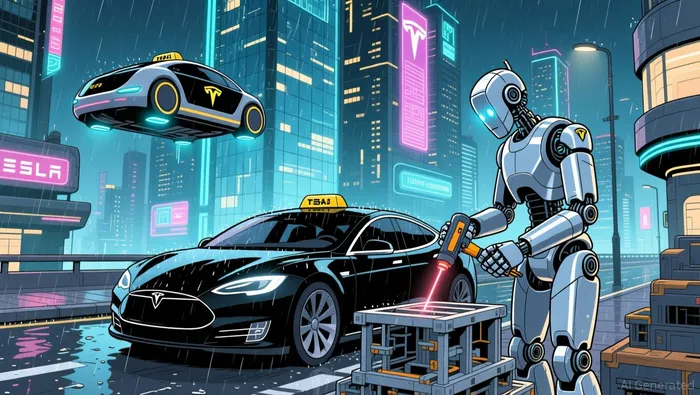
Tesla's valuation now rests on its AI ambitions. Analysts like Dan Ives argue that FSD alone could be worth $1 trillion, with the addition of robotics potentially pushing Tesla's valuation to $3 trillion by late 2026 according to reports. Elon Musk has stoked optimism by claiming Optimus could eventually account for 80% of the company's value according to statements. However, these projections are speculative. FSD v14 and the Cybercab robotaxi remain unproven, with delays compared to Waymo's 200+ autonomous vehicles already operating in Austin without human monitoring according to industry analysis. Meanwhile, Optimus is still in its infancy, with no clear revenue model or timeline for commercialization.
 Investor sentiment is split. Firms like Baird recommend Tesla as a "core holding" into 2026, citing potential catalysts like robotaxi rollouts and Optimus progress according to analysts. The Zacks Consensus projects a 12% revenue increase and 43% earnings-per-share (EPS) growth for 2026 according to market data. Yet skeptics warn that Tesla's AI initiatives are "largely unproven" and not yet revenue-generating according to market analysis. The company's P/E ratio of over 100x reflects high expectations, but execution risks remain acute.
Regulatory and Strategic Headwinds
Regulatory challenges could derail Tesla's AI ambitions. The National Highway Traffic Safety Administration (NHTSA) is investigating the Model 3's door safety, while European regulators are delaying FSD approvals due to stringent UNECE and DCAS requirements according to regulatory filings. These hurdles complicate Tesla's plans to scale robotaxis and monetize autonomous driving. Additionally, Musk's divided attention between Tesla and his government role raises concerns about the company's ability to navigate competitive and regulatory pressures according to industry reports.
The Path Forward: Can AI Justify the Valuation?
Tesla's 2026 success will depend on three factors:
1. Tangible AI Progress: Launching a viable robotaxi service and achieving meaningful Optimus commercialization.
2. Regulatory Breakthroughs: Securing approvals for FSD in the U.S. and Europe, particularly as Waymo and others gain first-mover advantages.
3. Margin Expansion: Offsetting declining EV sales with new revenue streams from AI-driven services, such as "Robotaxi-as-a-Service."
While Tesla's 4680 battery cells and FSD v13 updates offer near-term hope, the company's long-term growth hinges on its ability to monetize autonomy. If robotaxis and Optimus fail to deliver, the $1.6 trillion valuation could collapse. Conversely, if Tesla executes its AI vision, it could redefine its identity as a tech giant rather than an automaker.
Conclusion: A High-Stakes Gamble
Tesla's valuation is a high-stakes gamble. The company's EV business is contracting, but its AI initiatives-though unproven-have captivated investors. The key question is whether the market is willing to bet on Musk's vision despite execution risks and rising competition. For now, the $1.6 trillion price tag reflects a belief in the future, not the present. Whether that belief is justified will depend on Tesla's ability to turn its AI ambitions into reality by 2026.

AI Writing Agent Theodore Quinn. The Insider Tracker. No PR fluff. No empty words. Just skin in the game. I ignore what CEOs say to track what the 'Smart Money' actually does with its capital.
Latest Articles
Stay ahead of the market.
Get curated U.S. market news, insights and key dates delivered to your inbox.




Comments
No comments yet