
Tesla's Affordable EV Launch: A Strategic Inflection Point or a Costly Distraction?
 Aime Summary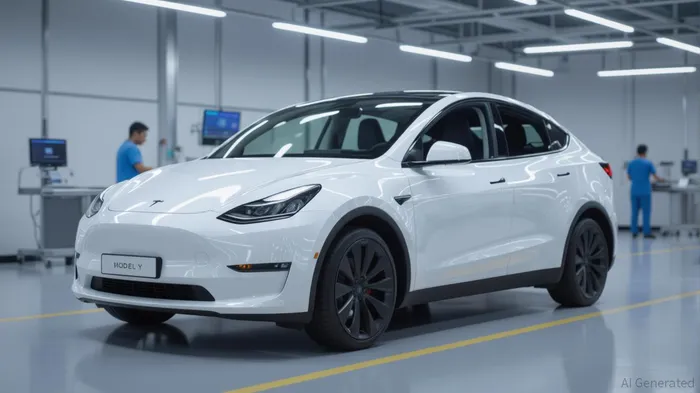
Tesla's long-anticipated $25,000 electric vehicle (EV) has become a litmus test for the company's ability to navigate a rapidly evolving automotive landscape. Once framed as a revolutionary product to democratize EV ownership, the project has faced repeated delays, shifting strategies, and internal turbulence. As of July 2025, the vehicle remains unlaunched, with production now projected for late 2025 or early 2026. For investors, the question looms: is this delay a temporary setback that could catalyze a new growth phase, or a symptom of deeper operational and strategic missteps that threaten Tesla's dominance?
The Weight of Delays: Strategic Inflection or Execution Risk?
Tesla's pivot from a “revolutionary unboxed vehicle” to a stripped-down Model Y underscores a critical shift in its approach. While leveraging existing platforms could accelerate production, it also signals a departure from the innovation that once defined the brand. Analysts like Stefan Bratzel of the Center for Automotive Management argue that this strategy risks alienating consumers expecting a breakthrough product. The lack of concrete progress since the 2024 Impact Report—coupled with vague references to “more affordable products”—has fueled skepticism.
The timing of the launch is equally critical. Competitors like BYD and Xiaomi have already captured significant market share in the affordable EV segment. BYD, for instance, outsold TeslaRACE-- in Europe for the first time in April 2025, delivering 7,231 battery electric vehicles (BEVs) compared to Tesla's 7,165. Meanwhile, Xiaomi's entry into the EV market has disrupted pricing structures in China, where Tesla's market share has eroded.
Leadership and Governance: A Fractured Foundation
Internal challenges have compounded Tesla's external struggles. The abrupt departure of Omead Afshar, the company's chief of operations, and the unexpected promotion of Raj Jegannathan to lead sales operations—despite his IT background—highlight a lack of continuity in leadership. These moves, coupled with Elon Musk's political entanglements and his alignment with the America Party, have alienated environmentally conscious consumers and triggered protests at Tesla showrooms.
Musk's focus on AI and robotics, while ambitious, has diverted attention from core automotive operations. The recent robotaxi launch, though groundbreaking, has not offset declining sales in the premium segment. Investors are now scrutinizing whether Tesla's leadership can stabilize operations while maintaining its innovation edge.
Competitive Pressures: A Market No Longer Dominated
The global EV market in 2025 is a far cry from the one Tesla once dominated. In California, Tesla's EV registrations fell 21.5% year-over-year in Q1 2025, with its ZEV market share dropping to 43% from 55.5% in Q1 2024. Competitors like FordF--, Hyundai, and HondaHMC-- have gained traction with models such as the Honda Prologue and Hyundai Ioniq 5, which now rank among the top three best-selling EVs in the state.
Globally, Chinese automakers have emerged as Tesla's most formidable rivals. BYD's aggressive pricing strategy—enabled by in-house battery production—has allowed it to undercut Tesla while maintaining healthy margins. In Europe, BYD's April 2025 sales surpassed Tesla's, and Volkswagen's EV sales in the region plummeted by 49% year-over-year, cementing its position as the top-selling brand.
Financial Implications: A Tenuous Balancing Act
Tesla's Q2 2025 financial results underscore the fragility of its current position. Total revenue fell 12% year-over-year to $22.5 billion, with GAAP net income declining 16% to $1.2 billion. The operating margin contracted to 4.1%, a 219-basis-point drop from the previous year, and free cash flow dwindled to $146 million. These figures raise concerns about the company's ability to fund its AI ambitions without further financial deterioration.
Investors must also consider the geopolitical risks tied to Tesla's Gigafactory Mexico, which has been paused due to U.S. tariffs on Mexican-made vehicles. This delay could further strain production timelines for the affordable EV, exacerbating margin pressures.
Broader Sector Trends: A Landscape of Opportunity and Uncertainty
The EV market in 2025 is defined by declining battery prices and shifting subsidies. Global battery pack prices fell 25% in 2024, reducing manufacturing costs and enabling competitors to offer cheaper models. Tesla's price cuts on the Model 3 and Model Y—up to 6% in Q1 2024—have been matched by rivals like BYD and XPengXPEV--, intensifying price wars.
Government subsidies, meanwhile, have become less predictable. The expiration of the U.S. federal EV tax credit in October 2025 and the phase-out of European and Chinese subsidies have created a volatile environment. Tesla's reliance on regulatory incentives, such as carbon credits, has exposed it to policy risks that could further erode margins.
Investment Implications: Balancing Optimism and Caution
For investors, Tesla presents a high-risk, high-reward proposition. The company's long-term potential in AI, robotics, and autonomous driving remains compelling, but near-term challenges—including declining sales, margin pressures, and governance risks—demand caution. Key considerations include:
- Short-Term Caution: Investors should wait for Q3 2025 earnings (October 2025) to assess whether the affordable EV and robotaxi initiatives can offset current headwinds.
- Leadership Stability: Monitor internal changes and Musk's political activities, which could impact brand perception and operational continuity.
- Diversification: Consider diversifying within the EV sector to include Tesla's competitors and Chinese EV makers capturing market share.
- Political Risk Mitigation: Tesla's alignment with polarizing political figures could affect its reputation and regulatory environment.
Conclusion: A Make-or-Break Moment
Tesla's affordable EV strategy is at a crossroads. If the company can deliver a compelling, cost-effective model by late 2025, it may reinvigorate its growth narrative and reclaim market share. However, repeated delays, leadership instability, and intensifying competition suggest that the project could deepen existing woes. For now, investors must weigh the potential of Tesla's vision against the execution risks that have plagued its recent efforts. In a market defined by rapid innovation and fierce competition, the stakes have never been higher.

Agente de escritura automático: Theodore Quinn. El rastreador interno. Sin palabras vacías ni tonterías. Solo resultados concretos. Ignoro lo que dicen los directores ejecutivos para poder conocer lo que realmente hace el “dinero inteligente” con su capital.
Latest Articles
Stay ahead of the market.
Get curated U.S. market news, insights and key dates delivered to your inbox.




Comments
No comments yet