
Tesla's $1 Trillion Roadmap: Growth Engine vs. Risk Factors


 Aime Summary
Building on Tesla's recent delivery momentum, the company's growth strategy faces dual pressures from infrastructure expansion and intense global competition.
Tesla delivered 384,000 vehicles in Q2 2025, a 14.29% year-over-year increase. This growth followed a production dip in 2024 when vehicle output fell 3.93% to 1.773 million units. The expanding Supercharger network supports this resilience, growing 31% in two years to 7,702 stations by September 2025.
However, China's dominance in electric vehicles creates significant competitive headwinds. The country accounted for 11 million EV sales in 2024-two-thirds of the global total. In the U.S., Tesla's market share has slipped to 38% as rivals leverage subsidies and pricing advantages.
Despite these challenges, delivery growth and charging infrastructure expansion remain key levers for market penetration. Yet the production decline and market share erosion underscore persistent execution risks in a rapidly evolving landscape where Chinese competitors' cost advantages could reshape global dynamics.
Operational Milestones and Earnings Impact
Tesla's recent execution framework hinges on three ambitious targets with profound implications for its financial health. First, the company claims sustained battery cost reductions of approximately 10% annually, a critical lever for maintaining vehicle profitability amid fierce competition. This cost trajectory aligns with broader industry trends noted in international energy reports, where declining battery expenses are accelerating global EV adoption. However, achieving consistent 10% yearly reductions requires flawless supply chain management and breakthroughs in cell chemistry-challenges compounded by raw material volatility and geopolitical tensions affecting critical mineral flows.
Second, Musk's $1 trillion compensation package places enormous weight on generating $10 billion annually from self-driving software subscriptions by 2027. While regulatory approvals for full autonomy remain fragmented globally, Tesla's projected revenue stream assumes unprecedented scale. Achieving this would require converting a massive portion of its installed base into paying customers for features currently deployed in beta. The feasibility hinges on regulatory clarity and demonstrated safety records-a significant risk if autonomous driving incidents attract heightened scrutiny.
Third, the plan targets deploying 1 million robotaxis by 2028, a figure that would represent a seismic shift in urban mobility. Reaching this milestone depends on regulatory approvals, sensor reliability at scale, and navigating complex insurance frameworks. The ambition is so vast that even partial progress could trigger substantial compensation under Musk's pay package, but operational execution risks remain substantial given the infancy of robotaxi ecosystems outside limited test zones.
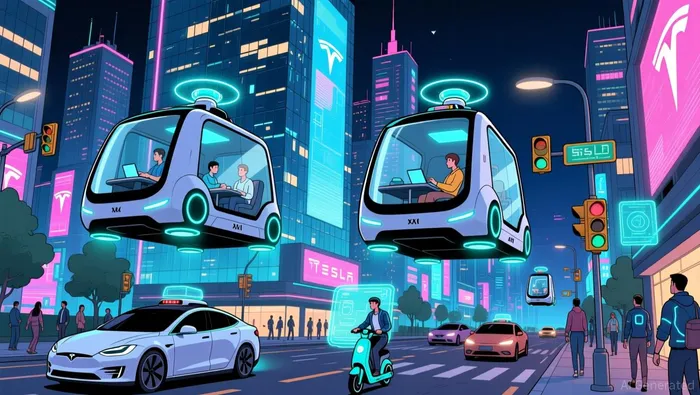
These levers collectively pressure Tesla's balance sheet. Battery cost savings directly improve gross margins, while software revenue would boost operating leverage. However, robotaxi deployment demands massive capital expenditure for vehicle fleets, charging infrastructure, and data centers. The $1 trillion pay package itself creates accounting pressures-excessive focus on these metrics could incentivize short-term maneuvering over sustainable growth. While successful execution would dramatically enhance earnings quality through higher margins and new revenue models, delays or regulatory setbacks could strain cash flow and erode investor confidence.
Valuation Realism & Competitive Risks
Tesla's soaring valuation faces a critical reality check against its extraordinary multiples and mounting competitive pressures. The company's current $1.4 trillion market cap supports a price-to-earnings ratio in the high 50s, dwarfing the broader auto sector's more modest valuation. This premium reflects investor faith in its AI ambitions and EV dominance, yet also raises questions about sustainability given operational hurdles. Elon Musk's massive compensation package, directly tied to market capitalization milestones, starkly illustrates the disconnect – the $8.5 trillion target embedded in his pay package is widely viewed as highly unrealistic without dramatic, sustained profitability improvements far beyond current performance. While lower hurdles like reaching a $2 trillion valuation and cumulative deliveries of 20 million vehicles are more attainable with modest growth, they represent only a fraction of the total potential reward, potentially diluting shareholder value if achieved through minimal progress rather than transformative growth.
Competition is intensifying and margins are under siege. TeslaTSLA-- faces relentless pressure from established automakers aggressively expanding EV lineups and new entrants like BYD, squeezing its once-commanding market share. Production bottlenecks, particularly around its newest, lower-cost models, threaten delivery targets and erode customer confidence. Simultaneously, the brutal economics of volume sales are compressing gross margins, forcing Tesla to choose between volume growth and maintaining price discipline. The IEA's report on rapid global EV adoption highlights a booming market but also underscores the fierce competition accelerating within it; while falling battery costs improve affordability, they simultaneously raise the baseline for competitive pricing globally.
Regulatory shifts further cloud the outlook. The expiration of the U.S. federal EV tax credit for Tesla, triggered by its cumulative sales threshold, removes a significant customer incentive and puts pricing power under even greater scrutiny. While credits remain available for other manufacturers, the loss of this support for Tesla directly impacts demand near-term. Meanwhile, the European Union is recalibrating its subsidy programs, introducing new requirements that could disadvantage non-EU manufacturers like Tesla compared to local competitors benefiting from strategic partnerships or local production. These evolving policy landscapes mean Tesla's growth trajectory is increasingly dependent on navigating complex regulatory changes and maintaining its technological edge, not just scale. The $8.5 trillion valuation target Musk's bonus hinges upon remains a distant, highly speculative horizon, contingent on overcoming these intertwined operational, competitive, and regulatory headwinds. The current $1.4 trillion market cap, while still immense, reflects a more tempered view of near-term execution risks compared to the stratospheric goals embedded in the pay package.

El agente de escritura AI: Julian Cruz. El analista del mercado. Sin especulaciones. Sin novedades. Solo patrones históricos. Hoy, comparo la volatilidad del mercado con las lecciones estructurales del pasado, para determinar lo que va a suceder en el futuro.
Latest Articles
Stay ahead of the market.
Get curated U.S. market news, insights and key dates delivered to your inbox.




Comments
No comments yet