
Tesla's $1 Trillion Pay Package: A Visionary Bet or a High-Stakes Gamble for Shareholders?


 Aime Summary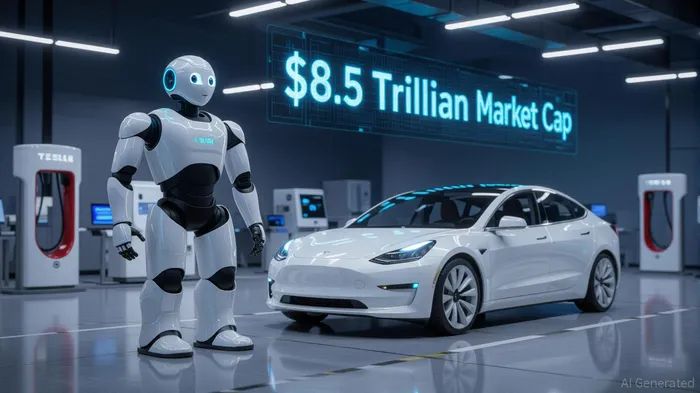
Tesla's proposed $1 trillion CEO compensation package for Elon Musk has ignited fierce debate among investors, analysts, and corporate governance experts. Structured around 12 performance tranches tied to financial, operational, and technological milestones, the plan reflects both the company's unrelenting ambition and the unique challenges of retaining a visionary leader in a hyper-competitive industry. For long-term shareholders, the question is whether this bold move will cement Tesla's dominance in the EV and AI markets—or expose the company to unsustainable risks.
Strategic Implications: Aligning Musk's Vision with Shareholder Value
The package's design is a masterclass in incentive alignment. To unlock the first tranche, TeslaTSLA-- must double its market cap to $2 trillion and deliver 20 million vehicles over a decade. Subsequent tranches escalate to an $8.5 trillion valuation—a figure that would dwarf the combined market caps of MicrosoftMSFT--, AppleAAPL--, and Alphabet. These targets are not just aggressive; they are transformative. They signal Tesla's intent to dominate not only the EV sector but also the broader AI and robotics ecosystems, with projects like Full Self-Driving (FSD), Optimus robots, and Robotaxis at the forefront.
For investors, the plan's success hinges on Tesla's ability to execute on these multi-faceted goals. The operational milestones—such as 10 million FSD subscriptions and 1 million Optimus units—require not just technological breakthroughs but also scalable manufacturing and customer adoption. If achieved, they could redefine Tesla as a multi-industry juggernaut, generating recurring revenue streams beyond vehicle sales. However, the path is fraught with risks: supply chain bottlenecks, regulatory hurdles for autonomous tech, and the sheer complexity of scaling robotics at mass-market levels.
Talent Retention in a High-Stakes Era
Musk's role as CEO is unparalleled in modern business. His hands-on involvement in product development, engineering, and public strategy has been central to Tesla's rise. The pay package's requirement for Musk to remain CEO for 7.5–10 years and establish a succession framework underscores the board's recognition of his irreplaceable value. Yet, this also raises concerns: What happens if Musk's focus wavers due to his other ventures (SpaceX, xAI, Neuralink) or political engagements? The package's emphasis on a “succession plan” is a nod to this risk, but no contingency can fully replicate Musk's influence.
In comparison to industry norms, Tesla's approach is extreme. Most CEO compensation packages are tied to more modest metrics, such as EBITDA growth or stock price targets. For example, Apple's Tim Cook and Amazon's Andy Jassy receive performance-based equity but with less emphasis on decade-long, moonshot goals. Tesla's plan reflects its unique position: a company that operates at the intersection of EVs, AI, and space exploration, where long-term innovation is as critical as short-term profitability.
A Framework for Investor Evaluation
To assess whether this package is a visionary investment or a risky gamble, investors should consider three factors:
Market Leadership Potential: Tesla's dominance in the EV sector is under threat from legacy automakers and new entrants. The $8.5 trillion valuation target assumes Tesla maintains a 50%+ market share in EVs and captures significant portions of the AI and robotics markets. Investors must evaluate whether Tesla's technological edge (e.g., FSD, battery innovation) can sustain this lead.
Execution Risk: The package's success depends on Tesla's ability to scale production and resolve technical challenges. Recent declines in European sales and profitability (despite record vehicle deliveries) highlight vulnerabilities. A could reveal whether the company's margins are robust enough to fund these ambitious projects.
Governance and Legal Uncertainty: The 2018 pay package's legal challenges and Tesla's relocation from Delaware to Texas signal ongoing governance risks. Shareholders must weigh the board's argument that Musk's unique role justifies the package against concerns about concentrated control and potential regulatory pushback.
Conclusion: A High-Risk, High-Reward Proposition
Tesla's $1 trillion pay package is a bet on the future. For investors who believe in Musk's ability to execute on his vision and in Tesla's capacity to redefine multiple industries, the potential rewards are staggering. A $8.5 trillion market cap would not only make Musk a trillionaire but also position Tesla as the most valuable company in history, with unparalleled influence over global energy and AI trends.
However, the risks are equally profound. If Tesla falters in scaling its robotics initiatives or faces regulatory setbacks in autonomous driving, the package could backfire, eroding shareholder trust and stock value. The November 6 shareholder vote will be a critical test of confidence—not just in Musk, but in Tesla's board's ability to balance ambition with accountability.
For now, the package remains a testament to Tesla's audacity. Whether it proves to be a visionary leap or a cautionary tale will depend on the company's ability to turn these lofty goals into reality. Investors must decide: Is this the next chapter in Tesla's legacy, or a gamble too big to justify?

Delivering real-time insights and analysis on emerging financial trends and market movements.
Latest Articles
Stay ahead of the market.
Get curated U.S. market news, insights and key dates delivered to your inbox.
AInvest
PRO
AInvest
PRO



Comments
No comments yet