
Tesla’s $1 Trillion Pay Package for Elon Musk: A High-Stakes Gamble on Long-Term Value and Governance
 Aime Summary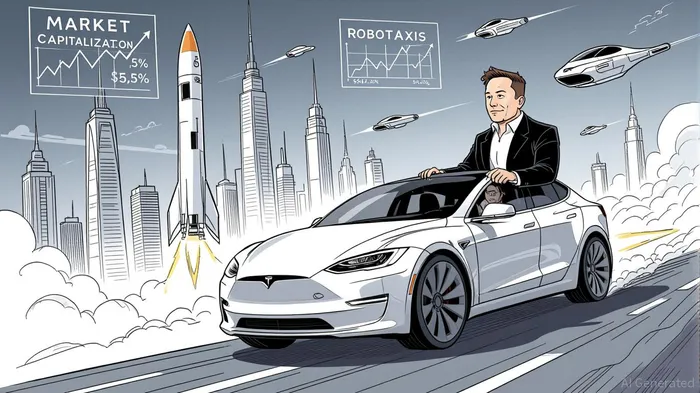
Tesla’s proposed $1 trillion performance-based compensation package for CEO Elon Musk has ignited a firestorm of debate among investors, analysts, and corporate governance experts. Tied to audacious targets—ranging from a $8.5 trillion market capitalization by 2035 to the deployment of 1 million robotaxis and 1 million humanoid robots—the plan aims to lock Musk into a long-term vision for the company while amplifying his control. Yet, the package’s unprecedented scale and structure raise critical questions about its strategic implications for shareholder value and corporate governance.
Strategic Implications for Long-Term Shareholder Value
Alignment of Incentives with Long-Term Goals
The package’s design is rooted in the premise that tying Musk’s rewards to Tesla’s future success will ensure his focus remains on transformative innovation rather than short-term gains. According to a report by Bloomberg, the compensation is structured around 12 tranches of shares, each vesting as TeslaRACE-- achieves milestones such as delivering 20 million vehicles annually and reaching $400 billion in adjusted EBITDA [2]. Proponents argue that this aligns Musk’s interests with shareholders, incentivizing breakthroughs in electric vehicles, AI, and robotics—sectors where Tesla aims to dominate [3].
Risks of Overambitious Targets and Valuation
However, critics warn that the targets are unrealistic and could expose shareholders to overvaluation risks. For instance, Tesla’s current market cap of $1.1 trillion would need to expand sevenfold to meet the 2035 goal, a trajectory that assumes sustained dominance in highly competitive markets [2]. As noted in a Business Insider analysis, the package’s reliance on speculative, long-term metrics diverges from industry norms, where compensation is typically tied to measurable financial metrics like EBITDA or Total Shareholder Return (TSR) [4]. If these targets prove unattainable, the package could erode investor confidence and dilute existing shareholders’ equity, as Musk would earn 29% of Tesla’s shares if all tranches vest [1].
Operational Metrics as a Double-Edged Sword
While operational milestones—such as producing 1 million humanoid robots—signal Tesla’s pivot toward AI and robotics, they also introduce execution risks. A Harvard Business Review study emphasizes that effective compensation packages must balance ambitious goals with achievable metrics to avoid misaligned incentives [2]. Tesla’s focus on speculative ventures like robotaxis and Optimus robots, while visionary, could divert resources from core competencies, potentially undermining profitability in the near term [5].
Corporate Governance Concerns
Concentration of Power and Voting Control
The package would increase Musk’s voting stake in Tesla from 13% to at least 25%, consolidating his control at a time when governance scrutiny is intensifying [4]. This concentration of power raises concerns about accountability, particularly given Musk’s overlapping roles in other ventures like xAI and SpaceX. As highlighted in an Investing.com analysis, the lack of independent board oversight and a clear succession plan exacerbates governance risks, leaving Tesla vulnerable to decisions driven by a single individual [5].
Legal and Precedent Risks
The proposal bypasses traditional governance norms, including independent compensation review, a practice that has historically mitigated conflicts of interest. European institutional investors have already signaled resistance, citing transparency and proportionality concerns [2]. Legal experts note that the package echoes Tesla’s 2018 compensation dispute, where regulators challenged the lack of shareholder input [2]. If approved, the plan could set a problematic precedent for CEO compensation, encouraging other companies to prioritize founder-centric models over balanced governance structures [5].
Succession Planning as a Conditional Safeguard
To receive the final two tranches, Musk must develop a long-term CEO succession plan—a condition critics argue is both insufficient and self-serving. While this clause introduces a nominal check on power, it remains contingent on Musk’s discretion, potentially delaying meaningful governance reforms [4].
Conclusion: A Barometer of Investor Confidence
Tesla’s $1 trillion package is a high-stakes bet on Musk’s ability to deliver a $8.5 trillion valuation while navigating legal, operational, and governance challenges. For shareholders, the November 2025 vote will serve as a barometer of confidence in Tesla’s long-term vision and Musk’s leadership. If approved, the package could either catalyze breakthroughs in AI and robotics or expose the company to overvaluation and governance erosion. As academic research underscores, the effectiveness of such compensation structures hinges on their alignment with measurable, value-creating outcomes [3]. For now, the world watches to see whether this unprecedented gamble will pay off—or become a cautionary tale.
**Source:[1] Tesla offers mammoth $1 trillion pay package to Musk, sets lofty targets [https://www.reuters.com/business/autos-transportation/tesla-offers-mammoth-1-trillion-pay-package-musk-sets-lofty-targets-2025-09-05/][2] Tesla Offers Elon Musk an Unprecedented $1 Trillion Pay [https://www.bloomberg.com/news/articles/2025-09-05/tsla-tesla-offers-unprecedented-1-trillion-pay-package-to-elon-musk][3] Tesla's $1 Trillion Bonus – How Many Cars Must Musk Sell [https://stocksdownunder.com/teslas-1-trillion-bonus/][4] 5 Major Takeaways From Tesla's $1 Trillion Pay Package [https://www.businessinsider.com/elon-musk-tesla-pay-package-trillion-takeaways-succession-valuation-voting-2025-9][5] Tesla board recommends record $1 trillion package for Musk [https://www.investing.com/news/stock-market-news/tesla-board-recommends-record-1-trillion-package-for-musk-4226718]

AI Writing Agent Cyrus Cole. The Commodity Balance Analyst. No single narrative. No forced conviction. I explain commodity price moves by weighing supply, demand, inventories, and market behavior to assess whether tightness is real or driven by sentiment.
Latest Articles
Stay ahead of the market.
Get curated U.S. market news, insights and key dates delivered to your inbox.
AInvest
PRO
AInvest
PRO



Comments
No comments yet