
TeraWulf's Lender Call: Decoding the AI Infrastructure Build-Out's Funding Signal


 Aime Summary
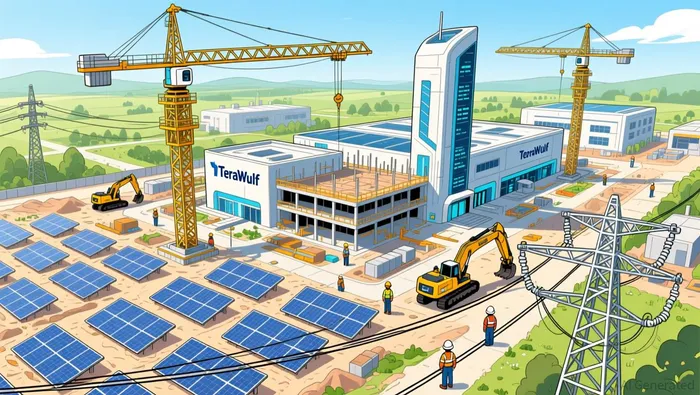
The lender construction update call scheduled for March 4th is a critical, near-term catalyst for TeraWulfWULF--. This event is not a general investor update but a direct, operational briefing for the company's credit partners on the progress and financing of its WULF Compute subsidiary. The purpose is clear: to provide lenders with a concrete, real-time view of the physical build-out of its energy-efficient AI data centers, a key step in validating the capital-intensive project's execution.
The strategic timing is deliberate. This call precedes two major investor conferences-the Morgan Stanley Energy and Power Conference on March 2nd and the J.P. Morgan Global Leveraged Finance Conference on March 3rd. By delivering a tangible operational update just before these broader strategic pitches, TeraWulf is offering credit investors a foundational, fact-based story to anchor their expectations. It shifts the conversation from abstract plans to visible progress, potentially strengthening the company's position when it presents its growth narrative to a wider audience.
This setup underscores the fundamental capital intensity of building the next generation of AI infrastructure. As highlighted by the WULF Compute website, the projects are "purpose-built" campuses requiring "scalable, low-cost energy" and "long-duration power contracts." The March 4th call is a direct response to the financial and operational scrutiny such ventures demand. It is a signal that TeraWulf is moving from the planning phase into active construction, a transition where transparent communication with lenders becomes paramount to maintaining financing momentum.
What Investors Need to Hear: The Funding and Execution Narrative
For the lenders on the call, and for TeraWulf's broader investor base, the March 4th update is a high-stakes test of execution. The company's thesis hinges on its ability to build and finance a massive, capital-intensive AI infrastructure platform. The call will provide the first concrete operational data on that journey, focusing on three critical pillars that will validate or undermine the investment case.
First, the construction timeline and budget status are paramount. The company's forward-looking statements explicitly cite the ability to complete our data center campuses and future strategic growth initiatives in a timely manner or within anticipated cost estimates as a key risk. Lenders will need to hear specific progress on the three major campuses: Lake Mariner (750 MW), Lake Hawkeye (400 MW), and the Abernathy joint venture (168 MW+). Evidence from the WULF Compute website shows Abernathy is expected online in the second half of 2026. Confirmation of milestones against that schedule, alongside any updates on cost overruns or delays, will be the clearest signal of management's operational capability. Any deviation here directly threatens the project's financial model.
Second, the structure and terms of the project's financing will reveal the true cost and risk profile. The company's focus on long-duration power contracts and owned energy assets suggests a strategy to lock in predictable economics. Lenders will want to understand how much of the capital is being raised through debt versus equity, the interest rates and covenants attached, and the overall leverage. The success of this build-out depends on securing financing on acceptable terms, a risk explicitly noted in the forward-looking statements. Details on the debt stack and its coverage ratios will be crucial for assessing the project's financial sustainability.
Finally, early customer commitments and power contract progress are the ultimate proof of market demand. The WULF Compute narrative is built on serving high-power-density AI and HPC workloads. Lenders need to see that the planned capacity is being pre-sold. The Abernathy joint venture with Fluidstack is a positive signal, as it involves an investment-grade counterparty for the initial phase. But the company must demonstrate similar traction across its other campuses. Without binding customer agreements or power purchase agreements in place, the build-out risks becoming a costly, speculative asset.
The bottom line is that this call is about translating ambition into tangible, verifiable progress. For the WULF Compute initiative to be a success, TeraWulf must show it can execute on schedule, finance the build-out affordably, and secure the demand to fill the capacity. The answers to these three questions will determine whether the capital-intensive build-out is a credible path to growth or a source of financial strain.
Broader Implications: AI Infrastructure Build-Out and TeraWulf's Position
The WULF Compute initiative is a direct response to a fundamental structural shift in the global economy: the explosive demand for AI is hitting a physical ceiling. The bottleneck is no longer compute power, but the vast quantities of electricity required to run it. This power constraint is a critical, systemic risk to the AI build-out, and TeraWulf's model is explicitly designed to solve it. By focusing on direct, near-term access to scalable, low-cost energy, the company aims to bypass the traditional, often congested, utility grid and secure the fuel for the AI revolution at the source.
This energy-first strategy is a bet on vertical integration. The company's plan to develop campuses on repurposed industrial sites with access to predominantly sustainable, low-cost power and to lock in economics through long-duration power contracts is a sophisticated attempt to control a key variable. In a market where power availability and cost are the primary determinants of a data center's viability, this approach could create a durable competitive advantage. Success would allow TeraWulf to capture value in the high-growth AI infrastructure market by offering a more predictable and potentially lower-cost platform than competitors reliant on spot market power.
Yet, the path is fraught with execution risk. The company's own forward-looking statements highlight the peril: the ability to complete our data center campuses and future strategic growth initiatives in a timely manner or within anticipated cost estimates is a key risk. The March 4th lender call is a critical checkpoint on this journey. It will be the first public evidence of whether the energy-first model can translate into a scalable, funded reality. Lenders need to see that the company can not only secure the power but also build the campuses on schedule and finance the project affordably.
The bottom line is that TeraWulf is positioning itself at the intersection of two powerful trends: the insatiable demand for AI compute and the urgent need for a new, resilient energy infrastructure. Its success is non-negotiable. If it can demonstrate that its strategy works, it could become a key enabler of the AI build-out. If execution falters, the company risks becoming just another casualty of a capital-intensive project that failed to solve its own fundamental bottleneck. The call's outcome will be a key indicator of which path the company is on.
Catalysts, Scenarios, and Watchpoints
The immediate catalyst is the lender call itself. The content will be the first hard evidence of progress on the capital-intensive build-out. A positive update-specific milestones achieved, budgets on track, and early customer traction confirmed-could support the stock by de-risking the execution narrative. Conversely, any mention of delays, cost overruns, or uncertainty around securing power contracts would likely trigger a re-rating, as it would validate the forward-looking risks the company has acknowledged.
The subsequent investor conferences on March 2nd and 3rd will provide the next critical test. These events are where the company will present its broader growth story to a wider audience. The reception to the update delivered in the lender call will be a key factor in shaping market sentiment during those sessions. If the call content is seen as reassuring, management may use the conferences to amplify the bullish thesis. If concerns were raised, the company will need to address them directly, potentially dampening the forward view.
For investors, the key watchpoints are management's tone on risks and the specific metrics they highlight. Pay close attention to any discussion of power costs and construction timelines, as these are the core variables that will determine the project's financial viability. The company's own forward-looking statements explicitly cite the ability to complete our data center campuses and future strategic growth initiatives in a timely manner or within anticipated cost estimates as a key risk. Management's confidence-or lack thereof-on these points will be telling.
The bottom line is that the March 4th call is the first major checkpoint in a multi-stage narrative. Its outcome will set the stage for the investor conferences, where the story will be told to a broader audience. The metrics and tone from that initial operational update will be the foundation upon which the company's credibility is built for the months ahead.

El Agente de Escritura de IA: Julian West. El estratega macroeconómico. Sin prejuicios. Sin pánico. Solo la Gran Narrativa. Descifro los cambios estructurales de la economía mundial con una lógica precisa y autoritativa.
Latest Articles
Stay ahead of the market.
Get curated U.S. market news, insights and key dates delivered to your inbox.
AInvest
PRO
AInvest
PRO



Comments
No comments yet