
Tennessee's Infrastructure Boom: A Blueprint for Regional Economic Dominance
The Volunteer State is undergoing a quiet revolution. From the rolling hills of West Tennessee to the bustling corridors of Nashville, a wave of infrastructure investments is reshaping Tennessee's economy. These projects—fueled by federal funding, private capital, and strategic state policies—are not just repairing potholes but building a foundation for sustained growth. For investors, this is no ordinary construction cycle: it's a generational opportunity to capitalize on a region primed for economic ascendancy.
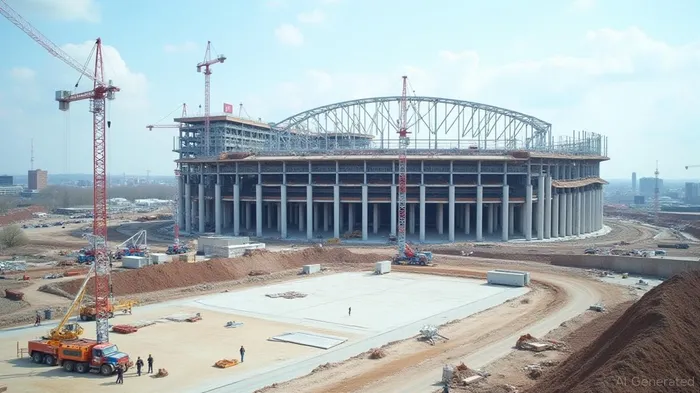
The Catalyst: Federal Dollars Meet Private Ambition
Tennessee's infrastructure renaissance is underpinned by the $6.22 billion allocated under the 2021 Infrastructure Investment and Jobs Act (IIJA). This influx has unlocked projects like Ford's $5.6 billion electric vehicle (EV) battery plant in West Tennessee—a facility that will employ 5,000 workers and anchor a supply chain attracting billions more in investment. Meanwhile, Orano's $2 billion uranium enrichment plant in Oak Ridge is reviving Tennessee's legacy in nuclear innovation, promising 1,200 high-wage jobs and positioning the state as a leader in next-gen energy.
These projects are no accident. Tennessee's “Pay as You Go” fiscal discipline, maintained through a raised gas tax, has ensured that federal dollars are matched with state resources. The result? A 3.3% projected growth rate in construction and manufacturing sectors by 2025—nearly double the national average.
The Economic Multiplier Effect: Jobs, Wages, and Population Growth
The data is unequivocal: infrastructure spending pays dividends. Tennessee's GDP is projected to grow 2.5% in 2025, outpacing the U.S. average of 2%, driven by sectors like construction (up 3.3%) and manufacturing (3.3%). But the real story is in the labor market.
- Job Creation: While job growth has slowed from post-pandemic highs, Tennessee's 36,400 projected 2025 jobs—many in high-skill, high-wage fields—are no accident. The FordFORD-- plant alone will generate $5 billion in annual wages.
- Wage Growth: Nominal personal income is expected to rise 4.6% in 2025, with real wages growing 2.6% after inflation. This is no small feat in an era of stagnant wages elsewhere.
- Population Surge: Tennessee's population grew 1.1% in 2023—twice the national rate—and is on track for 600,000 new residents by 2030. This influx fuels demand for housing, retail, and services, creating a self-reinforcing economic cycle.
The Undervalued Opportunity: Tennessee's Competitive Advantages
Investors often overlook Tennessee's structural strengths:
- Pro-Business Climate: No income tax on wages, right-to-work laws, and a 4.5% corporate tax rate make it a magnet for capital.
- Strategic Location: Tennessee's central U.S. geography and rail/road network—handling $1 trillion in freight by 2050—position it as a logistics hub.
- Workforce Development: Community colleges like Austin Peay State University are training workers for advanced manufacturing and EV tech, ensuring the talent pipeline stays open.
The Risks—and Why They're Manageable
Critics point to challenges: underfunded transit systems in Nashville and Memphis, a 25% rural broadband gap, and the 4.4% of bridges deemed structurally deficient. But these are not dealbreakers.
- Transit Funding: State leaders are exploring a sales tax referendum to create dedicated transit revenue—a model proven in peer cities like Denver.
- Broadband: State incentives for providers and federal subsidies (via the IIJA) are closing the gap.
- Infrastructure Report Card: While Tennessee's “C” grade in the 2022 ASCE report highlights aging systems, the $1 billion in new state funding this year is accelerating repairs and upgrades.
The Investment Playbook: Where to Deploy Capital Now
- Construction and Materials: Companies like Vulcan Materials (VMC) and Stanley Black & Decker (SWK)—key suppliers to Tennessee's projects—are poised to benefit.
- EV and Energy Infrastructure: Ford (F) and utilities like Duke Energy (DUK), which are upgrading grid capacity for EV adoption, offer long-term growth.
- Real Estate: Nashville's downtown revitalization (e.g., Nashville Yards) and Memphis' logistics hubs are prime for commercial and residential development.
- Public-Private Partnerships (P3s): Tennessee's new “choice lane” policy invites investors to bid on toll roads and transit upgrades, offering steady returns.
Why Act Now?
The window is narrow. Tennessee's population growth, while robust, will slow after 2030 due to aging demographics. Federal funding from the IIJA is time-limited, and competitors like Texas and Georgia are watching closely. Investors who move quickly can secure positions in a state with:
- A 30-year low in unemployment (3%) and rising wages.
- A 2.5% GDP growth rate exceeding the U.S. average.
- A 600,000-person population boom in the next seven years.
Conclusion: The Next Decade Belongs to Tennessee
Infrastructure is the ultimate “patient capital” investment—and Tennessee is where that patience pays off. From EV batteries to nuclear innovation, this state is building an economy that's resilient, diversified, and primed for global competition. The data is clear: Tennessee isn't just keeping up with growth—it's setting the pace. For investors ready to act, the time to build positions in Tennessee's future is now.
This article is for informational purposes only and should not be construed as financial advice. Always consult a professional before making investment decisions.

Delivering real-time insights and analysis on emerging financial trends and market movements.
Latest Articles
Stay ahead of the market.
Get curated U.S. market news, insights and key dates delivered to your inbox.


AInvest
PRO
AInvest
PRO



Comments
No comments yet