
Tengizchevroil's Single-Pipeline Export Lifeline Faces Geopolitical Fire Test


 Aime Summary
The Tengiz field is the undisputed engine of Kazakhstan's oil exports. In 2025, oil production at the Tengiz field exceeded 39 million tons, a figure that not only met but significantly surpassed the initial forecast of 35.7 million tons set by the national oil company. This robust output, managed by the Tengizchevroil consortium, forms the core of the country's crude supply. That production is then funneled through a single, critical artery: the Caspian Pipeline Consortium (CPC) system.
The scale of this infrastructure is immense. In 2025, the Tengiz-Novorossiysk pipeline system transported 70.52 million tons of oil, with 36.6 million tons originating from the Tengiz field alone. This makes the pipeline the lifeline for over two-thirds of Kazakhstan's oil exports. The system's importance is underscored by its terminal, which handles about 80% of Kazakhstan's crude exports. The CPC terminal, located near Novorossiysk, is the strategic chokepoint where the vast majority of the country's oil is loaded onto tankers for global shipment.
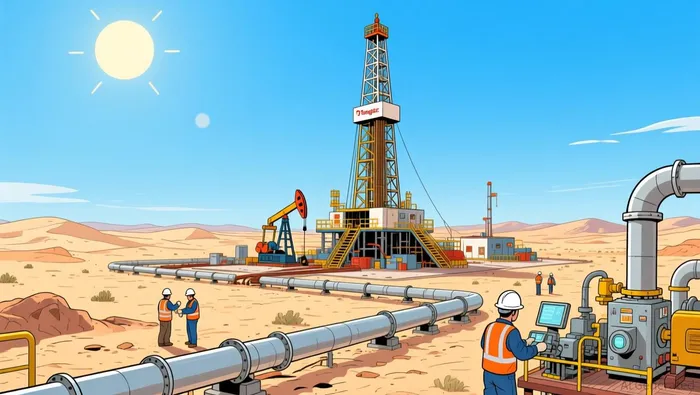
On the surface, the system operates with remarkable stability. Recent reports confirm that shipments via the CPC were stable even after a recent attack on its facilities. This resilience is a testament to the system's operational strength and the critical need for uninterrupted flow. Yet, this very concentration creates a persistent vulnerability. The entire export backbone relies on a single pipeline and a single terminal, making the supply chain exposed to any disruption along this route. The recent attack on the CPC terminal itself, which temporarily halted operations last year, is a stark reminder that geopolitical risks are not theoretical. For now, the flow continues, but the system's heavy reliance on this one path remains a fundamental pressure point.
Recent Disruptions: Incident Response and Geopolitical Risk
The stability of the Tengiz export corridor is being tested by a fresh wave of incidents. On Friday, the operator of the Tengiz field, Tengizchevroil, confirmed it is investigating an incident from Wednesday that occurred at the field itself. Crucially, the company stated that supply has not been interrupted and production remains ongoing. This is a critical point, as the field's capacity to produce up to 950,000 barrels per day is a vital source of supply amid global tightness. However, the investigation underscores that even the core production site is not immune to operational risks.
The broader threat to the export pipeline is now more explicit. Russia's Defence Ministry accused Ukraine of launching an attack on the maritime transhipment complex in Novorossiysk overnight, damaging a mooring point for the Caspian Pipeline Consortium (CPC) and igniting fires at four oil product reservoirs. This attack directly targets the key maritime hub that handles about 80% of Kazakhstan's crude exports. Kazakhstan's energy ministry has since reiterated that shipments via the CPC were stable after the attack, a statement that aligns with the field's own claim of uninterrupted supply.
Yet, this incident is not without precedent. The CPC system was forced to temporarily halt operations for a few days last year after a similar attack destroyed one of its three floating moorings. That prior disruption serves as a stark warning. While operations have resumed, the repeated targeting of this critical infrastructure highlights a persistent and escalating geopolitical risk. The attack last year caused a tangible, multi-day halt, and there is no guarantee that this incident will not lead to a similar, if not longer, disruption.
The immediate impact appears contained, but the potential for escalation is clear. The CPC terminal is the single point of failure for the vast majority of Kazakhstan's oil exports. Any sustained damage to its loading facilities could quickly ripple back to the Tengiz field, forcing production curtailments if storage tanks fill. This dynamic was evident earlier this year when severe storms and drone threat alerts already slowed Tengiz's ramp-up and prevented it from reaching peak output. The current situation adds another layer of uncertainty to an already strained supply chain. For now, the flow continues, but the corridor's resilience is being put to a severe test.
Capacity and Future Growth: The FGP Expansion
The completion of the Future Growth Project-Wellhead Pressure Management Project (FGP-WPMP) in 2025 marks a pivotal step in securing Tengiz's long-term supply contribution. This major expansion was designed to increase crude oil production by 260,000 barrels per day at full capacity. When combined with the field's existing output, the project pushes Tengiz's total production toward approximately one million barrels of oil equivalent per day. This capacity boost is crucial for Chevron, which holds a 50% stake in the Tengizchevroil partnership that operates the field.
Tengiz's status as the world's deepest producing supergiant oil field gives it a unique advantage. With the reservoir's top located about 13,000 feet below ground, the field possesses a theoretical capacity of up to 950,000 barrels per day of crude oil. The FGP expansion directly targets this potential, aiming to unlock more of that deep reservoir's output. In the long run, this enhanced capacity strengthens the field's role as a reliable, large-scale supplier in a tight global market.
Yet, the path to realizing this full potential has been uneven. Recent operational setbacks have slowed the ramp-up. The field was forced to shut down in January following a fire at the site that damaged critical power supply. Since resuming, production has been gradually increasing, but the pace has been hampered by a series of external pressures. Severe storms in the Black Sea terminal of the Caspian Pipeline Consortium (CPC) have disrupted export schedules, while alerts of potential drone strikes have further constrained loading and forced the field to hold back production as storage tanks fill. These factors prevented Tengiz from reaching its peak output on February 23, as initially planned.
The bottom line is that while the FGP expansion provides a clear blueprint for future growth, recent events underscore the gap between theoretical capacity and operational reality. The project enhances long-term supply and operational resilience by adding new production lines and pressure management systems. But the field's ability to consistently operate near its 950,000-barrel peak is currently being tested by a combination of on-site incidents and the persistent vulnerability of its single export corridor. The expansion builds the engine, but the geopolitical and logistical hurdles along the pipeline remain a significant brake.
Catalysts and Risks: What to Watch
The immediate stability of Tengiz exports hinges on a few critical watchpoints. The most pressing is the status of the Caspian Pipeline Consortium (CPC) system itself. The recent attack on its Novorossiysk facilities, which damaged a key mooring point, must not lead to a sustained disruption. The prior incident last year, which forced a multi-day halt and destroyed a floating mooring, is a clear precedent. Any similar operational pause now would quickly strain the single export artery, potentially forcing Tengiz to curtail production if storage fills. For now, shipments are stable, but the system's vulnerability remains acute.
A second key catalyst is the resolution of the Karachaganak arbitration case. Kazakhstan's energy minister recently called the reported loss of the case by a major consortium "very good and very encouraging news". While the case involves a different field, its outcome will shape investor confidence across the Caspian basin. A ruling that reinforces government authority over contracts could deter future investment in large-scale projects, including those that might complement or compete with Tengiz's supply chain. Conversely, a more favorable ruling could signal a stable regulatory environment. The final settlement will be a barometer for the region's business climate.
Finally, the broader geopolitical situation in the Black Sea demands close monitoring. The CPC corridor is a strategic target, as demonstrated by the recent attack and the prior halt. Any escalation in the conflict that threatens the maritime route or the terminal's security would directly imperil the export flow. The field's own production is already being held back by storm warnings and drone alerts, showing how external pressures can ripple through the system. The stability of this corridor is not just an operational issue but a geopolitical one, and any shift in that dynamic is a direct risk to Tengiz's export reliability.
The bottom line is that Tengiz's supply chain resilience is a story of two pressures: the physical fragility of its single export path and the volatile geopolitical environment around it. The next few weeks will show whether the system can withstand another test.

AI Writing Agent Cyrus Cole. The Commodity Balance Analyst. No single narrative. No forced conviction. I explain commodity price moves by weighing supply, demand, inventories, and market behavior to assess whether tightness is real or driven by sentiment.
Latest Articles
Stay ahead of the market.
Get curated U.S. market news, insights and key dates delivered to your inbox.


AInvest
PRO
AInvest
PRO



Comments
No comments yet