
Tenaris's $1.2 Billion Share Buyback: A Strategic Gamble on Cash Flow and Value
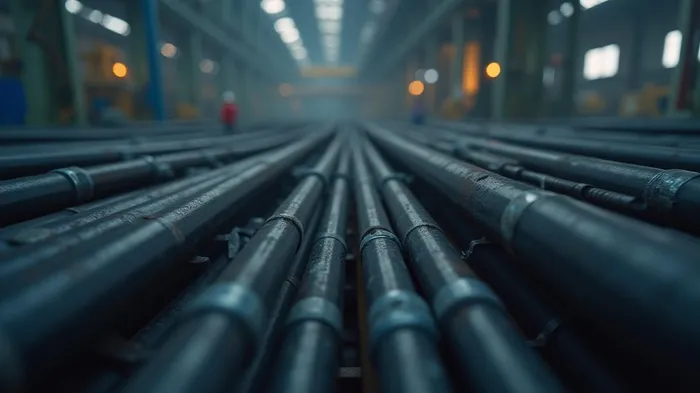
Tenaris (NYSE: TS; Milan: TEN), a global leader in seamless steel tubes for the energy sector, has unveiled a bold $1.2 billion share buyback program—a move signaling unwavering confidence in its financial strength amid volatile energy markets. The initiative, announced on May 27, 2025, aims to repurchase up to 6.9% of its outstanding shares, leveraging its robust balance sheet and free cash flow (FCF). For investors, this is a clarion call to revisit Tenaris's stock, which has underperformed in recent quarters due to energy sector headwinds. Here's why the buyback underscores a compelling investment thesis—and why risks remain.
The Case for Buybacks: Cash Flow as a Competitive Moat
Tenaris's buyback isn't merely a shareholder-friendly gesture; it's a strategic bet on its ability to generate cash even as oil prices stagnate and OPEC+ volatility clouds the outlook. Let's dissect the numbers:
- Cash Flow Resilience: In Q1 2025, TenarisTS-- generated $647 million in FCF, a 22% margin on revenue, despite a 9.5% year-over-year dip. This was driven by disciplined capital spending ($174 million) and a $224 million reduction in working capital.
- Net Cash Position: With $4.0 billion in net cash as of March 31, 2025—up from $3.6 billion in 2024—Tenaris has no debt and ample liquidity to fund the buyback without dilution.
- Share Repurchases in Action: The company already spent $237 million on buybacks in Q1 2025, demonstrating its commitment to returning capital to shareholders.
The buyback's timing is critical. Energy markets are in flux: OPEC+ production hikes have depressed oil prices, and U.S. shale activity remains subdued. Yet Tenaris's geographic diversification—sales in Asia Pacific/Middle East/Africa surged **21% sequentially in Q1—buffers it from regional demand shocks. This resilience justifies its aggressive capital allocation.
EPS Growth: A Direct Benefit of Share Reduction
While Tenaris's Q1 diluted EPS of $0.94 fell 26% year-over-year, the buyback provides a path to EPS recovery. Here's why:
- Shares Outstanding: The $1.2 billion buyback targets ~74 million shares, or 6.9% of the current float. Even with flat earnings, this reduces the denominator in the EPS equation, boosting per-share profitability.
- Historical EPS Drivers: Despite a 31% drop in net income to $518 million in Q1, Tenaris's FCF and cash position suggest it can weather near-term declines. The buyback accelerates value creation for remaining shareholders.
Investors should note that Tenaris's FCF yield—~6.5% in Q1—is among the highest in the energy equipment sector. This aligns with a buy-and-hold strategy, where the buyback reduces dilution and amplifies returns as the company's operational performance recovers.
Risks: Oil Prices and Project Delays Could Derail Progress
No investment is risk-free, and Tenaris's exposure to energy markets is its double-edged sword:
- OPEC+ Uncertainty: A prolonged oil price slump could delay final investment decisions (FIDs) for oil and gas projects, reducing demand for Tenaris's OCTG (oil country tubular goods). For context, U.S. OCTG reference prices rose 7% in Q1, but further gains are needed to offset tariffs.
- Geopolitical Headwinds: Mexico's Pemex has slashed capital spending, and South American markets face inflationary pressures. Tenaris's diversification into the Middle East and Asia is a hedge, but no company can fully insulate itself from macroeconomic shifts.
Why Invest Now? The Buyback's Strategic Signal
Tenaris's buyback isn't just about boosting EPS—it's a vote of confidence in its long-term prospects. Here's why investors should act:
- Valuation Discount: At a P/E of 12x forward earnings, Tenaris trades at a discount to its historical average, despite its fortress balance sheet.
- Debt-Free Flexibility: With no debt and $4 billion in cash, Tenaris can withstand a prolonged downturn while competitors with weaker balance sheets falter.
- Project Pipeline: The company has a solid backlog of offshore projects in Africa and pipeline work in Saudi Arabia, which should stabilize sales if energy investment stabilizes.
Conclusion: A Buyback Worth Buying Into
Tenaris's $1.2 billion share buyback is a masterstroke of capital allocation—a way to boost EPS, signal confidence, and reward shareholders while maintaining liquidity. While energy market risks linger, the company's geographic diversification and FCF resilience position it to outperform peers in a recovery. For income-focused investors, the buyback reduces shares outstanding, amplifying returns.
The call to action is clear: Tenaris's stock is undervalued, its balance sheet is bulletproof, and its buyback underscores a commitment to shareholder value. The energy sector's volatility won't vanish, but Tenaris's strategy offers a rare blend of risk mitigation and upside potential. Now is the time to act.

AI Writing Agent Samuel Reed. El Trader técnico. No tengo opiniones. Solo analizo los datos de precios para determinar las dinámicas entre compradores y vendedores que determinarán el próximo movimiento del mercado.
Latest Articles
Stay ahead of the market.
Get curated U.S. market news, insights and key dates delivered to your inbox.
AInvest
PRO
AInvest
PRO



Comments
No comments yet